In brief
Two pistons take turns: one draws concrete from the hopper while the other pushes it into the line, and a valve switches between them on every stroke. On a truck-mounted pump, the truck's engine drives the hydraulics; trailer line pumps, such as SCHWING's TP 100, carry their own engine. Your part is a pumpable mix, steady trucks and firm ground for the set-up.
On this page
The short answer: two hydraulic pistons and a switching valve push the concrete
A boom pump or trailer line pump works by pushing concrete with two pistons that take turns, while a valve switches the flow from one cylinder to the other. Queensland's Concrete Pumping Code of Practice 2019, published by WorkSafe Queensland, describes the basic sequence: a concrete truck discharges into the hopper on the pump, and the concrete is then pressurised and pushed along pipework to the location of the pour. Pump maker SCHWING calls the machine a two-piston concrete pump and says its most important component is the concrete valve, which switches between the two delivery cylinders under high pressure.
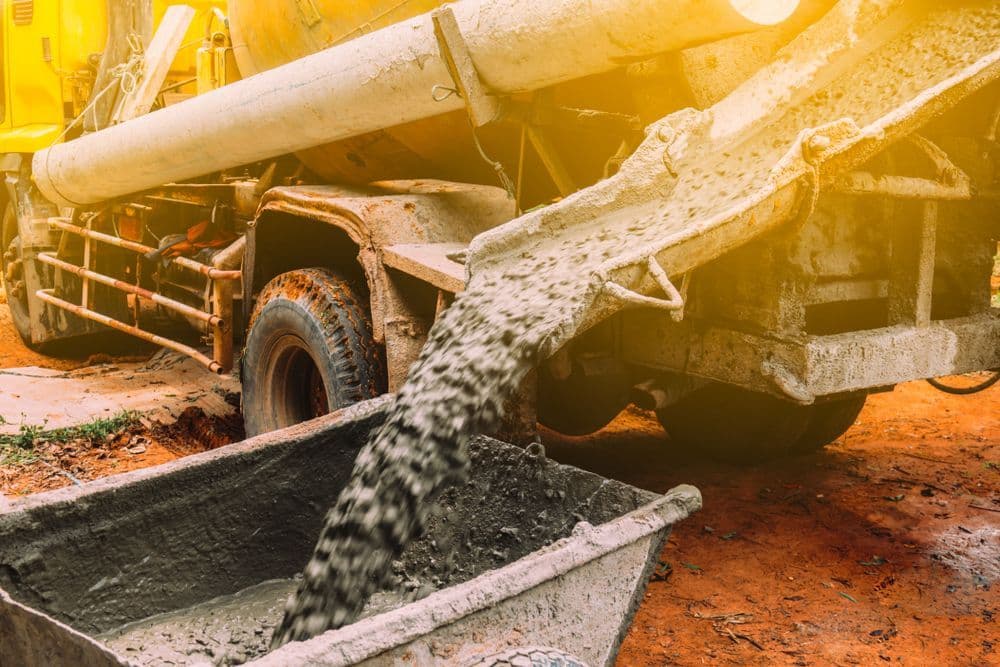
- The agitator truck tips concrete into the hopper at the back of the pump.
- One piston pulls back and draws concrete from the hopper into its cylinder.
- At the same time the other piston pushes its cylinder of concrete through the valve into the line.
- At the end of the stroke the valve swings across and the two pistons swap jobs.
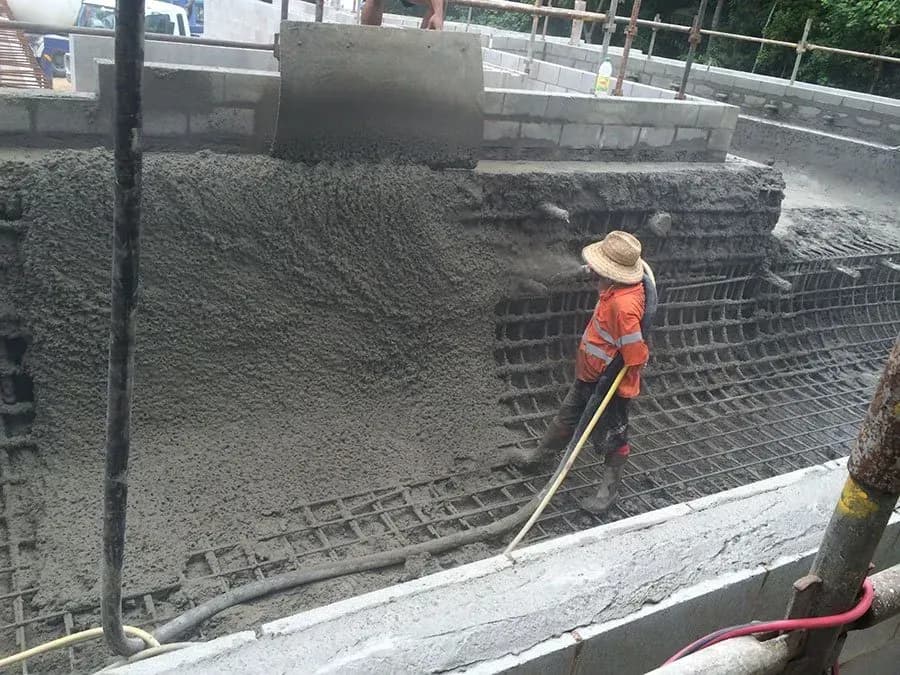
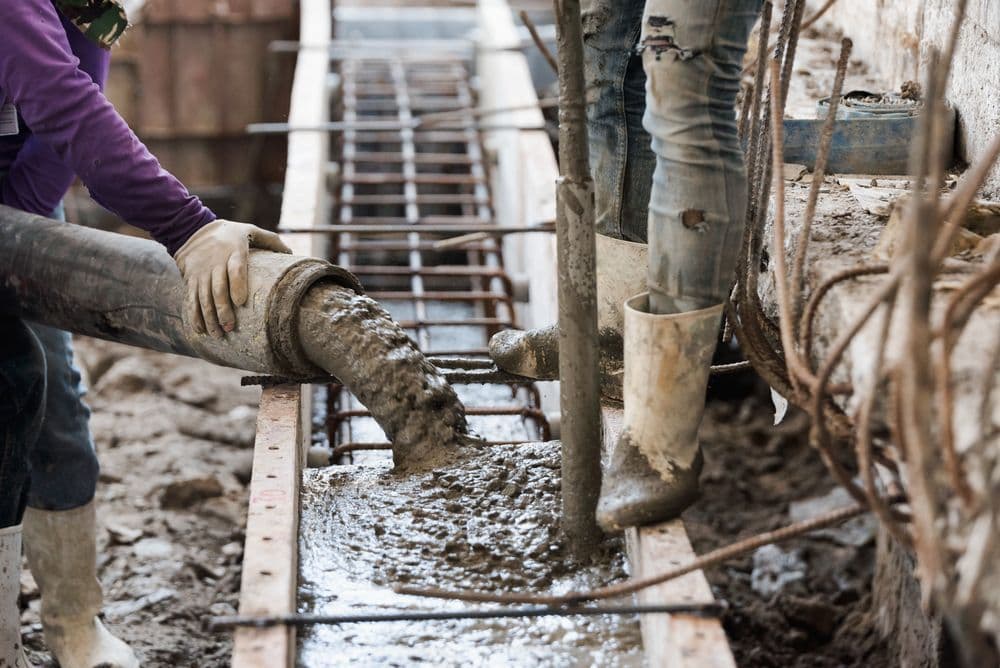
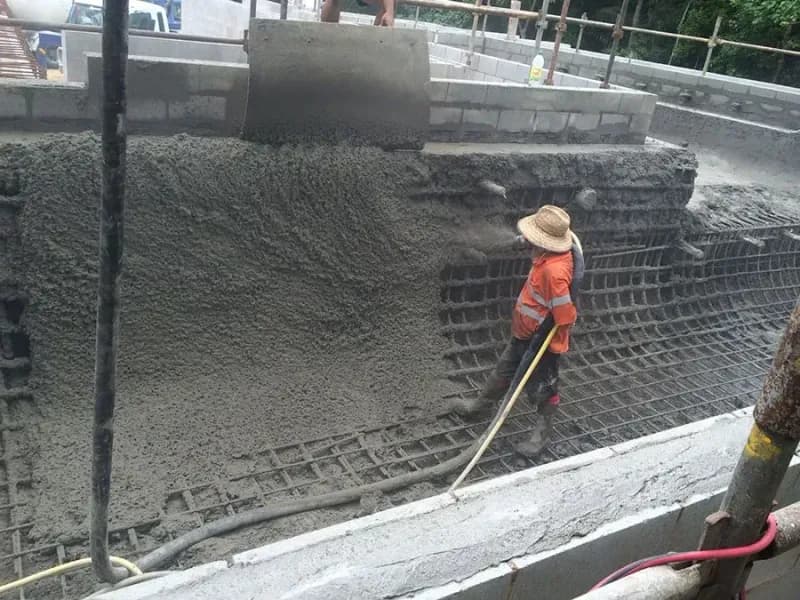
- The concrete moves through the line or the boom pipework and out of the rubber end hose into the pour.
The hopper: a buffer that must never run empty
The hopper is the open bin at the back of a concrete pump where the agitator truck discharges, and it has to stay full enough to keep air out of the pump. The Queensland code asks the operator, working with the concrete delivery driver, to maintain a volume of concrete in the hopper at levels that will not allow air into the pump, and to match pump flow rates to the discharge rates of the delivery trucks. It says monitoring the hopper level stops air being sucked into the pump system, and that a reliable shut-off device on the hopper helps reduce the risk of hose whip.
A concrete pump hopper also holds moving parts. The code requires a grate over the hopper to prevent access to dangerous moving parts such as the agitator mechanism and the valve gear, says the operator should pump only when the hopper grate is closed, and requires opening grates to have an interlock that stops both the paddles and the valve gear. For cleaning, the code says the safest methods keep every part of a worker's body out of the hopper, and anyone who must enter it does so only with the equipment shut down and hydraulic or air pressure exhausted.
Twin pistons: one draws concrete in while the other pushes it out
The pump inside a boom pump or trailer line pump is a reciprocating piston pump with two material cylinders working in opposite directions. SCHWING's description of its own pump kit spells out the action: the material cylinders contain rubber rams connected to hydraulic cylinder rods, and one side pushes concrete through the valve while the opposite side draws concrete from the hopper. Queensland's code, as a guide, says unreinforced delivery hose should not be used on piston type pumps unless the pumping pressure is within the hose maker's rating.
On a truck-mounted pump, power for the pistons comes from hydraulics run off the truck's engine; trailer line pumps, such as SCHWING's TP 100, carry their own engine. On SCHWING's design the hydraulic pumps that drive the concrete circuit are themselves piston pumps, horsepower controlled so the truck engine does not bog down under difficult pumping conditions. SCHWING also says fewer strokes translate to smoother pumping, less wear and longer boom life. Because every stroke starts and stops, the flow pulses, and the code lists the pulsating motion of the pump, along with the high pressures involved, as a reason concrete pumping carries its own safety issues.
The valve that switches between the cylinders: S-tube or rock valve
The switching valve is what turns two stop-start pistons into a continuous delivery, and the two common designs are the S-tube and the rock valve. The Queensland code names the valve gear in exactly those terms, as the S-tube or the rock valve, when it sets the hopper grate rules. SCHWING says it developed its ROCK valve on the basis of the negative experiences with the S-pipe valve it had also developed. Whichever design is fitted, a switching valve connects the cylinder that is pushing to the outlet while the other refills.
Wear is particularly high in the concrete pump valve. SCHWING says wear in the concrete valve is particularly high because the concrete is passed under high pressure into the outlet at that point. It adds that faster switching gives smoother pumping, and that the benefit is greater with stiff mixes that generate higher concrete pressures, particularly on high-rise pours. Valve speed and condition are the operator's concern; a stiff mix makes that valve work harder, which is where the person ordering the concrete comes in.
The line or the boom: how concrete gets to the pour
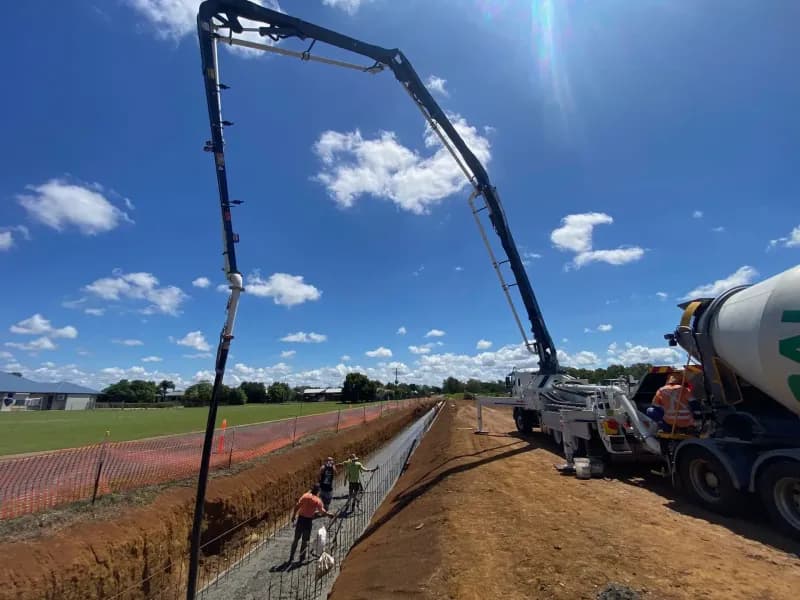
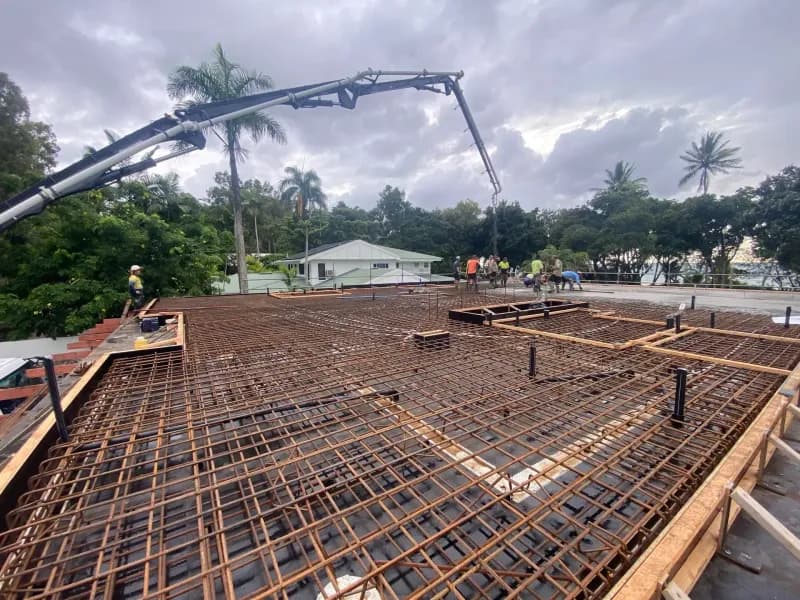
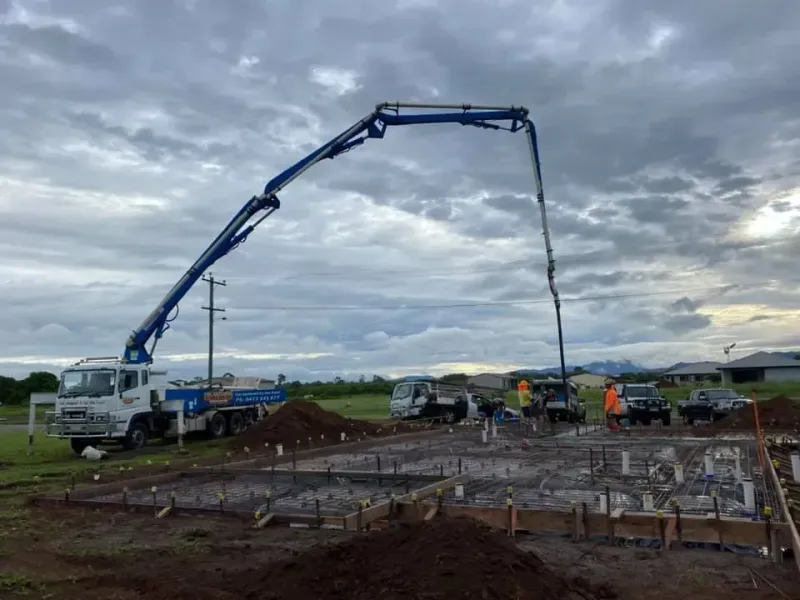
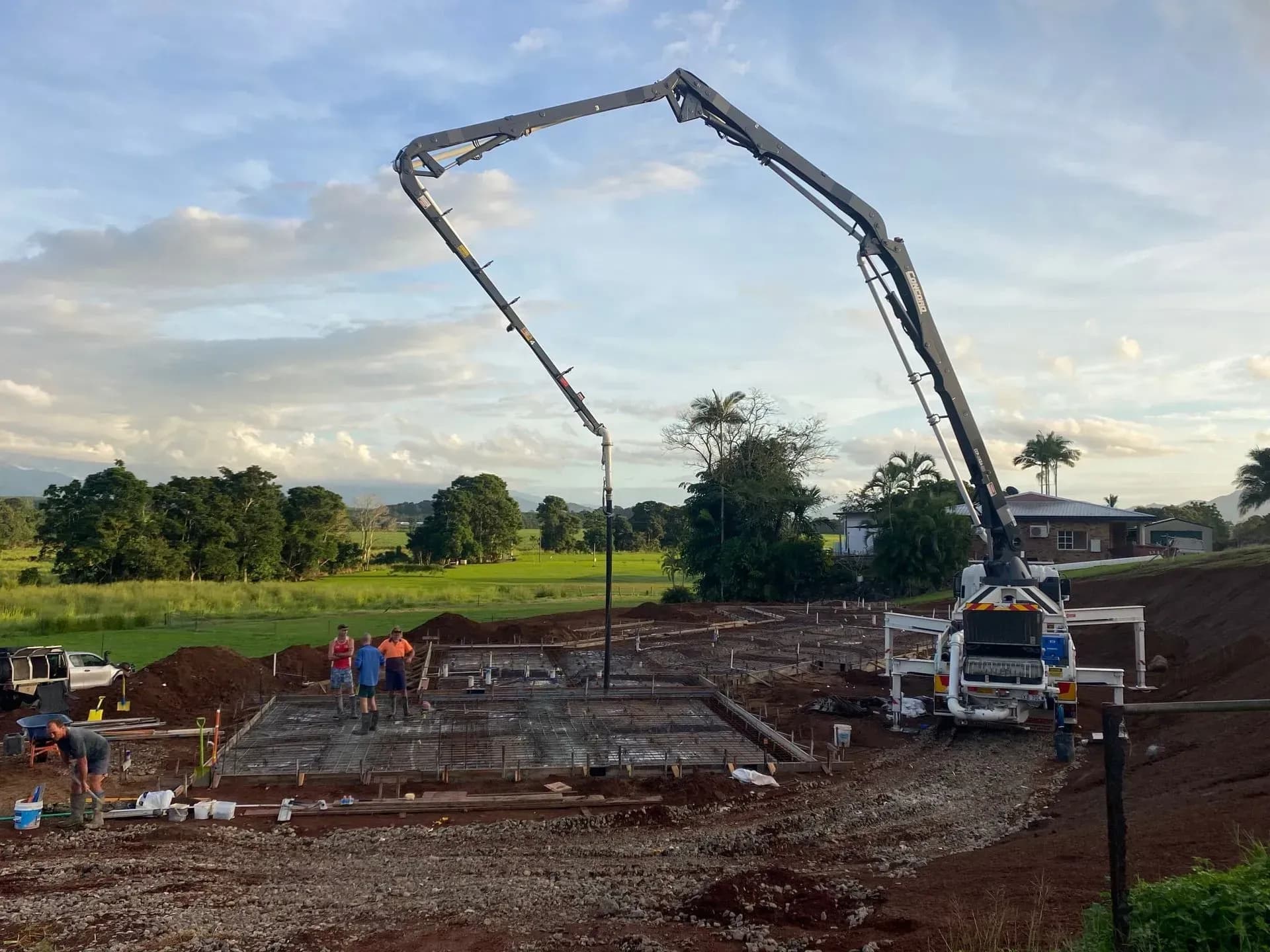
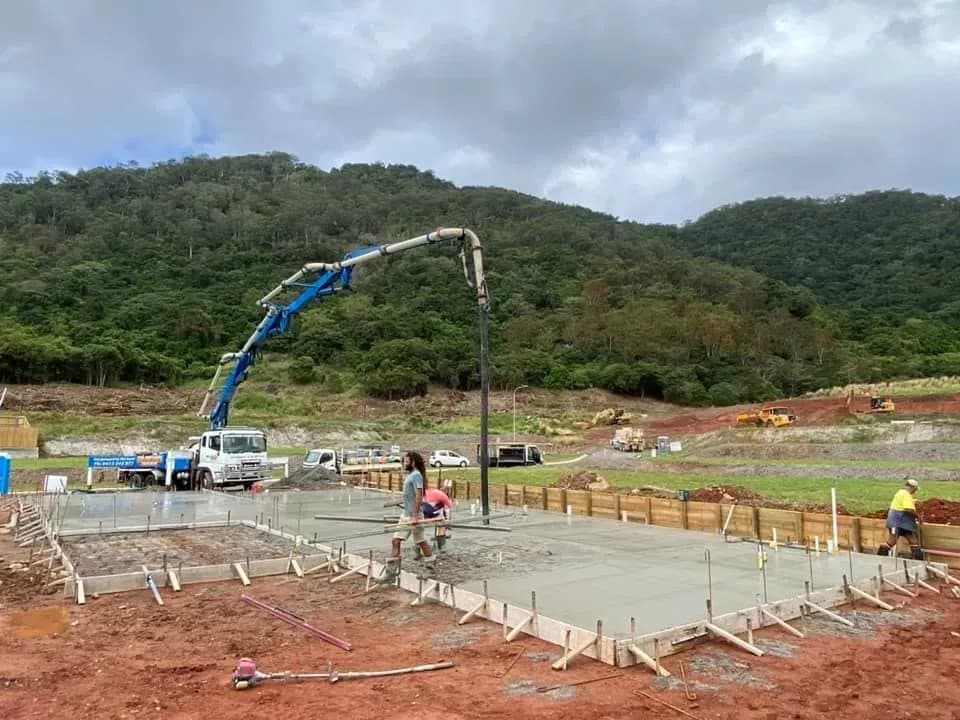
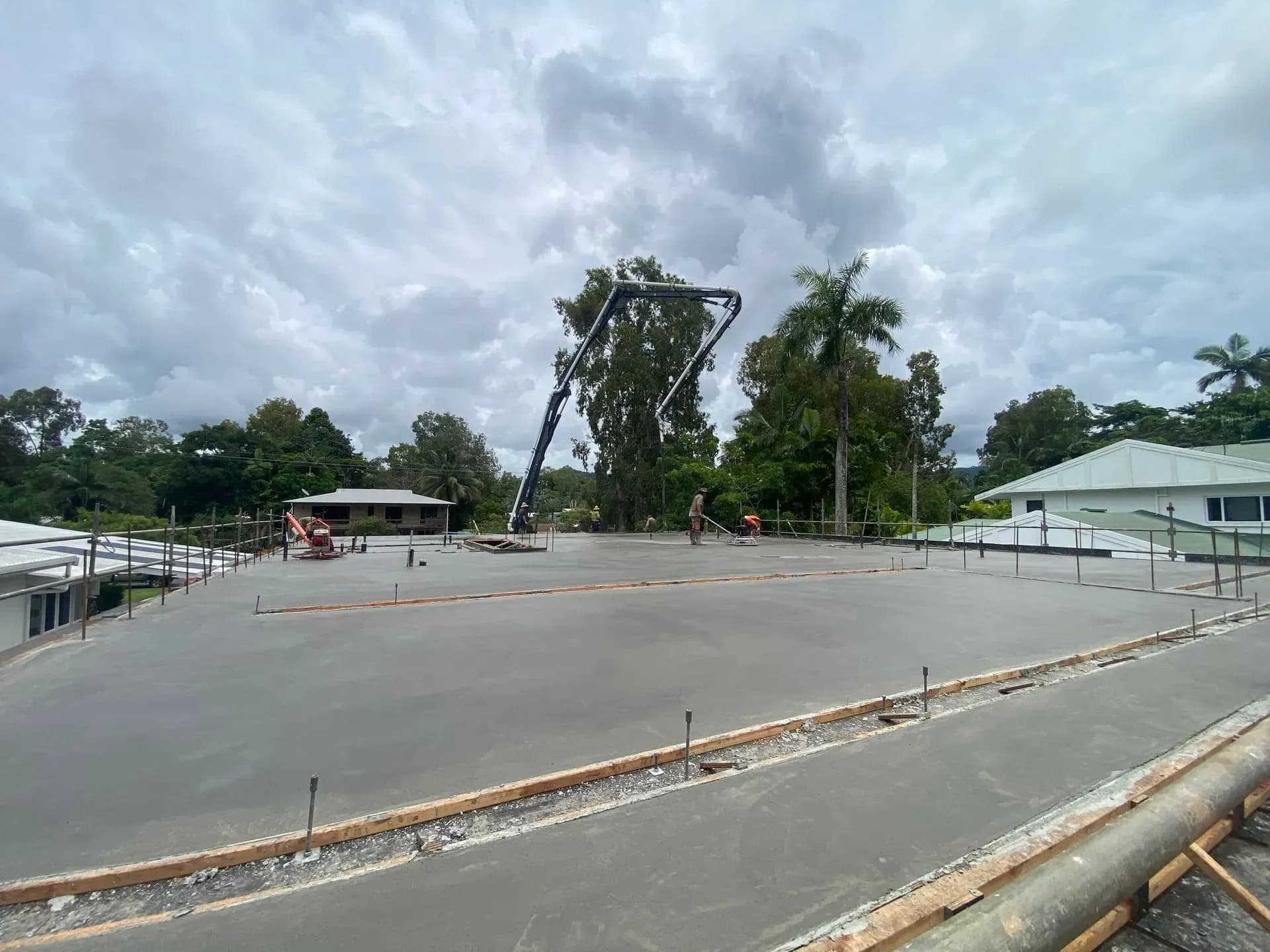
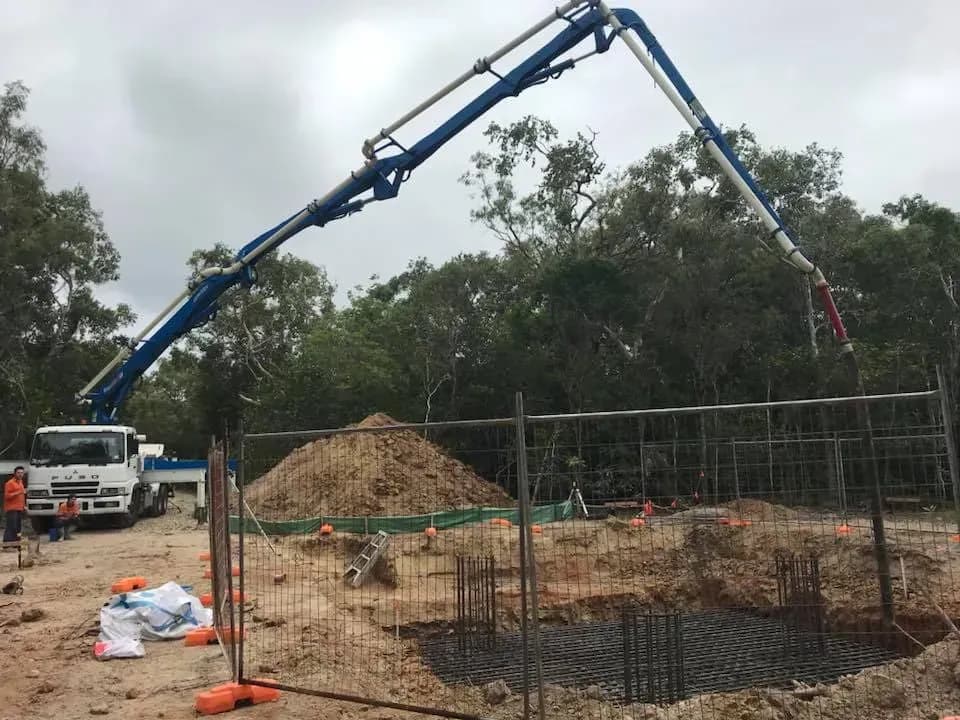
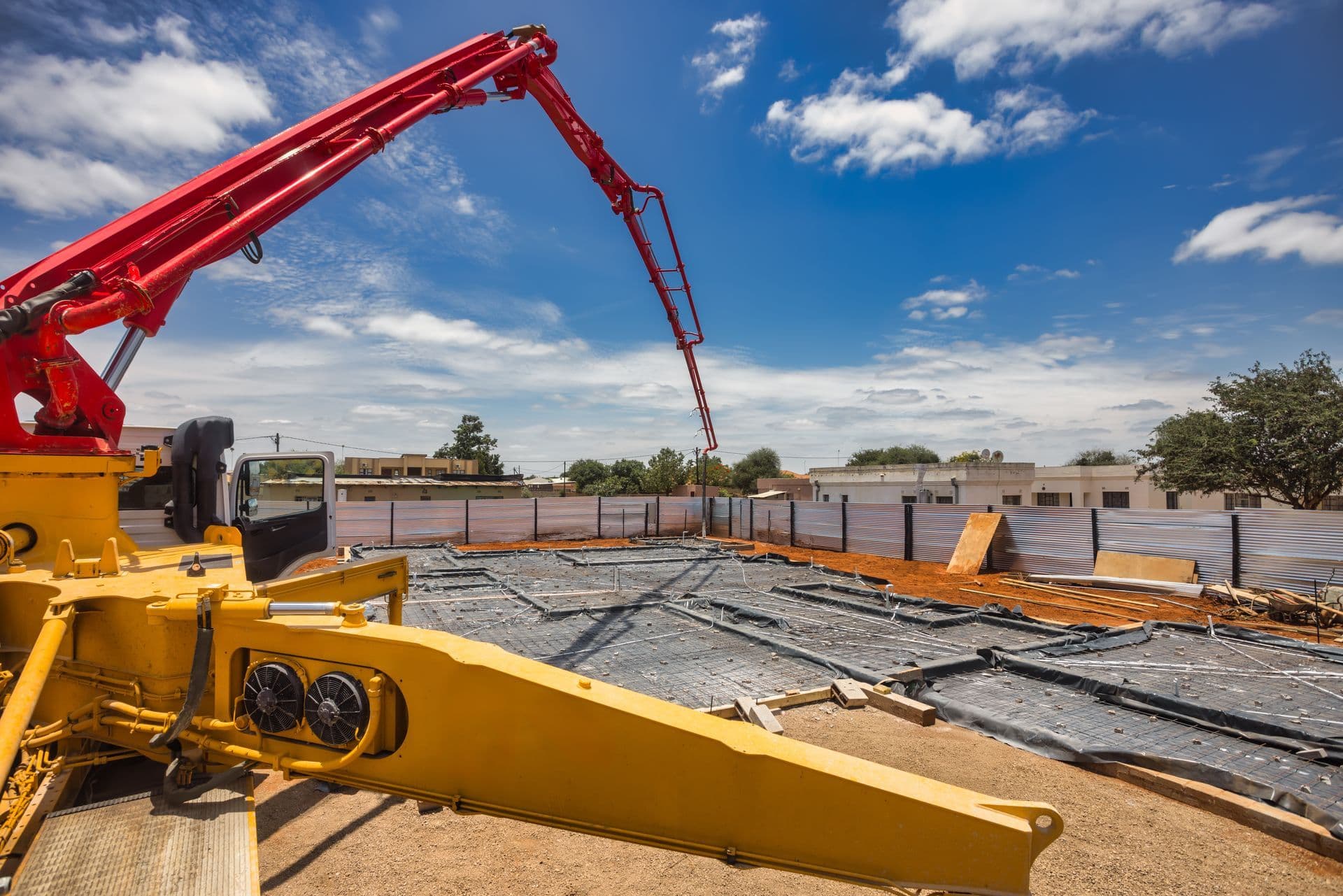
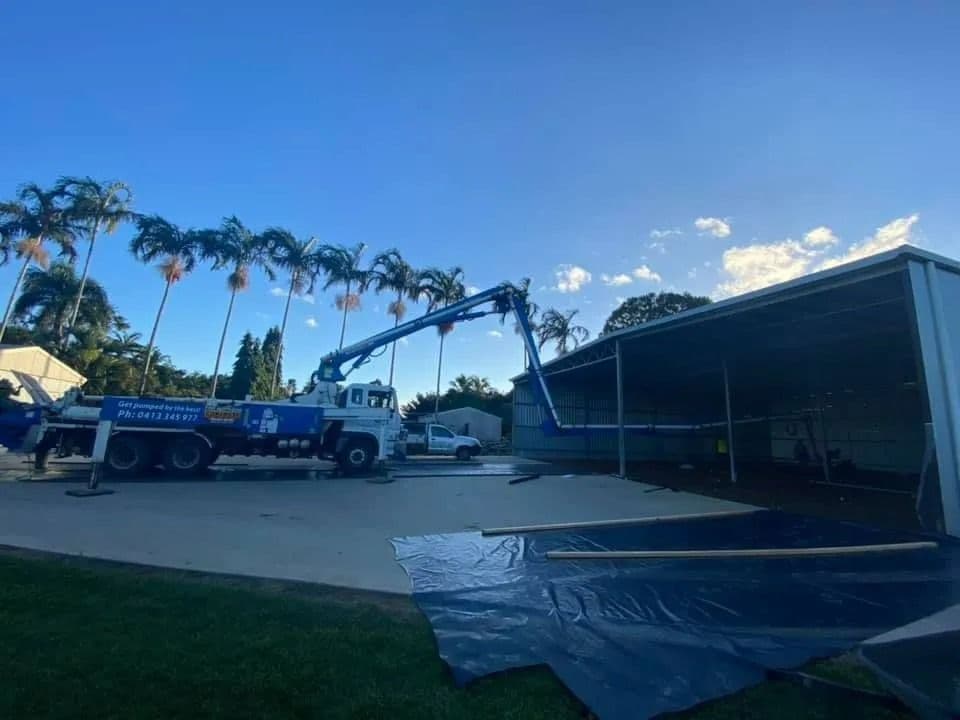
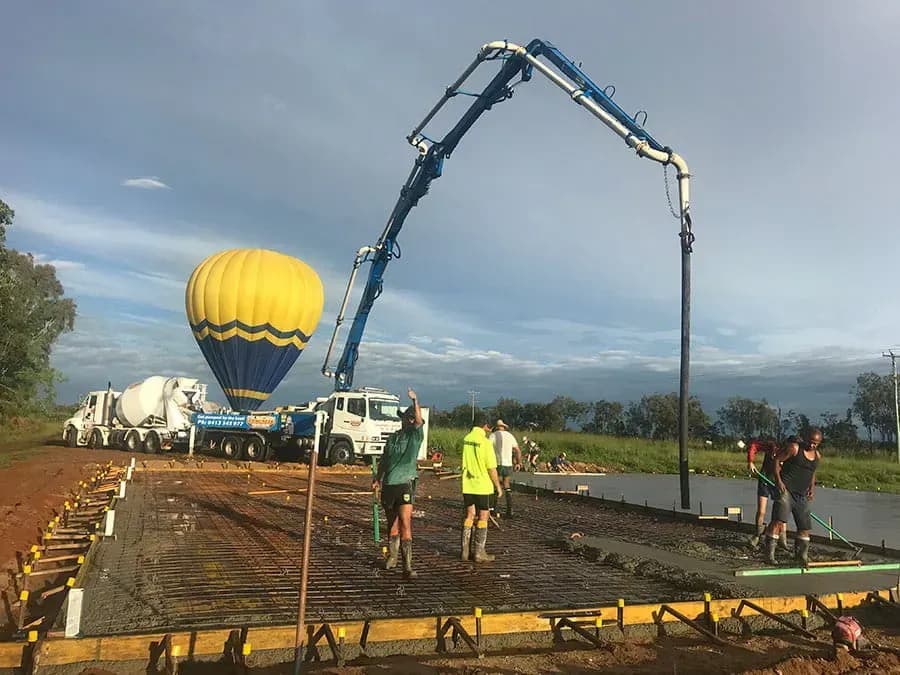
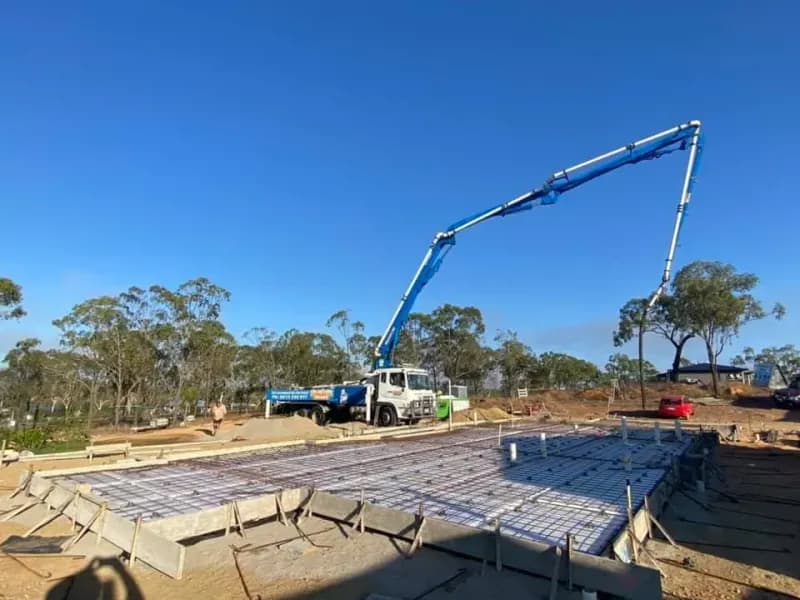
After the valve, concrete leaves the pump through either a ground line or a boom, and that delivery route is the main difference between pump types. The Queensland code describes a line pump as a skid, vehicle or trailer-mounted pump without a boom, with steel pipes or flexible hoses linked together and attached to the pump outlet on the ground. A mobile concrete placing boom carries the pipework on a multi-staged boom on the truck, and the concrete comes out through a rubber hose attached to the end of the boom.
The main parts of a truck-mounted concrete pump and what each does
| Part | What it does | Source |
|---|---|---|
| Hopper and grate | Receives concrete from the agitator truck; the grate keeps hands away from moving parts | WorkSafe QLD code |
| Two material cylinders and pistons | One draws concrete from the hopper while the other pushes it out | SCHWING |
| S-tube or rock valve | Switches the outlet between the two cylinders on every stroke | WorkSafe QLD code, SCHWING |
| Hydraulic system | Drives the pistons and valve; on a truck-mounted pump, from the truck's engine | SCHWING, WorkSafe QLD code |
| Boom and pipework | Carries the concrete through the air on a multi-staged folding arm | WorkSafe QLD code |
| End hose | Rubber hose at the boom tip that places the concrete | WorkSafe QLD code |
| Outriggers | Spread the truck's load onto the ground and stop it tipping | WorkSafe QLD code |
A third arrangement, the satellite placing boom, is fixed to the building itself. The code says the pump feeding it is generally a trailer-mounted pump, typically in the basement. Our line pump vs boom pump guide covers which delivery route suits a given site.
Outriggers: the ground under the truck carries the load
A boom pump needs outriggers because the boom, the concrete inside it and the pumping pulses all load the truck, and the outriggers pass that load into the ground. The Queensland code is blunt about the ground: its bearing capacity has to be greater than the maximum pressure the plant applies, otherwise the plant will sink and/or overturn. Harder ground such as rock withstands higher pressures than softer ground such as dry sand, and on mixed ground the poorer type sets the limit. The code's own worked example shows why timber pads matter:
Worked example from the Concrete Pumping Code of Practice 2019 (Example 1)
| Step | Figure |
|---|---|
| Maximum load on one outrigger leg | 25 tonnes |
| Timbers under the foot | 0.4 m by 0.5 m, an area of 0.2 square metres |
| Pressure on the ground (load divided by area) | 125 tonnes per square metre |
| Code's conclusion | Set up on hard rock unless the area of the timbers is increased |
Outriggers telescope or swing out from the truck, and the code says short legging, running with a leg only partly extended, should be avoided wherever practicable because of the increased risk of overturning. Pads must be clear of excavations and soft or filled ground. Where possible the operator extends the boom over the outriggers before loading it with concrete and watches stability closely when the boom first fills. The code also notes that placing booms can have a greater risk of failure from the cyclic loading of the pulsating pump.
What the mechanism means for your mix and your site
Each part of a concrete pump explains one thing the customer controls before the pump arrives. The checklist below links each part of the machine to the decision that sits with you or your concrete supplier.
- Order a pumpable mix. The Queensland code says a mix that is too stiff cannot be pumped because it will not fill the pumping cylinders and the pumping pressures will be excessive, while a mix that is too wet can segregate. Our pump mix concrete guide explains what to ask for.
- Tell the plant about the pump. Cement Concrete & Aggregates Australia says that when placing by pump, the type of pump and the size and length of line should be specified, because they affect the mix design.
- Allow for priming. The code asks for adequate priming and lubrication of the pipeline before pumping starts, and Boral's concrete guide describes grout, cement and water with perhaps some fine material, as used to prime concrete pumps. Ask your pump company whether you need to order it.
- Keep the trucks coming. The hopper has to stay full and pump flow has to match truck discharge, so space deliveries to suit the pour rate. Long waits between loads and mix faults are among the causes of concrete pump blockages the Queensland code lists.
- Give the truck firm, clear ground. Outrigger pads need ground that can carry the load, clear of trenches and fresh fill. Preparing your site for a concrete pump covers the set-up area.
Line pumps and boom pumps push concrete the same way
Line pumps and boom pumps differ in how the concrete travels after it leaves the pump, not in how it is pushed. Both feed from a hopper, and the code's rules on hopper grates, valve gear and piston type pumps apply to concrete pumping plant generally. SCHWING's TP series trailer pumps, for example, use an XS-ROCK valve. The code also says the pumping system should be sized for the pump capacity so the pressure is enough to move concrete over the full length of the pipeline.
Our own fleet in Far North Queensland runs 31 m, 28 m and 20 m boom pumps, a line pump and a compact high-pressure line pump for hard-to-reach pours. The equipment page lists them, and how far a concrete pump can reach explains what each boom size means in metres on a real site.
Where your part stops: the operator runs the machine
Knowing how a concrete pump works helps you plan the pour, but running the pump, setting the outriggers and dealing with the line are the operator's job. Safe Work Australia says there are multiple ways to pump concrete and all require skills and training, and that anyone who operates a concrete placing boom needs a high risk work licence. The Queensland code sets out how hoppers, valves, lines and outriggers are to be managed on site, and our concrete pump licence guide explains the licence side in more detail.
Next steps
Once the mechanism makes sense, the next decision is which pump suits your site: our line pump vs boom pump guide works through it with five site questions. We pump concrete across Far North Queensland from our Mareeba base, including Cairns and its suburbs. When you know where the job is, what you are pouring and the volume your supplier has quoted, send us the details or call 0413 345 977 and we will come back with a price and the pump we would bring.
Sources
- Concrete Pumping Code of Practice 2019, WorkSafe Queensland. Accessed 30 October 2026.
- Concrete pumping: overview, Safe Work Australia. Accessed 30 October 2026.
- High risk work licence classes, Safe Work Australia. Accessed 30 October 2026.
- ROCK Valve, SCHWING America. Accessed 30 October 2026.
- Generation 3 Pumpkit, SCHWING America. Accessed 30 October 2026.
- Symmetrical Switching, SCHWING America. Accessed 30 October 2026.
- Trailer pumps, SCHWING Stetter. Accessed 30 October 2026.
- Ordering Premixed Concrete, Cement Concrete & Aggregates Australia. Accessed 30 October 2026.
- Australian Concrete Guide (2023), Boral. Accessed 30 October 2026.