In brief
A boom pump's size is roughly its vertical reach, and its horizontal reach is several metres shorter: one manufacturer lists 31.0 m up, 26.3 m out and 23.5 m from the front of the truck for its 31 m boom. Where the truck can set up its outriggers then decides how much of that reach your pour actually gets. A line pump has no boom, so its distance comes down to pump pressure, hose length, bends and the mix.
On this page
Short answer: boom length sets the limit, setup position decides the real reach
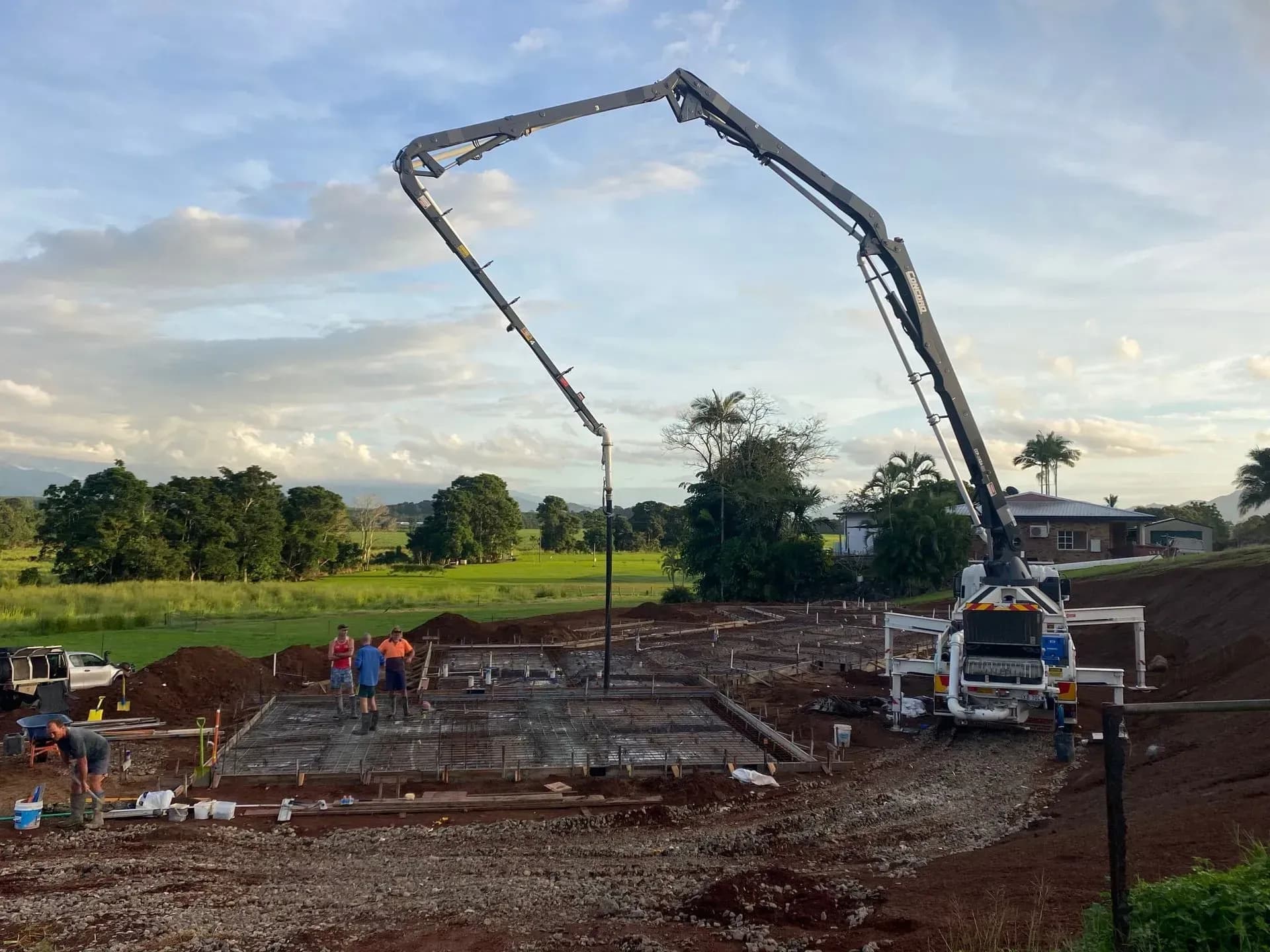
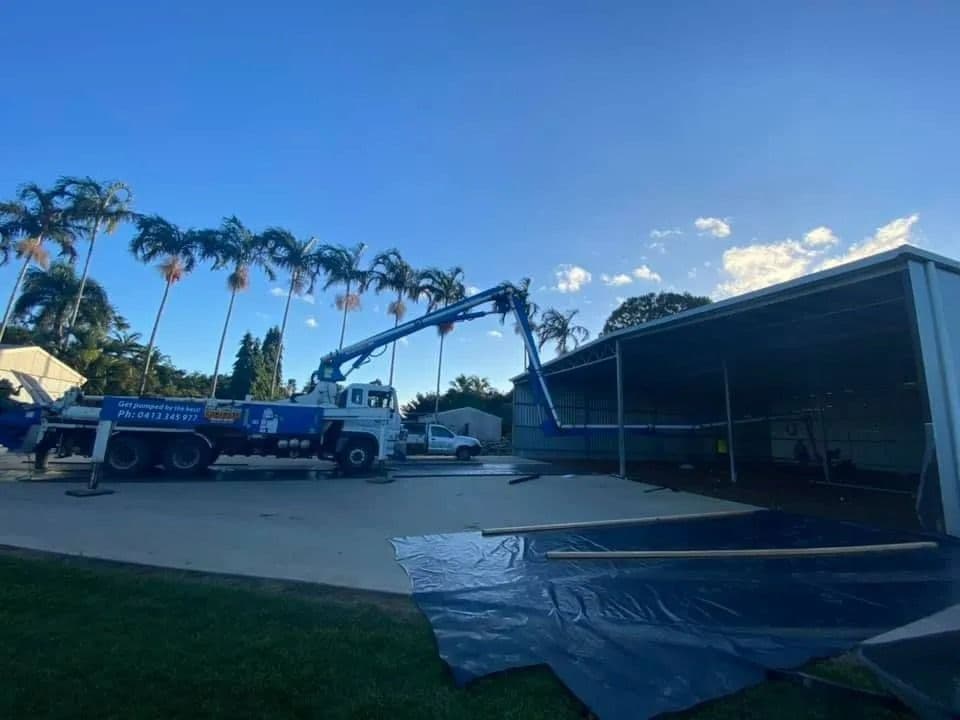
A concrete boom pump reaches about as high as its size name, and less than that sideways. Manufacturer brochures show the pattern clearly: Putzmeister's 31Z-Meter lists a vertical reach of 31.0 m, its 28Z-Meter 27.31 m and its 38Z-5 37.5 m. Each of those booms reaches noticeably less out to the side, and less again when the distance is measured from the front of the truck. The table below sets out the published figures for three boom sizes, so you can compare a size name with the distance it covers on the ground. Makes and models differ, so treat these as examples of how reach is quoted, not as the exact figures for any one truck. The final limit on your job is where the truck can park and set its outriggers, because every metre between that spot and the pour comes off the reach.
Published reach figures for example boom models (Putzmeister brochures, accessed October 2026). Feet and inch figures converted to metres where the brochure gives only feet.
| Boom class | Example model | Vertical reach | Horizontal reach | Net reach (from front of truck) | Reach depth |
|---|---|---|---|---|---|
| 31 m | Putzmeister 31Z-Meter | 31.0 m | 26.3 m | 23.5 m | 19.9 m |
| 28 m | Putzmeister 28Z-Meter | 27.3 m | 23.8 m | 21.1 m | 16.6 m |
| 38 m | Putzmeister 38Z-5 | 37.5 m | 32.8 m | 30.3 m | 25.3 m |
Vertical reach, horizontal reach and depth
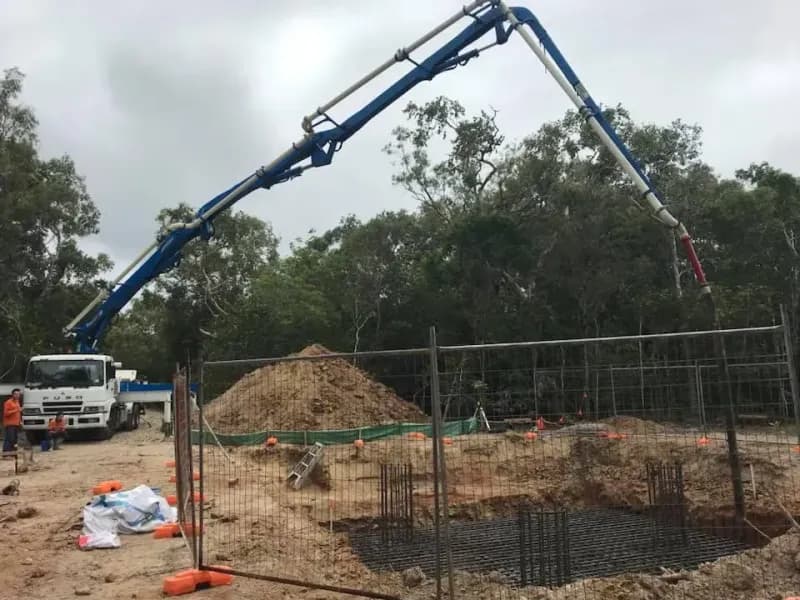
Boom pump reach is quoted three ways: vertical reach is how high the boom tip goes, horizontal reach is how far out it goes, and reach depth is how far it can place concrete below the level the truck stands on. On Putzmeister's 31Z-Meter those figures are 31.0 m, 26.3 m and 19.9 m. On the 28Z-Meter they are 27.3 m, 23.8 m and 16.6 m. The vertical number is the one the size name tracks, which is why a 31 m boom does not put concrete 31 m across a block. Spec sheets also list a separate, shorter figure for reach from the front of the truck, and the 31Z brochure notes that figure applies to the truck it was measured on, so the carrier makes a difference too. For a builder checking a site, horizontal and net reach matter most on flat jobs, vertical reach matters for upper floors and tall block walls, and reach depth matters for pools, basements and pours below the street.
Smaller booms follow the same rule. Putzmeister's BSF 20 data sheet lists a reach height of 19.5 m for its 20 m class M20-4 boom, so a 20 m class boom's sideways reach is likely to be shorter than 20 m.
Why usable reach is shorter than the boom length
Usable boom reach is shorter than the boom length for two reasons: horizontal reach is already shorter than the size name, and the truck can only set up where the ground and surroundings allow. In the published figures above, horizontal reach sits 3.5 to 4.7 m below vertical reach, and net reach from the front of the truck is 7.5 m short of the name on a 31 m boom. Queensland's Concrete Pumping Code of Practice (and Safe Work Australia's national guide) says the setup area should be level, able to support the load and free of obstructions, and on a slope the machine's angle must stay within the manufacturer's limit. SafeWork NSW adds that the pump should be sited so its outriggers can be deployed. So the boom often cannot park where the tape measure says it should.
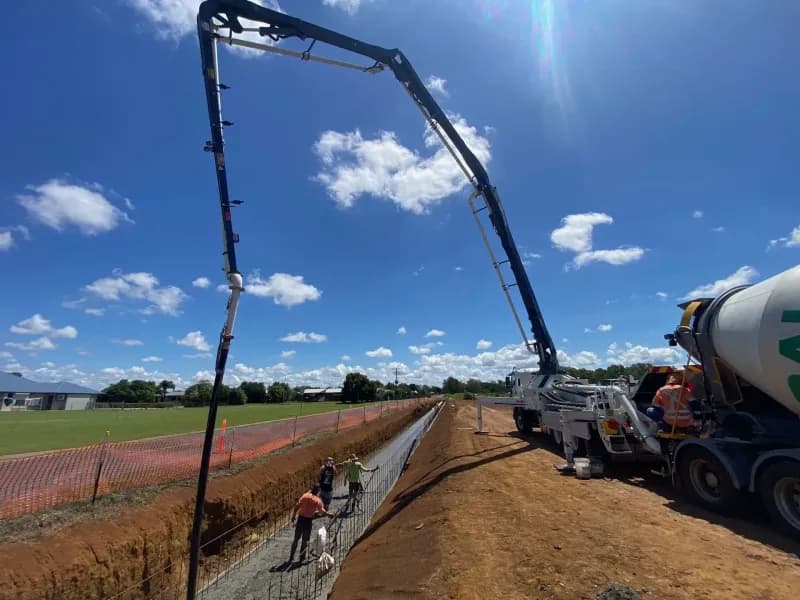
- Outrigger pads need to be clear of excavations, soft or filled ground and other obstacles, so trenches and fresh backfill near the kerb push the truck further away.
- Queensland's code says the pump should not be positioned over or next to backfilled ground, trenches, cellars, basements, pits or soft ground.
- Short legging of the outriggers should be avoided wherever possible because it increases the risk of the pump overturning.
- Some booms offer one-sided support for narrow setups. Putzmeister says this lets the boom's total reach be used on the fully supported side, which means the side you pour on has to suit the setup.
- Booms must not be operated over the top of energised powerlines, and must not be operated in winds above the manufacturer's specification.
How far a line pump can pump
A line pump's reach is not fixed by a boom, so how far it can pump depends on pump pressure, the length of line, the bends in it and the concrete mix. Safe Work Australia describes a line pump as a fixed or mobile pump that pushes concrete through pipes or flexible hoses that run along the ground. Its guide asks whether the system is sized so the pumping pressure is enough to move the concrete over the full length of the pipeline, notes that bends and short bends in the pipe or hose increase pumping pressure, and warns that a mix that is too stiff can't be pumped because the pressures become excessive. So there is no single line pump distance. Measure the route the hose will actually follow rather than a straight line, and note how much it climbs. Send us that route and the mix your supplier is sending so we can match the pump to the job. Our guide to pump mix concrete covers the mix side.
Matching reach to your site
Matching pump reach to a site starts with four measurements taken from where the truck can safely stand. Send these before booking so we can match the pump to the job.
- Distance from the likely setup point to the furthest edge of the pour, along the ground.
- Height of anything the concrete has to go over or up to: a roof line, a block wall, an upper floor.
- Depth below the street, for pools, basements or a site that falls away from the road.
- What is around the setup point: overhead powerlines, trenches, fresh backfill, soft ground, slope and room to spread the outriggers.
Which Far Northern Concrete Pumping pump to ask about, by site type
| Site situation | Pump to ask about |
|---|---|
| Tighter suburban block | 20m boom pump, a compact setup |
| House slab, commercial floor or civil pour | 28m boom pump, the workhorse of the fleet |
| Difficult access or multi-storey work | 31m boom pump, the longest reach in our fleet |
| No room to set up and stabilise a boom | Line pump, with hoses run along the ground |
| Hard-to-reach pour | Compact high-pressure line pump |
What we run in Far North Queensland
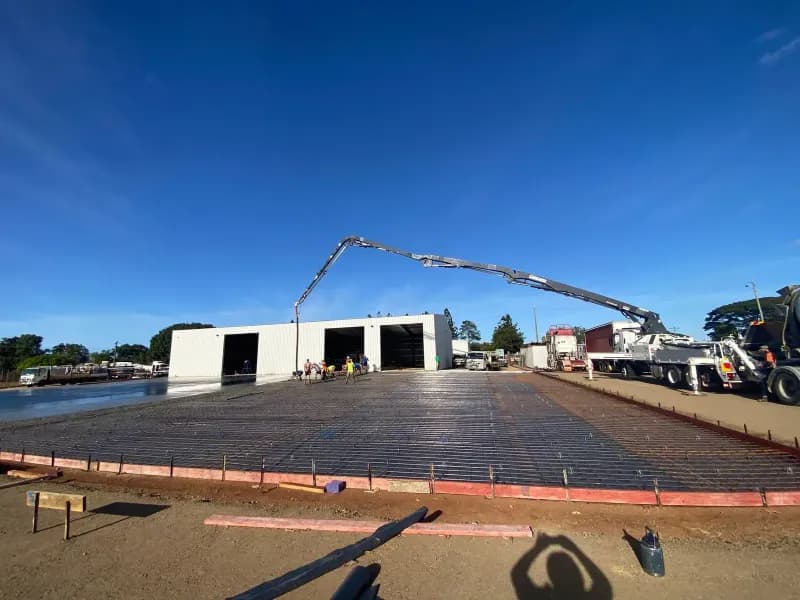
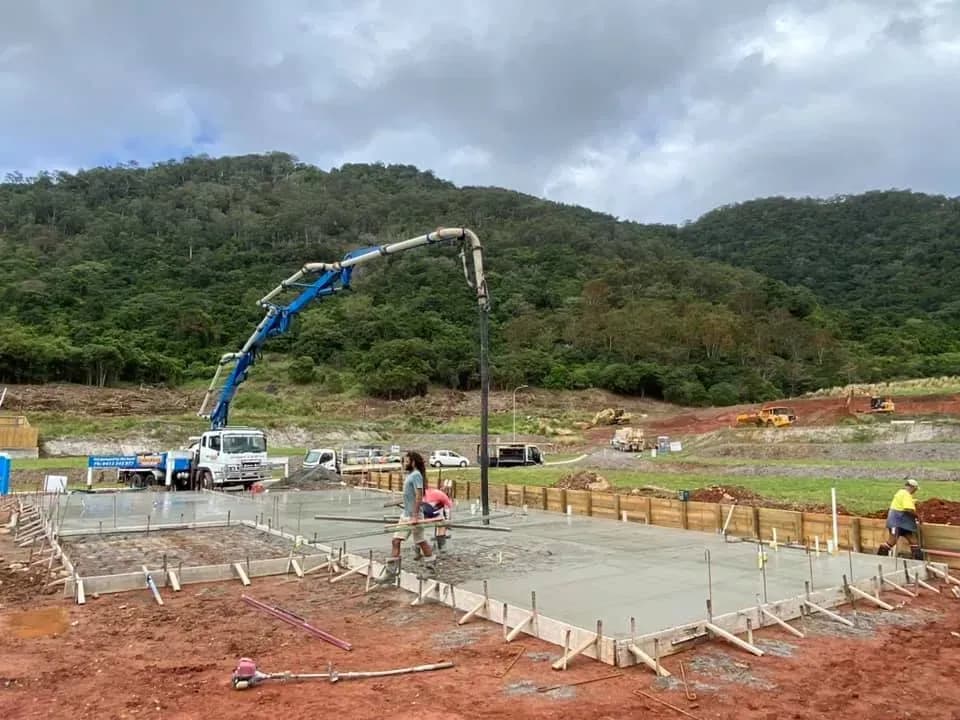
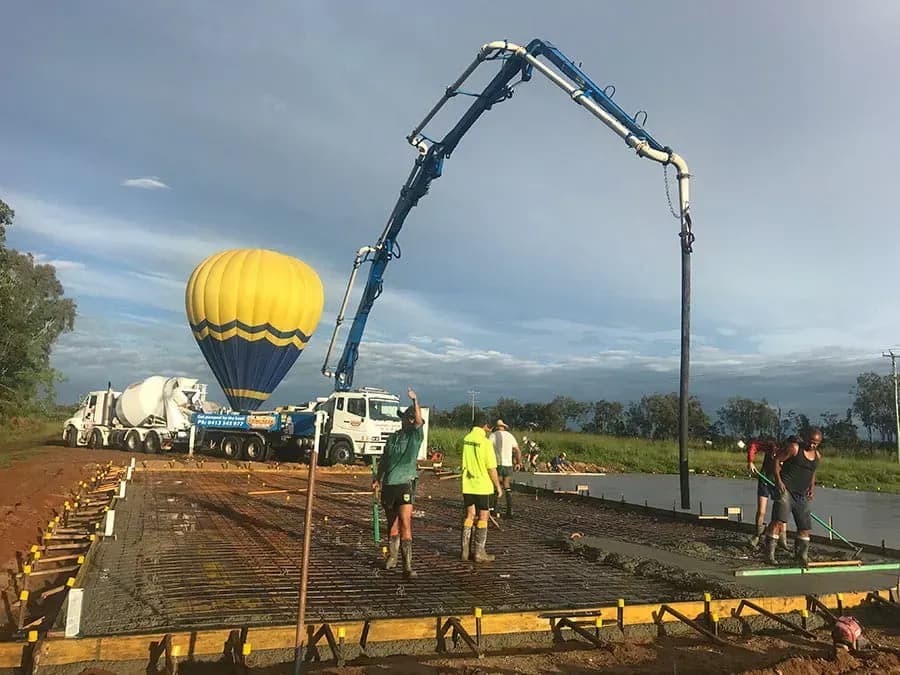
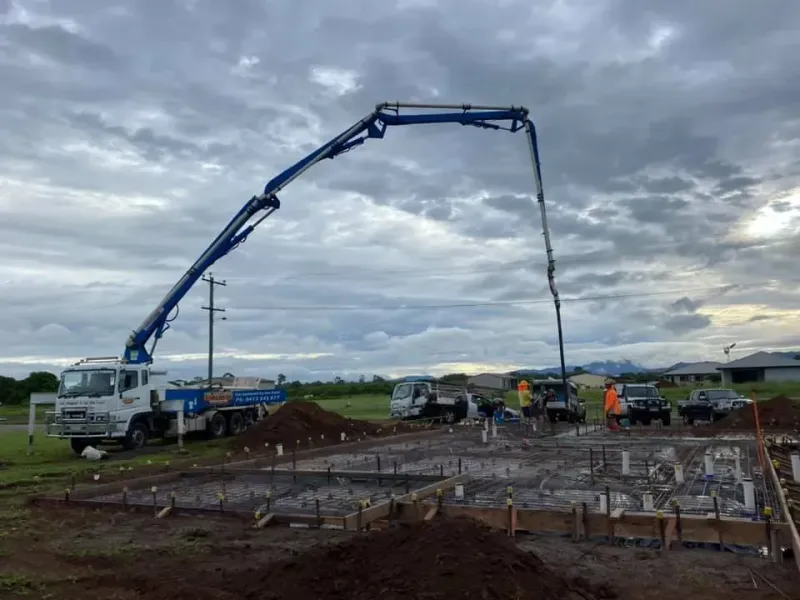
Far Northern Concrete Pumping runs a 31m boom pump, a 28m boom pump, a 20m boom pump, a line pump and a compact high-pressure line pump for hard-to-reach pours. The 31m boom is the longest reach in our fleet, so the 38 m and larger figures you see quoted online describe machines we do not bring. Going by the example figures above, a 31 m class boom covers about 26 m out and about 23.5 m from the front of the truck, before setup limits. A boom pump places concrete through a folding arm mounted on the truck, so it can reach over a house, a fence, established landscaping or a pool. Our operators are fully trained, licensed and insured, and we're high-risk licensed. From Mareeba we cover the Tablelands, Cairns and its suburbs, the coast north to Port Douglas and Cooktown, and south through Innisfail and Tully: see Cairns concrete pumping and concrete pumping on the Tablelands, or our full concrete pumping services.
Next steps
Still deciding between a boom and hoses on the ground? Read line pump vs boom pump for how each one suits different sites. To check your measurements against a specific machine, see our equipment or call 0413 345 977 with the setup point, distance, height and depth of your pour.
Sources
- Concrete Pumping Code of Practice 2019 (amended July 2026), Workplace Health and Safety Queensland. Accessed 4 October 2026.
- 31Z-Meter Truck-Mounted Concrete Boom Pump (brochure), Putzmeister. Accessed 4 October 2026.
- 28Z-Meter Truck-Mounted Concrete Boom Pump (brochure), Putzmeister America. Accessed 4 October 2026.
- 38Z-5-Meter Truck-Mounted Concrete Boom Pump (brochure), Putzmeister. Accessed 4 October 2026.
- Truck-mounted concrete pump BSF 20-4.12 H (data sheet), Putzmeister. Accessed 4 October 2026.
- Guide to managing risk in construction: Concrete pumping, Safe Work Australia. Accessed 4 October 2026.
- Concrete placing equipment operations: Fact sheet, SafeWork NSW. Accessed 4 October 2026.