In brief
You need a concrete pump when the agitator truck cannot safely park close enough for its chute to reach every part of the pour, and barrowing the gap would take longer than the truck can wait. If the truck can drive right up to the formwork on firm, level ground, the chute is usually enough. The five checks below (parking, chute reach, distance, slope and ground) tell you which side of that line your job sits on.
On this page
The quick answer
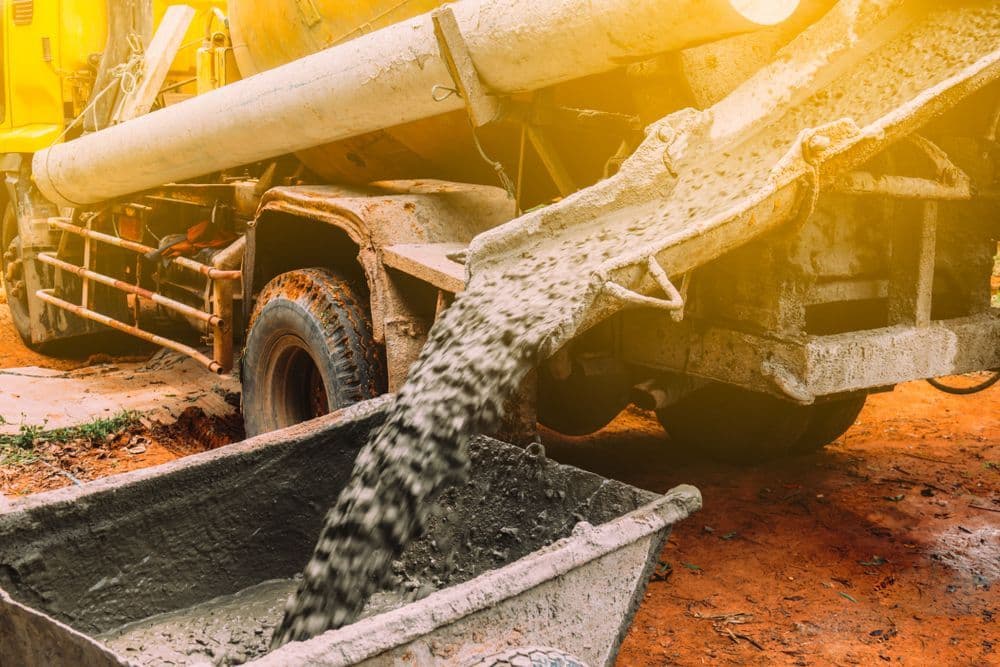
A concrete pump is needed when the concrete truck cannot get its chute over the formwork. Concrete supplier guidance treats chute placement as the simplest option: the concrete goes straight from the truck into its final position. When the truck cannot get close enough, there are two ways to cover the gap: wheelbarrows or a pump. Barrows suit a short, flat run and a small volume. A pump suits everything else, including backyards behind a house, slabs uphill from the street and pours where a loaded truck could damage an existing driveway.
Supplier Concrete Sales puts it plainly: some sites need a concrete pump to move concrete to a place a conventional truck cannot reach. The rest of this guide is a practical test for working out whether yours is one of them, written for house blocks in Cairns, Mareeba and the Tablelands.
When the agitator chute is enough
The agitator chute is enough when the truck can park beside the pour and the furthest corner sits within the chute's length. That length is shorter than most people expect. Concrete Sales lists 2.5 m on its mini mix trucks and 2.8 m on its larger trucks, and Hunter Readymixed lists 3.4 m measured from the centre of its 8 and 10 wheel agitators. Trucks differ between suppliers, so ask yours for the figure before you plan around it.
The chute cannot simply be extended. Holcim, for example, does not allow extra chutes to be added beyond those supplied on the truck. For a new driveway, Holcim suggests setting the forms wide enough for the truck to drive between them, which saves barrowing altogether.
Chute lengths published by Australian concrete suppliers (accessed October 2026)
| Supplier and truck | Chute length | Access width needed |
|---|---|---|
| Concrete Sales mini mix truck | 2.5 m | 2.5 m |
| Concrete Sales maxi and twin steer trucks | 2.8 m | 3.0 m |
| Hunter Readymixed 8 and 10 wheelers | 3.4 m from centre of truck | Not stated (truck width 2.5 m) |
When a pump saves the pour
A pump saves the pour when the truck cannot reach, should not drive in, or cannot wait for barrows. Concrete industry guidance for homeowners raises a question many people skip: will a fully laden truck driven onto the property damage driveways, paths, patios or in-ground services such as stormwater and sewer pipes? If so, the same guidance asks whether a smaller mini mix truck would avoid the problem, or whether it would be better to pump the concrete from the street.
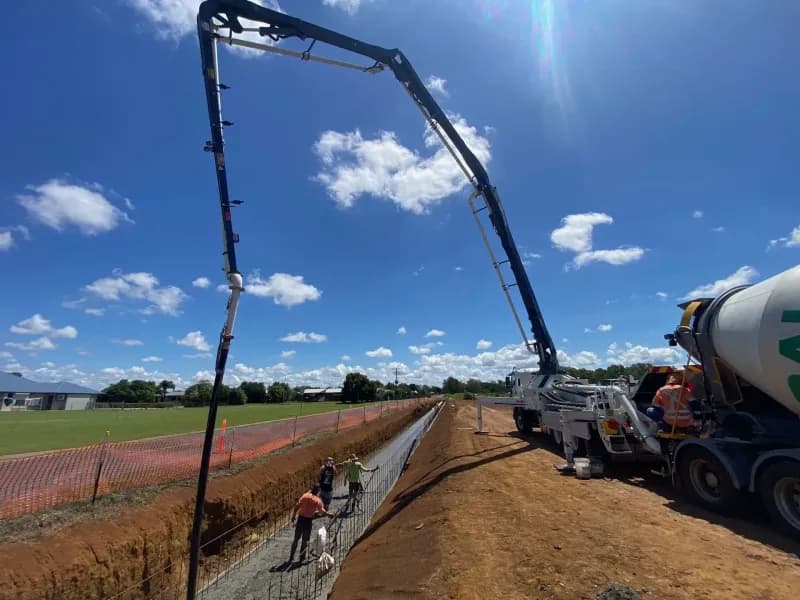
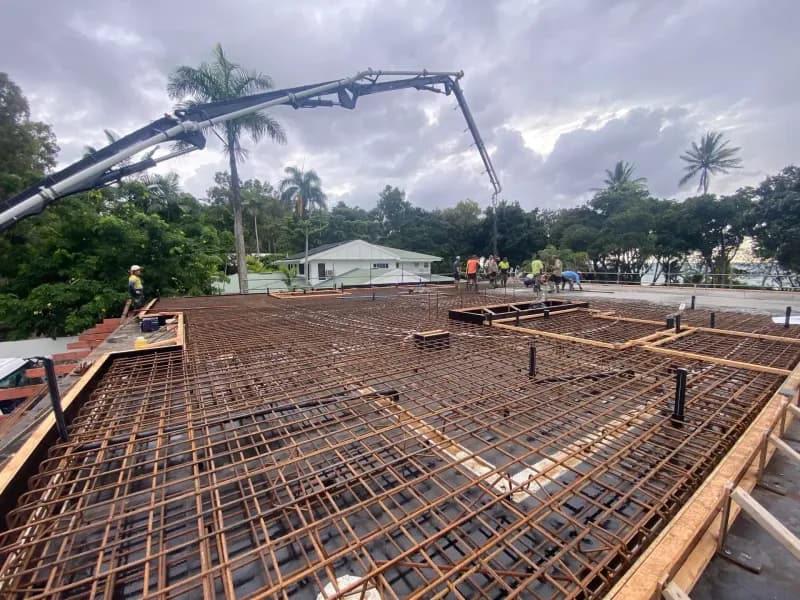
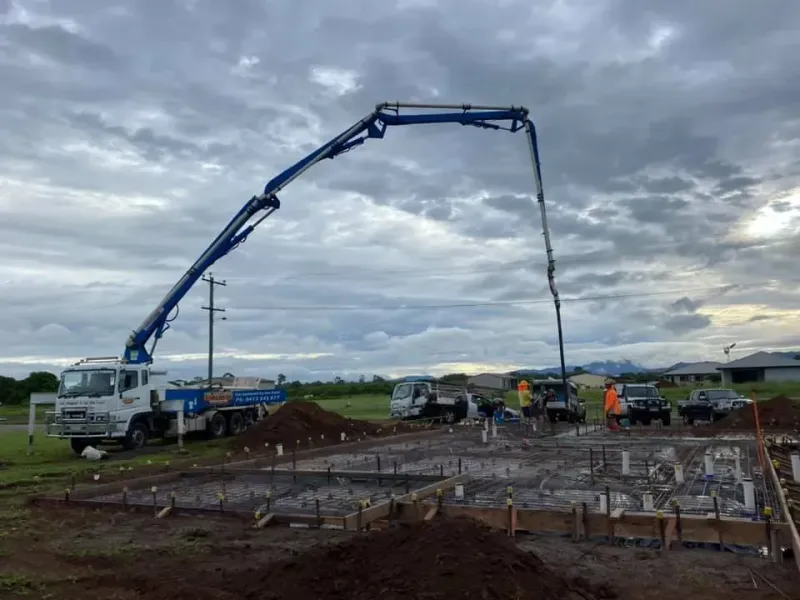
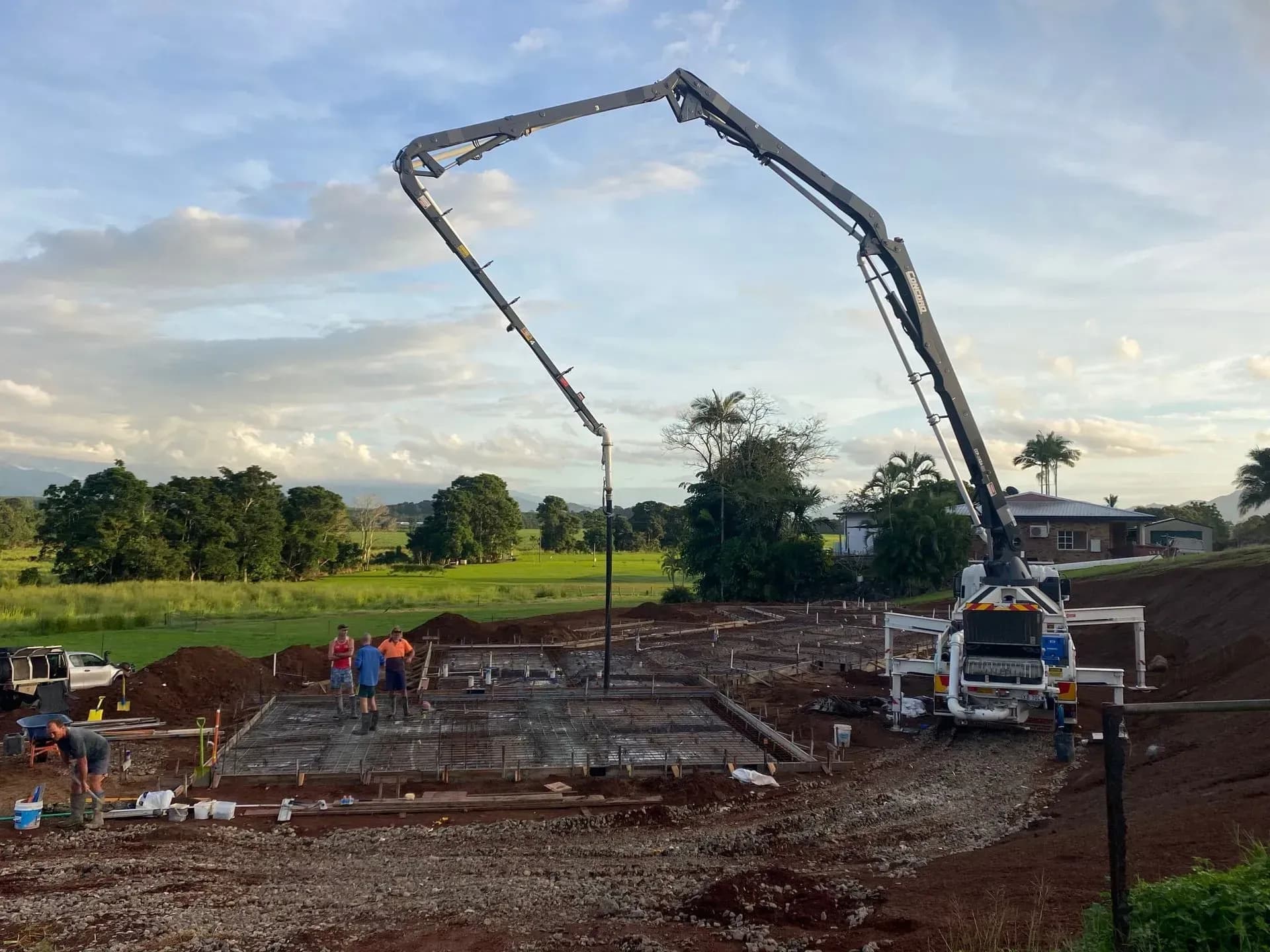
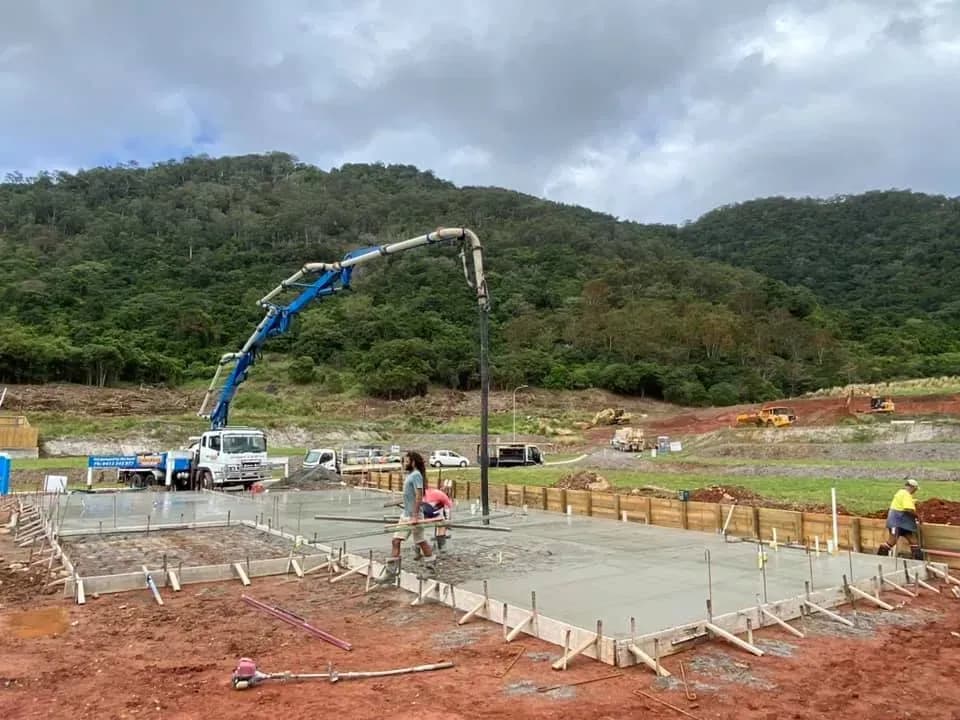
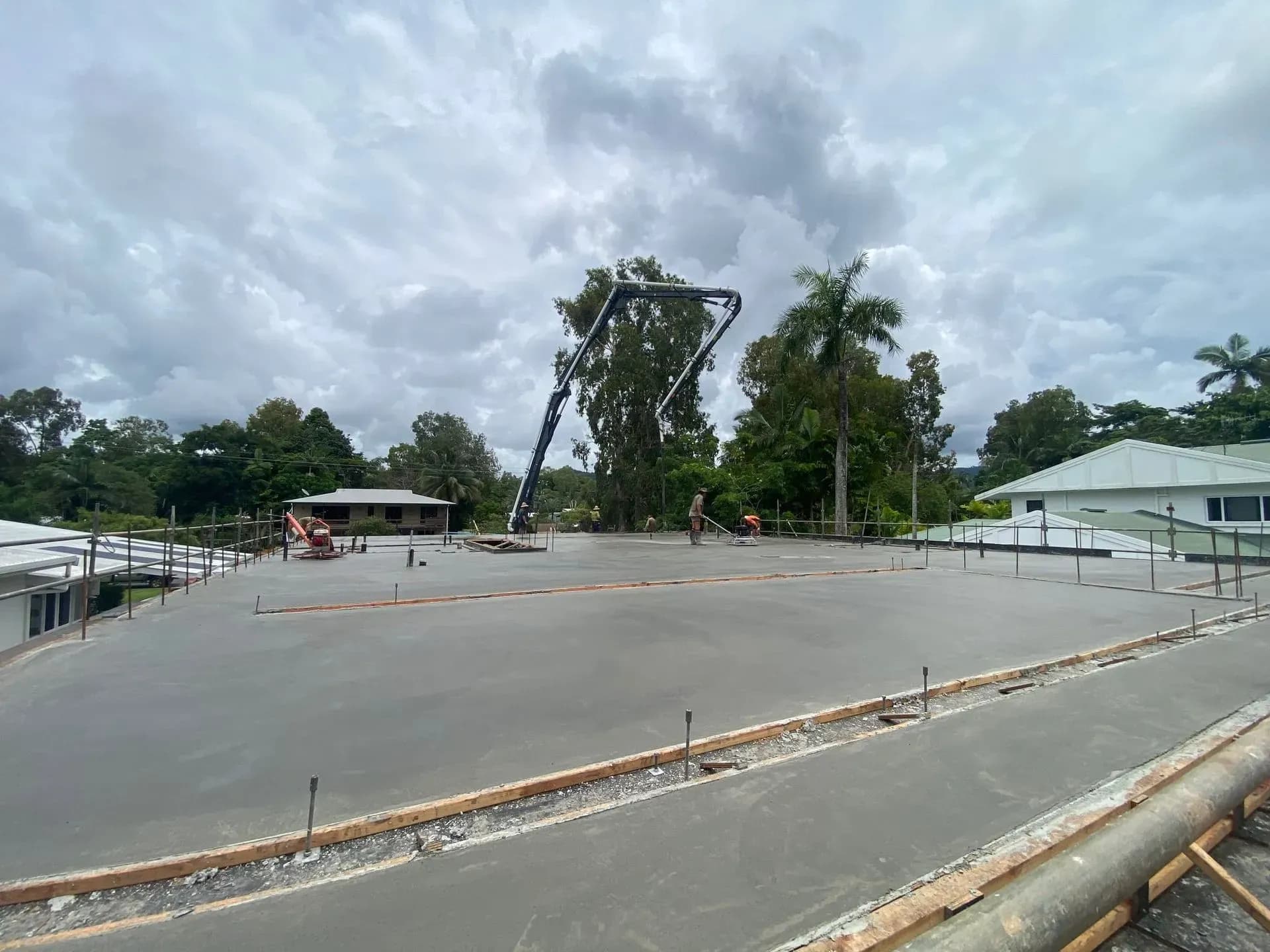
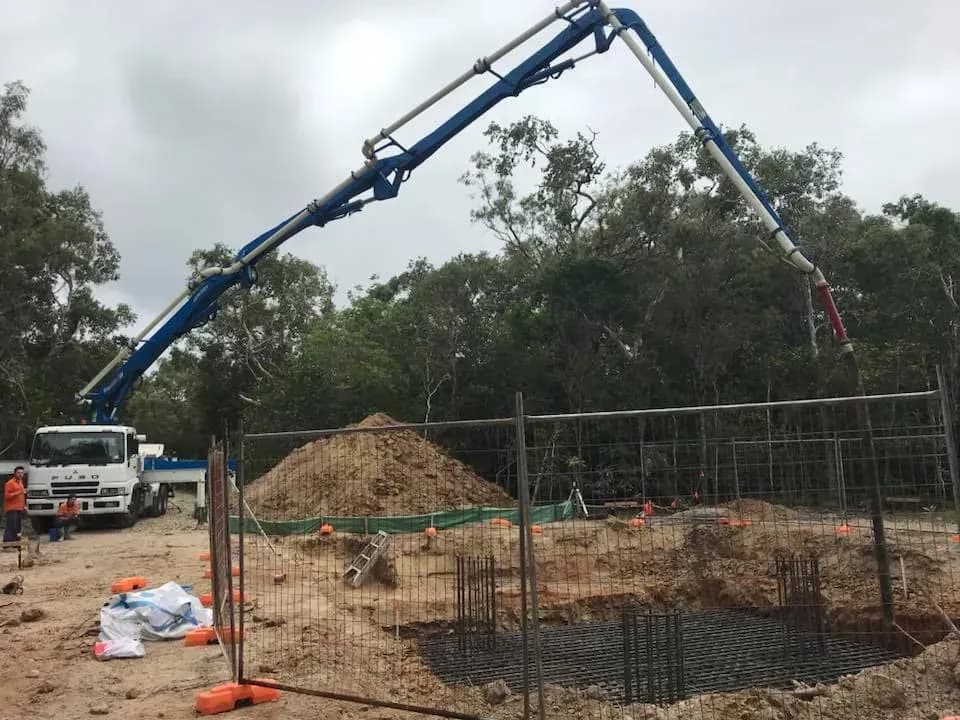
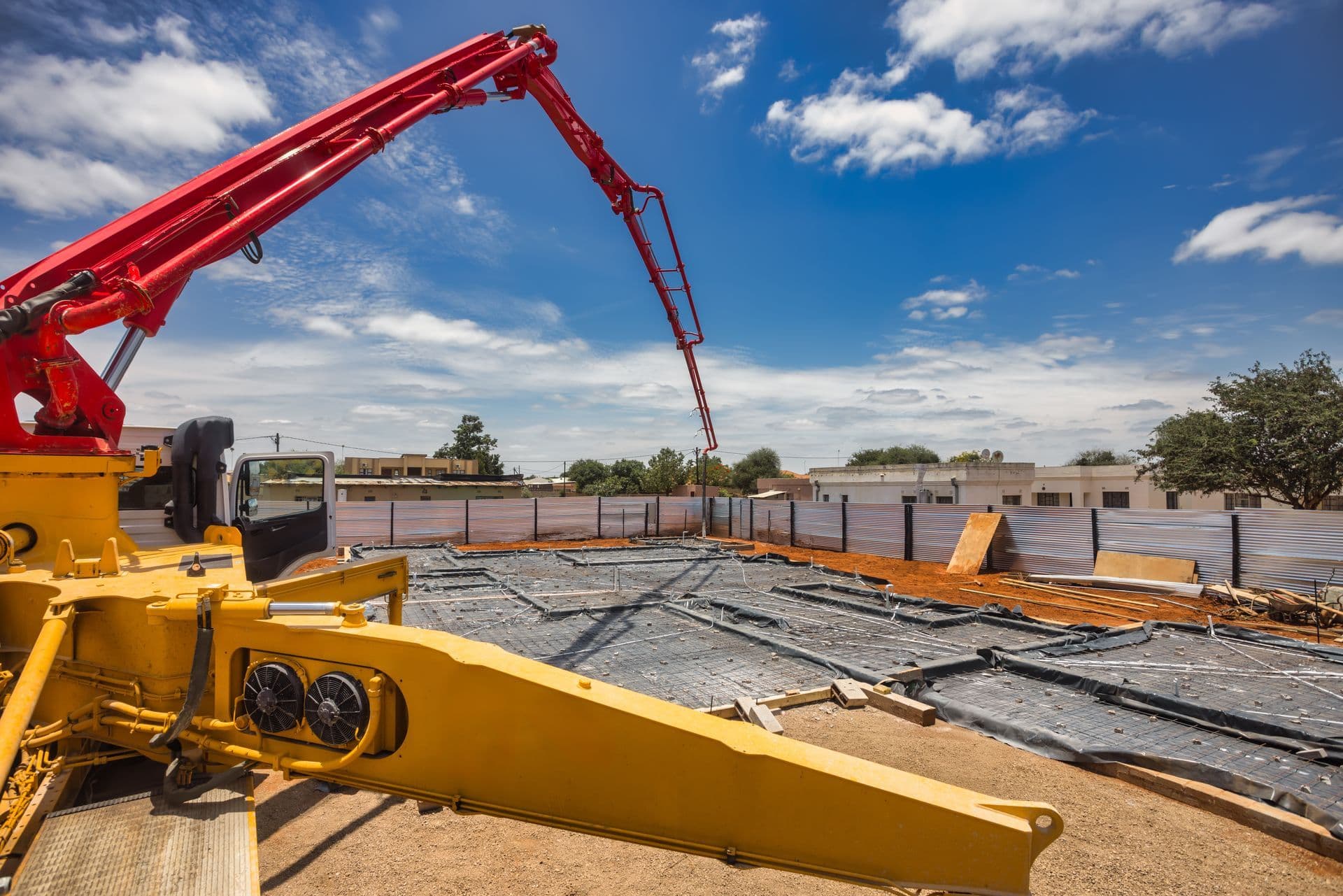
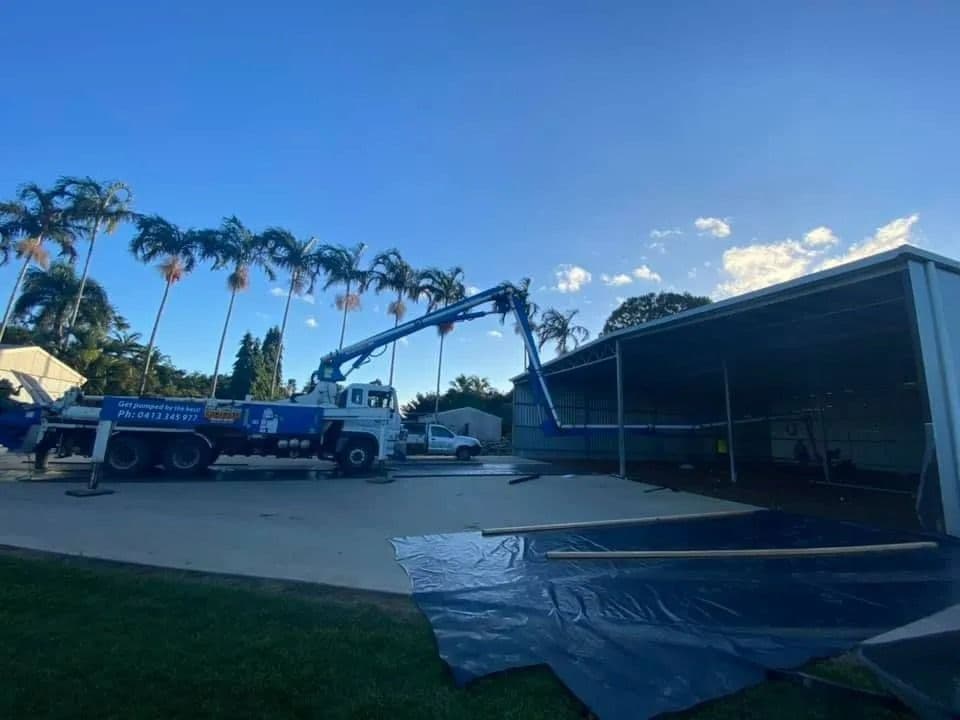
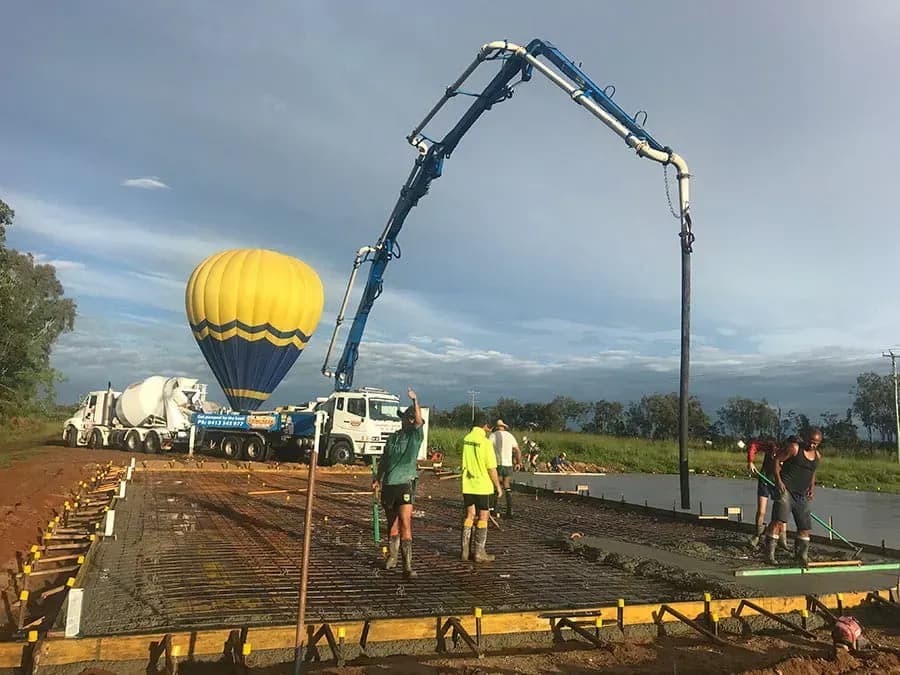
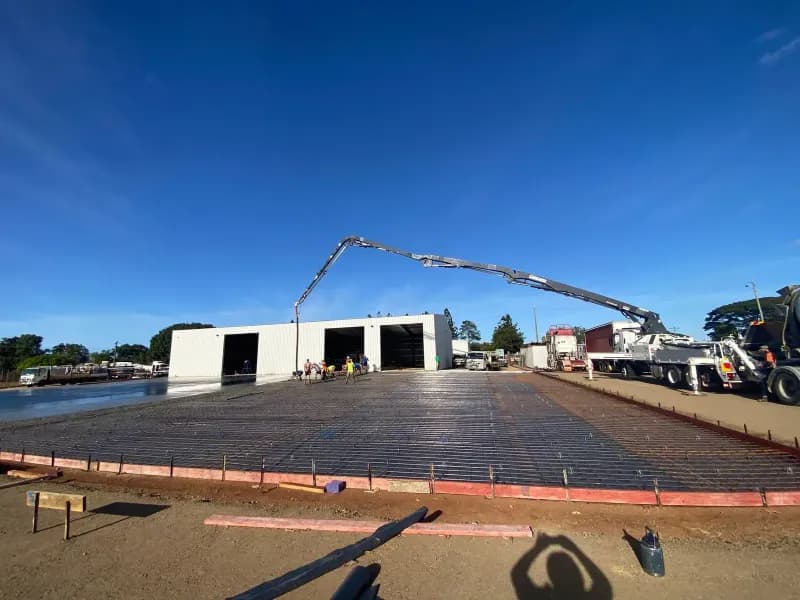
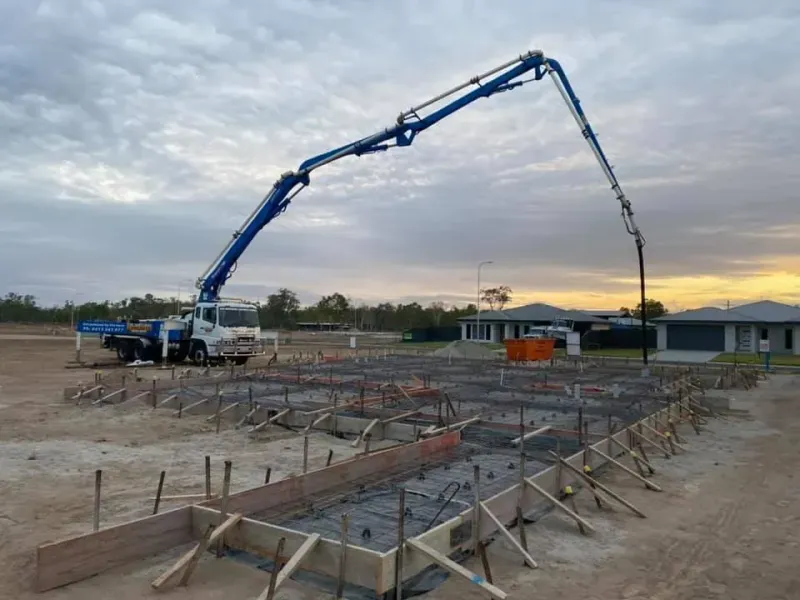
A pump also earns its place when the pour is behind or above something. A boom pump places concrete through a folding arm mounted on the truck, so it can reach over a house, a fence, established landscaping or a pool. A line pump feeds concrete through hoses run along the ground, which suits sites where there is no room to set up and stabilise a boom. Our line pump vs boom pump guide compares the two, and how far a concrete pump can reach covers distance.
The access test: five checks
The access test is five checks you can do with a tape measure before calling anyone. If every check passes, the chute will probably do. If one fails, plan on a pump or a long barrow run. The thresholds below come from Boral's published delivery requirements and Holcim's safe site guidance.
- Parking: is there a safe, legal spot beside the pour, and a way in at least 3 metres wide and clear of materials? Boral asks for extra width where the access road turns. Check for overhead powerlines and overhanging trees as well.
- Chute reach: measure from where the truck would stand to the furthest corner of the formwork. Anything beyond the chute length published by your supplier needs barrows or a pump.
- Distance: if the truck stops short, pace out the gap. Every metre of it is a barrow run or a hose length.
- Slope: Boral's limit for its trucks is 1 in 10, both up the driveway and across it. A steeper block keeps the truck on the street.
- Ground: the surface has to carry the truck. Boral lists 32 tonnes for a 10 wheeler. Look for soft fill, open trenches, dry wells and other hidden weak spots, and keep the truck back from a trench by its depth plus 1 metre.
The ground check matters most in Far North Queensland. The Bureau of Meteorology tracks the northern wet season from October to April, and its 2025 to 2026 summary found rainfall above to very much above average across most of Queensland north of 26 degrees south. Holcim warns that rain on a clay surface can create hazardous, slippery conditions and that uncompacted fill can present a rollover hazard. A dry season pass on a new block can become a fail after a week of storms, so re-run the ground check the day before the pour. Our guide to pouring concrete in the rain covers the rest.
Pump vs barrows: time, labour and finish
Barrowing works on small, flat runs, but the numbers grow quickly. One cubic metre of concrete is 1,000 litres and weighs about 2,400 kg. A conventional 50 litre wheelbarrow takes 20 trips to move it, at about 120 kg a load. Industry guidance recommends half filling each barrow, which doubles that to 40 trips per cubic metre. A 4 cubic metre shed slab is therefore 80 full loads, or 160 half loads, pushed over planks.
Time is the other limit. The supplier allows a set time to empty the truck, so a barrow crew has to be sized to finish inside it, and waiting time can be charged. Our 90 minute rule guide explains the clock on the concrete itself.
Chute, barrows or pump: how the three methods compare
| Method | Suits | Main limit |
|---|---|---|
| Agitator chute | Truck parks beside the pour on firm, level ground | Chute length, about 2.5 to 3.4 m by supplier (some measured from the truck's centre) |
| Wheelbarrows | Small volume, short and flat run, enough helpers | 20 full trips per cubic metre, and the truck's unloading time |
| Line pump | Tight side access, backyards, no room for a boom | Hoses run along the ground from the pump to the pour |
| Boom pump | Pours behind a house, fence or pool | Needs reasonably level, solid ground to set up |
Small jobs and the compact line pump
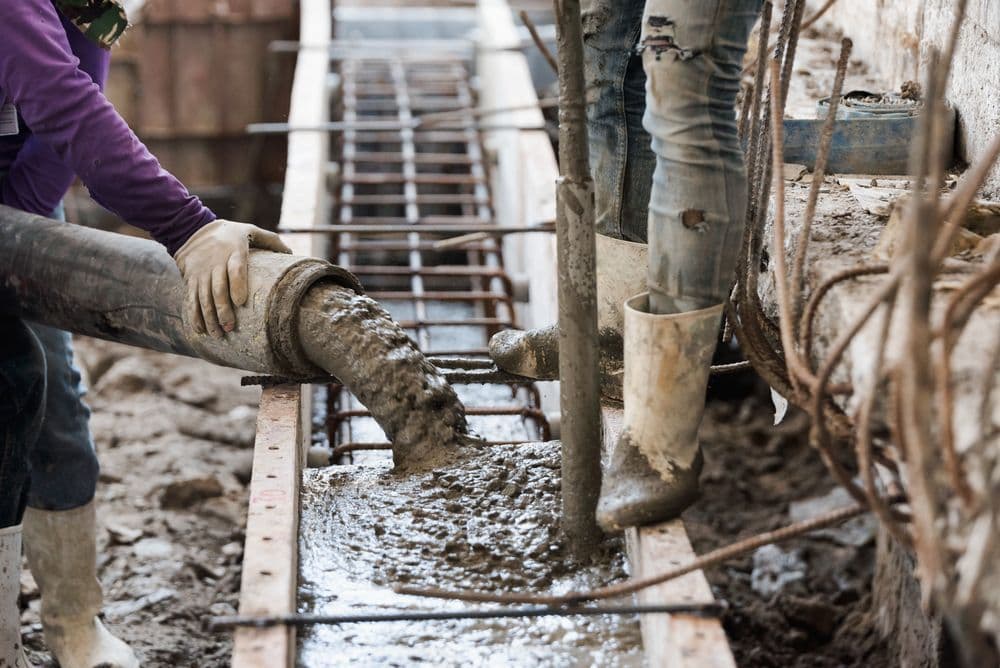
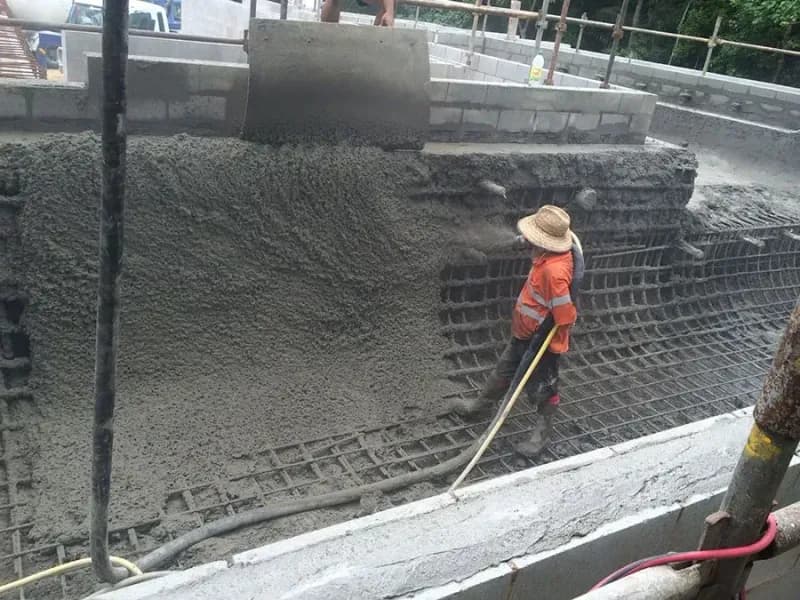
Small jobs can still need a pump when access is the problem rather than volume. A path along the side of a house, a pool surround behind a fence or a footing under a verandah may be too far for a chute and too fiddly for barrows. A line pump uses a trailer or truck mounted pump with flexible hoses, so it can follow a narrow side passage where a truck never fits.
Far Northern Concrete Pumping runs a compact high-pressure line pump for hard-to-reach pours, alongside a line pump and 20m, 28m and 31m boom pumps (see our equipment). If your site has tight spaces or obstacles such as trees, fences or buildings, tell us when you book so we bring the right machine. What pumping costs depends on the pump required, the volume being placed and how long we are on site, which is why the access test helps us quote.
Next steps
Run the five checks, note the volume from your plans (our concrete calculator guide helps), then compare costs in our concrete pump hire cost guide. When you are ready, our residential concrete pumping page covers driveways, house slabs and pool surrounds, or see all concrete pumping services and call 0413 345 977.
Sources
- Concrete Delivery Requirements 2024, Boral. Accessed 4 October 2026.
- 2.04A Safe Site Delivery, Holcim Australia. Accessed 4 October 2026.
- Home renovator's step by step guide to laying concrete, Holcim Australia. Accessed 4 October 2026.
- 5 Essential Things You Need to Know When Ordering Premixed Concrete, Holcim Australia. Accessed 4 October 2026.
- Ordering Premixed Concrete, Hunter Readymixed Concrete. Accessed 4 October 2026.
- Meet The Fleet, Hunter Readymixed Concrete. Accessed 4 October 2026.
- Truck Fleet, Concrete Sales. Accessed 4 October 2026.
- Australia's 2025 to 2026 northern wet season, Bureau of Meteorology. Accessed 4 October 2026.
- Concrete pumping: Overview, Safe Work Australia. Accessed 4 October 2026.