In brief
Choose a line pump when the pour sits at or near ground level and a hose can be laid along the ground to it from where the truck parks. Choose a boom pump when the pour is high, behind a building or large enough that reach and speed matter, and the truck has firm, level ground for its outriggers. Five questions about your site settle it: where the truck can park, how far, how high, how much and what the ground is like.
On this page
The short answer: line pump for small, reachable pours; boom pump for height, distance and volume
A line pump suits pours that a hose can reach along the ground, and a boom pump suits pours that are high, hidden behind something or big enough that reach and speed decide the day. Our equipment page sums up the split: boom pumps are ideal for large-scale or high-reach projects, while line pumps use flexible hoses for tight spaces and suit residential or small commercial jobs.
Safe Work Australia adds a safety angle to the line pump vs boom pump choice. Its concrete pumping guide says that where a site has overhead structures or limited space, a line pump may be substituted for a concrete placing boom to reduce risk. The five questions further down turn the rest of the choice into a test you can run on your own site.
What a line pump is and how it works
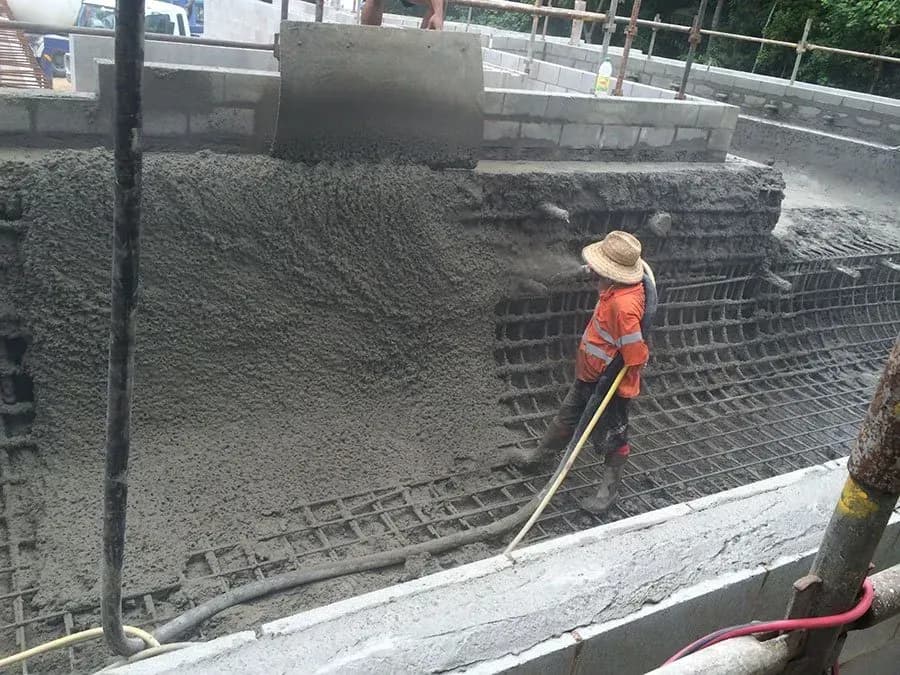
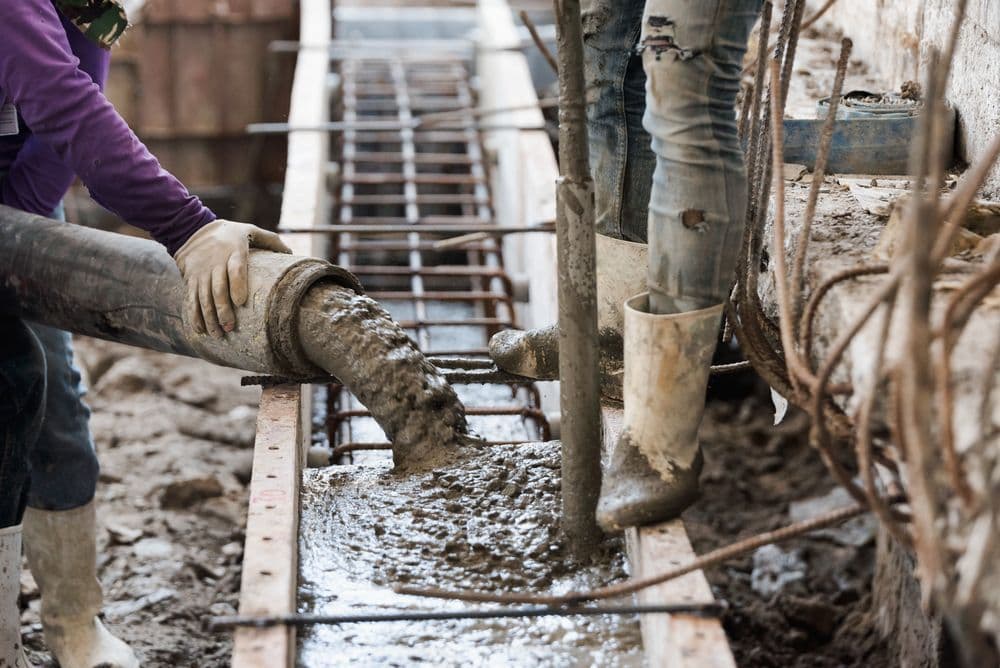
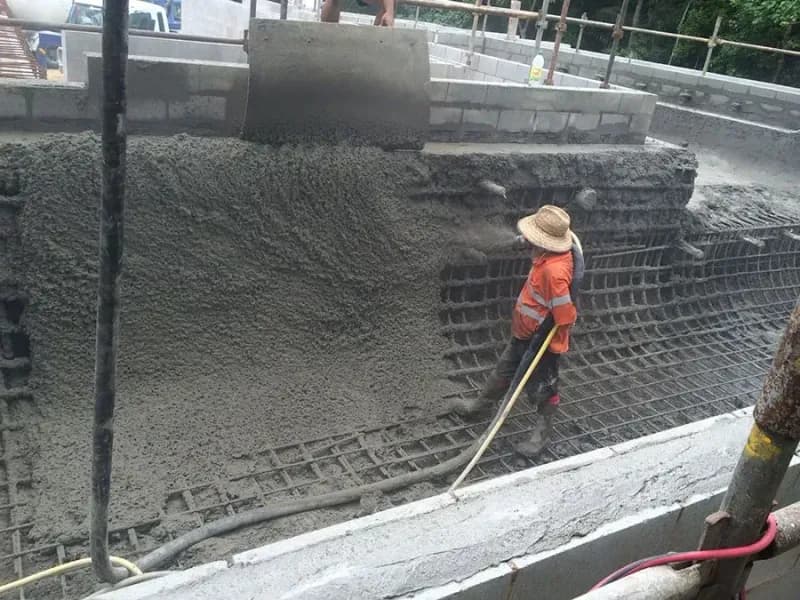
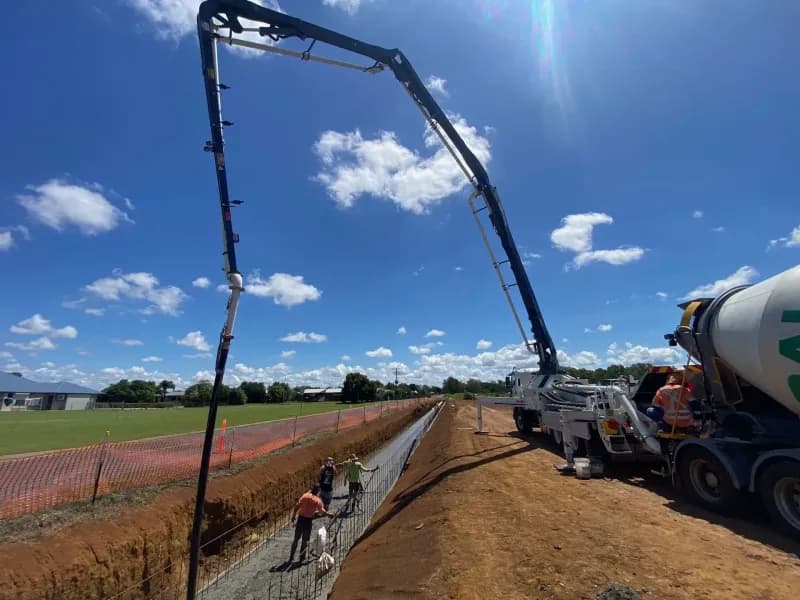
A line pump is a trailer or truck-mounted concrete pump that pushes concrete through pipes and flexible hoses laid along the ground to the pour. Safe Work Australia defines it as a fixed or mobile pump that pumps concrete through pipes and/or flexible hoses that run along the ground. The agitator truck discharges into the pump's hopper, the pump pushes the concrete into the line, and a line hand at the far end directs the hose into the formwork. The line can follow a side path or pass through a gate where no truck will fit.
The trade-off with a line pump is the line itself. It has to be laid out, secured and cleaned after the pour, and Safe Work Australia's checklist asks whether flexible hoses on line pumps are secured in place when priming or clearing blockages. Blockages can come from mix design deficiencies, pipeline and joint deficiencies or worn pump parts, which is why the mix matters as well as the machine. Our guide to pump mix concrete explains what to order.
What a boom pump is and how it works
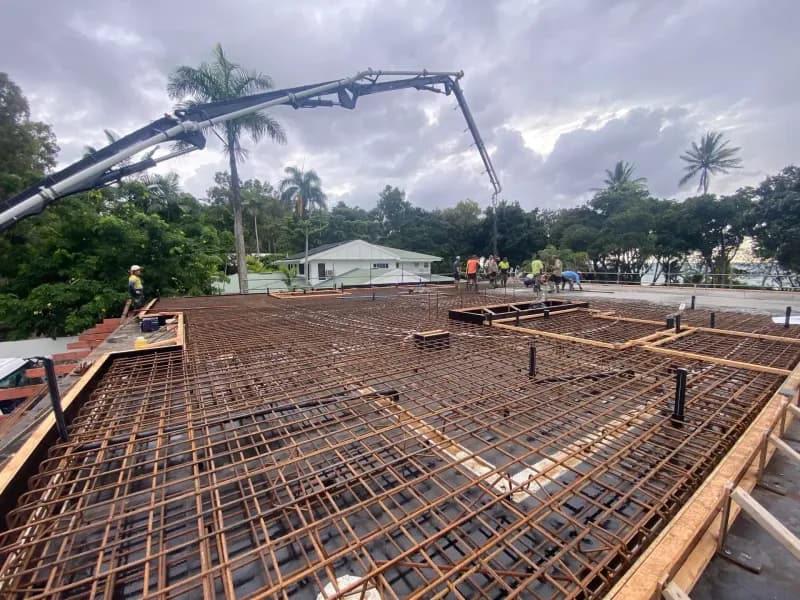
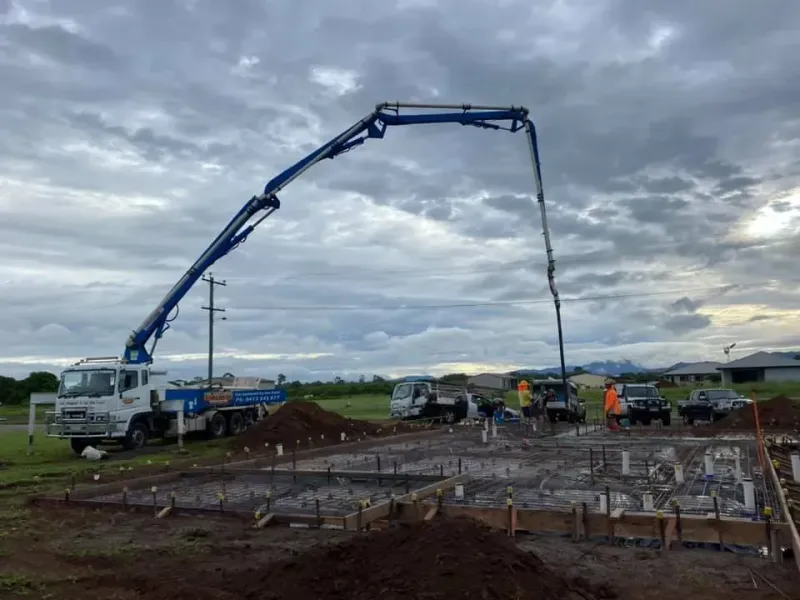
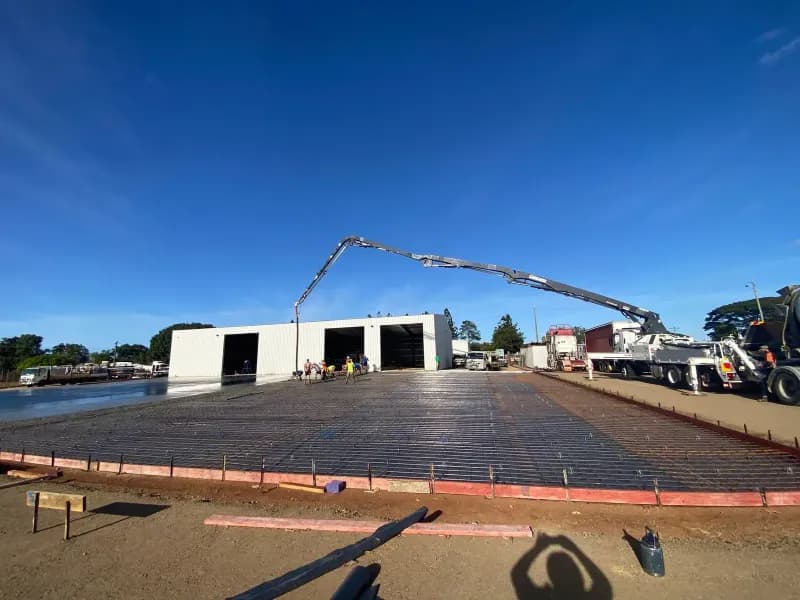
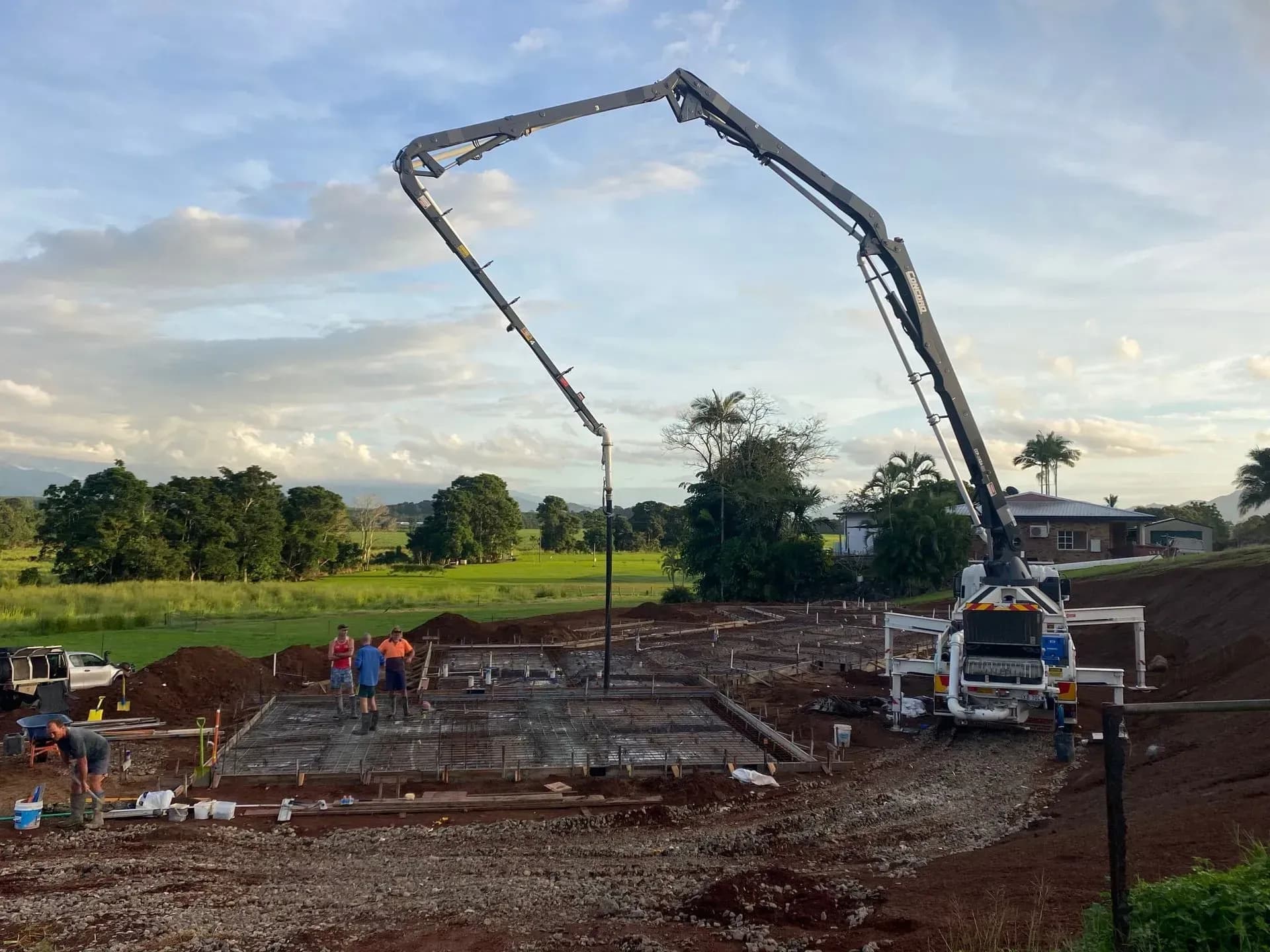
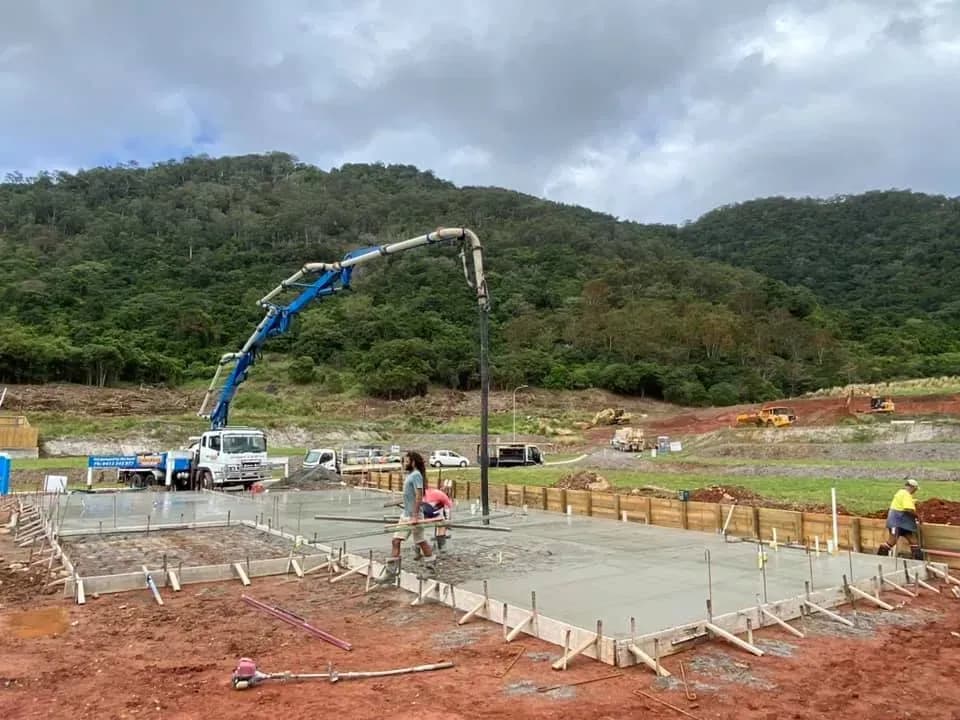
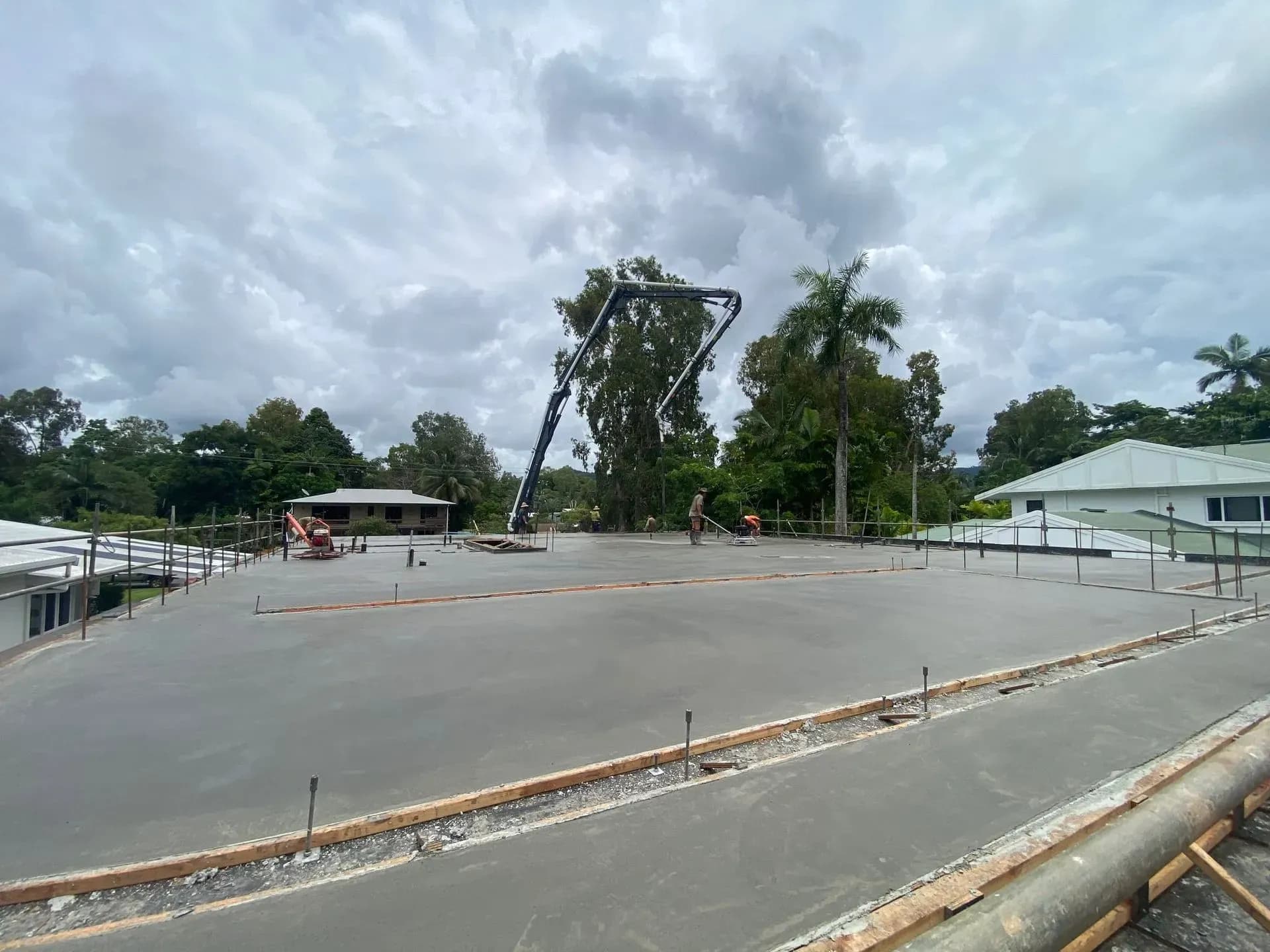
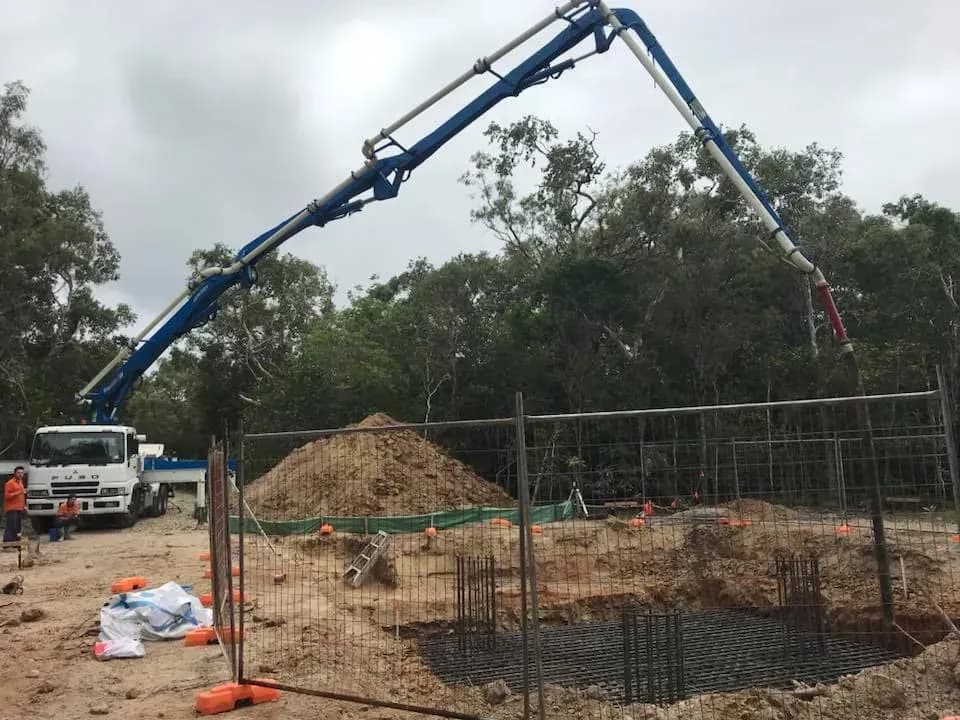
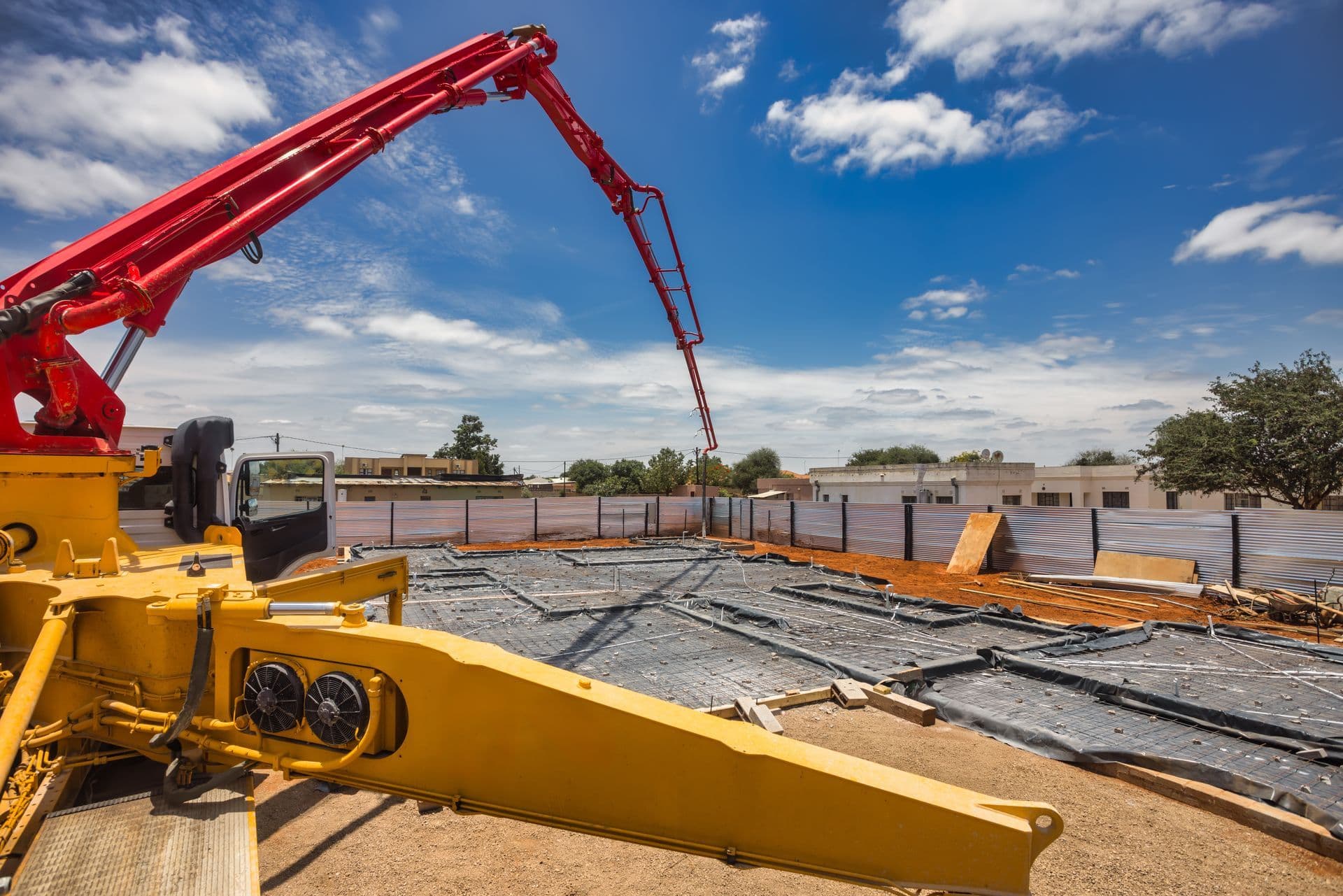
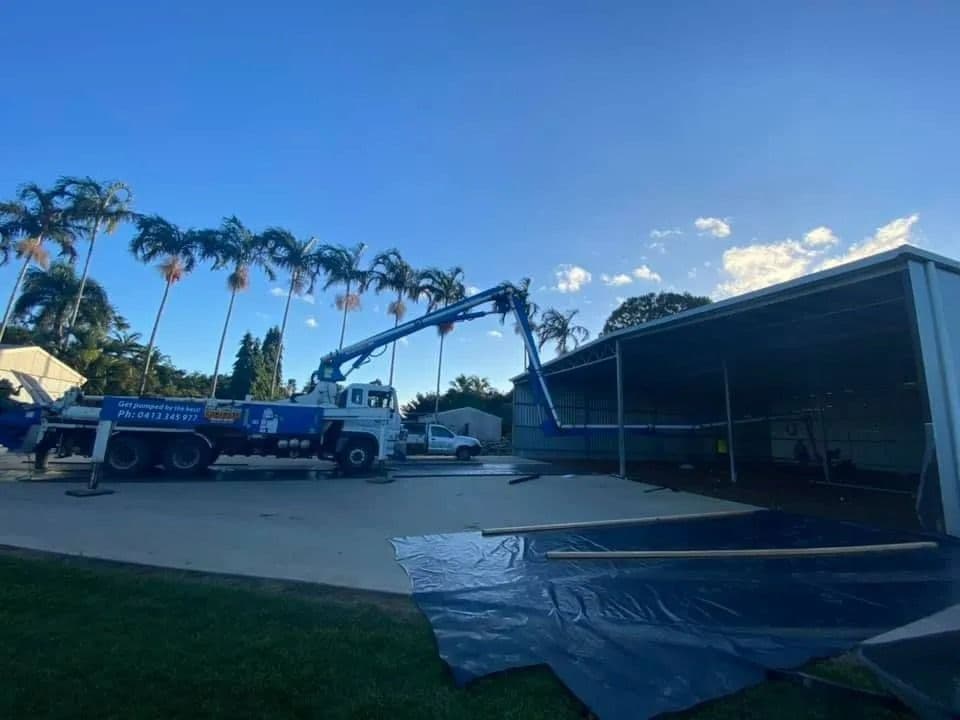
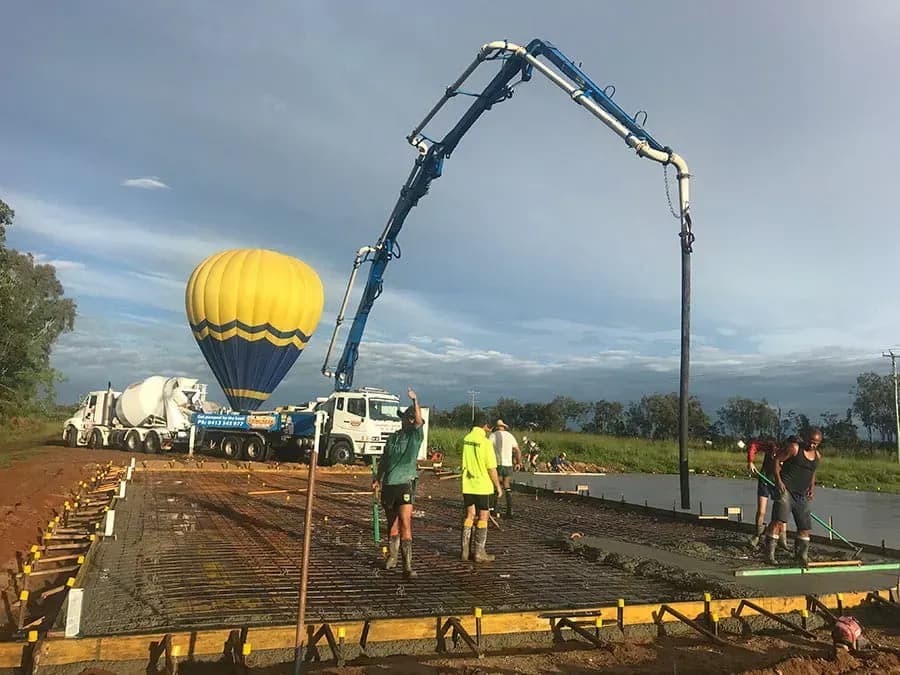
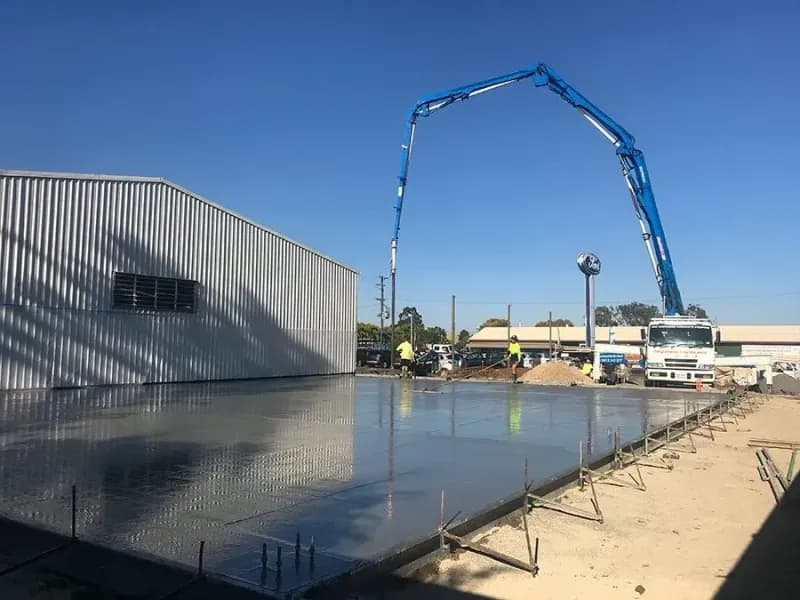
A boom pump is a truck-mounted concrete pump that carries its delivery pipe along a folding, multi-section arm, so the concrete travels through the air to the pour instead of along the ground. Safe Work Australia calls it a mobile concrete placing boom: a truck-mounted pump that pushes concrete through pipework supported by a multi-staged boom. The truck parks once, sets its outriggers and the boom does the travelling, reaching over a house, a fence, established landscaping or a pool to put the concrete where it needs to go.
A boom pump's size rating is its vertical reach, and its horizontal reach is shorter. The SCHWING S 28 X data sheet shows the gap on one 28 metre class truck pump. SCHWING states these are maximum theoretical values, so treat them as a ceiling, not a promise for every site:
Reach and footprint of one 28 m class boom pump (SCHWING S 28 X data sheet)
| Measure | Figure | What it means on site |
|---|---|---|
| Vertical reach | 27.80 m | The headline size of the boom |
| Horizontal reach | 23.70 m | How far out the boom tip goes at full stretch |
| Net horizontal reach | 21.50 m from the front bumper | Measure your pour distance from where the truck will stand |
| Front outrigger width | 5.96 m | Width of firm, level ground the set-up needs |
Safe Work Australia names a third type, the satellite placing boom, where a fixed or trailer-mounted pump feeds a boom fixed to the structure being built. So Safe Work Australia's guide lists three kinds of concrete pumping equipment: line pumps, mobile placing booms and satellite placing booms.
Line pump vs boom pump compared
Line pumps and boom pumps differ most in how the concrete travels, how much room the set-up needs and who may operate them. The table sets the two side by side using Safe Work Australia's guidance and our own fleet notes.
Line pump vs boom pump, factor by factor
| Factor | Line pump | Boom pump |
|---|---|---|
| How concrete travels | Through pipes and hoses run along the ground | Through pipework carried on a multi-staged boom |
| Suits | Tight spaces, backyards, indoor pours, residential and small commercial jobs | Large-scale or high-reach work, commercial and civil pours |
| Set-up space | Level ground that can carry the load and is free of obstructions, plus a route for the line | Level ground that can carry the load, with outrigger pads clear of excavations and soft or filled ground |
| Overhead structures and power lines | Named by Safe Work Australia as a possible substitute for a boom where there are overhead structures or limited space; power-line distances still apply | Safe working distances from power lines apply; contact the electricity supply authority to determine controls |
| Weather | Rain can still soften the ground the pump stands on | Must not operate in winds over the manufacturer's specification; storms bring lightning risk |
| Operator | Skills and training required | High risk work licence for a concrete placing boom required |
Five questions that decide it on your site
Five questions about your site decide between a line pump and a boom pump, and you can answer most of them with a tape measure before you ring anyone.
- Where can the truck park? A boom needs an area that is level, able to carry the load and free of obstructions, with outrigger pads clear of excavations, soft or filled ground. Safe Work Australia says short legging should be avoided wherever possible because it raises the risk of overturning, and that a boom's outriggers must be set according to the manufacturer's operating instructions. If the only spot is fresh backfill, a boom should not be set up there, and a narrow verge that would force short-legged outriggers should be avoided wherever possible; otherwise look for a line pump that can stand on firm ground and run its line to the pour.
- How far is the pour from that spot? Measure from where the truck will stand to the furthest corner of the pour, and compare it with the boom's horizontal reach, not its headline size. Our guide on how far a concrete pump can reach goes into the numbers.
- How high is it, and what is in the way? Suspended slabs, upper floors and pours behind a house favour a boom. Overhead power lines, eaves and trees can favour a line pump.
- How much concrete is going in? Large commercial or civil pours favour a boom for its reach and speed. Paths, footings and small backyard slabs often suit a line pump, and some jobs need no pump at all; see do I need a concrete pump.
- What will the ground be like on the day? Slope, water and mud, clay or sand, and back-filled ground all affect stability, and rainfall can leave a machine unstable. A boom that cannot set up safely cannot pour.
Where the compact high-pressure line pump fits
A compact high-pressure line pump is built for hard-to-reach pours. Far Northern Concrete Pumping runs one alongside our 31 m, 28 m and 20 m boom pumps and standard line pump, and it lets us reach tight or sloped spaces. Here is how our concrete pumping fleet lines up against typical jobs:
Far Northern Concrete Pumping fleet and where each pump fits
| Pump | Where it fits |
|---|---|
| 31 m boom pump | Longest reach in the fleet, for difficult access and multi-storey work |
| 28 m boom pump | The workhorse for house slabs, commercial floors and civil pours |
| 20 m boom pump | Compact setup for tighter suburban blocks |
| Line pump | Sites where a boom cannot be set up at all |
| Compact high-pressure line pump | Hard-to-reach pours, tight or sloped spaces |
Choosing a pump for Far North Queensland sites
Far North Queensland sites change the line pump vs boom pump answer in ways generic guides miss, because slope, wet-season ground, narrow coastal blocks and travel distance all pull in different directions.
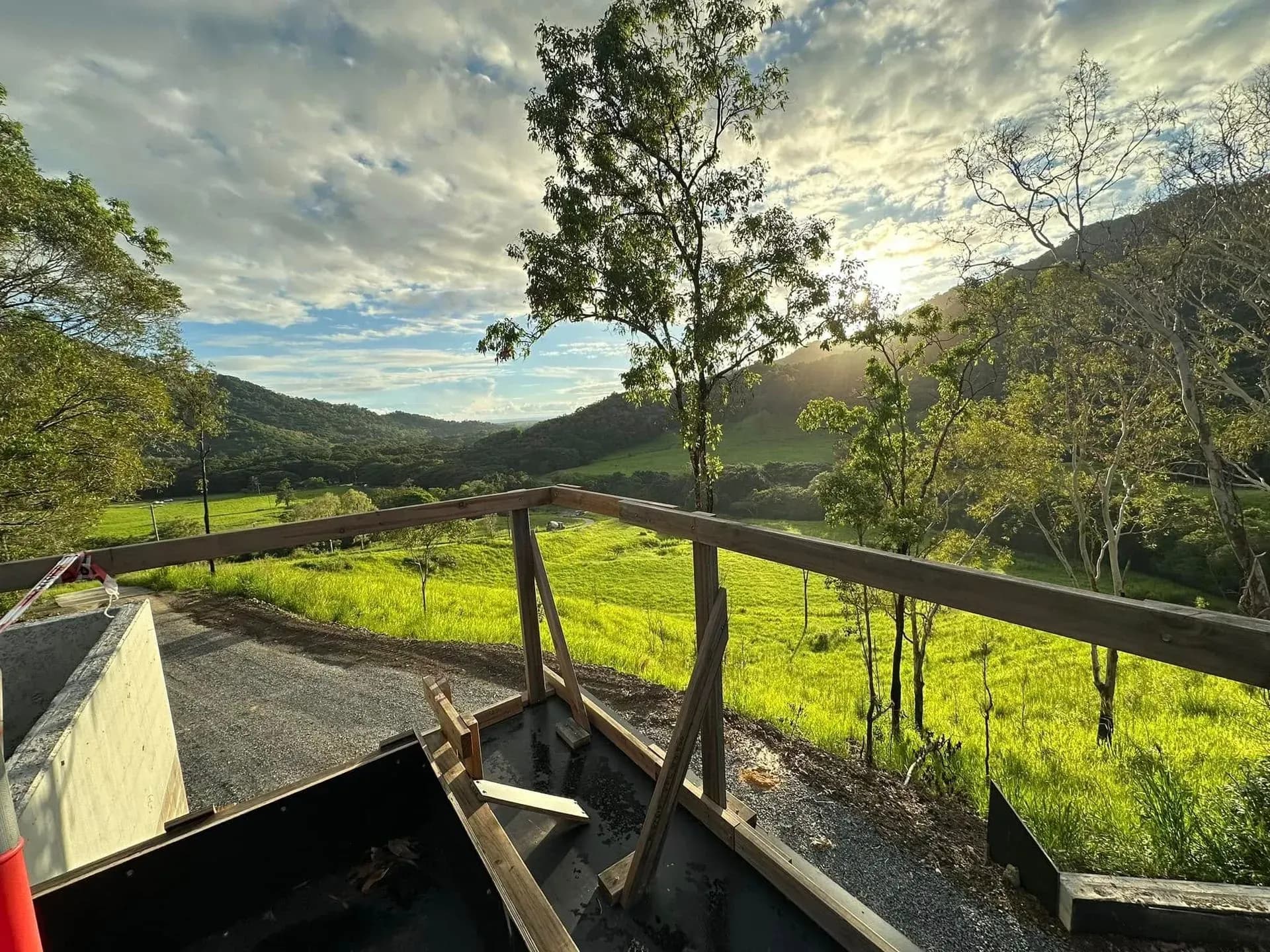
- Tablelands blocks and rural pours: on the Tablelands, rural driveways run a long way from the road. Slope is one of the ground factors Safe Work Australia lists for pump stability, so a sloping site with no level stand for outriggers points towards a line pump that follows the ground to the pour.
- Cairns infill and beachside lots: around Cairns, beachside blocks are long, narrow and full of things you cannot drive over. A boom set up on the street can place over the house; where power lines or a lack of firm standing rule that out, a line run down the side is the alternative.
- Wet weather: rainfall can affect ground conditions and make a machine unstable, and operating in storms risks lightning strikes to booms. Plan a fallback date, or a line pump option, for wet-season pours.
- Remote sites: for pours toward Cape York, we want to know the access route, the site conditions, where the agitators are coming from and how long they will take between loads, because the pump can only be as continuous as the supply feeding it. Which pump travels north depends on your reach, the volume and what the access will take.
Next steps
Answer the five questions, then get a price that reflects them. Our concrete pump hire cost guide explains what drives the price of each pump type, and preparing your site for a concrete pump covers what to have ready on the day. When you know where the job is, what you are pouring and the volume your supplier has quoted, send us the details or call 0413 345 977 and we will come back with a price and the pump we would bring.
Sources
- Guide to managing risk in construction: Concrete pumping, Safe Work Australia. Accessed 4 October 2026.
- Concrete pumping: overview, Safe Work Australia. Accessed 4 October 2026.
- High risk work licence classes, Safe Work Australia. Accessed 4 October 2026.
- Concrete pump licensing, Concrete Pumping Association of Australia. Accessed 4 October 2026.
- Truck-mounted concrete pumps: product overview (S 28 X data), SCHWING Stetter. Accessed 4 October 2026.