
In brief
A concrete pump needs a clear, level set-up area with a firm base that can carry both the pump and the concrete trucks, clear access for those trucks, a defined washout area, and a safe distance from overhead powerlines. In Queensland, the Concrete Pumping Code of Practice 2019 puts most of this on the principal contractor or whoever controls the site, so the builder or owner has it ready before the pump arrives.
On this page
The checklist at a glance
Concrete pump site preparation comes down to seven things: truck access, room for the outriggers, firm ground, distance from powerlines, known underground services, a washout area, and a plan for wet weather. Queensland's Concrete Pumping Code of Practice 2019 says the principal contractor or person in control of the workplace should provide a clear, unobstructed area with a firm base that can support the pump and the delivery trucks, and must consult the pumping business about the risks. The table below turns the code into a list you can walk the site with a few days before the pour.
Pre-pour site checklist for a concrete pump in Queensland
| Check | What to have ready | Why it matters |
|---|---|---|
| Truck access | A clear path for the pump and each concrete truck to reach the set-up spot | The code calls for clear access to the pump unit for concrete trucks |
| Set-up area | Room for the outriggers fully extended, level and free of obstructions | Short legging should be avoided because it raises the risk of overturning |
| Ground | Firm, undisturbed ground away from trenches, pits and backfill | Outriggers can sink or punch through soft or hollow ground |
| Powerlines | Lines located, and the electricity entity contacted if they are close | The boom should stay at least 3 metres from lines up to 132kV |
| Underground services | Pipes, pits, tanks and services marked and passed to the operator | Covered cavities can give way under an outrigger |
| Washout | A defined washout area that keeps residue out of stormwater | Expected by the code, and environmental rules apply |
| Weather | A plan for rain softening the set-up area | Saturated ground loses bearing capacity |
Truck access and parking
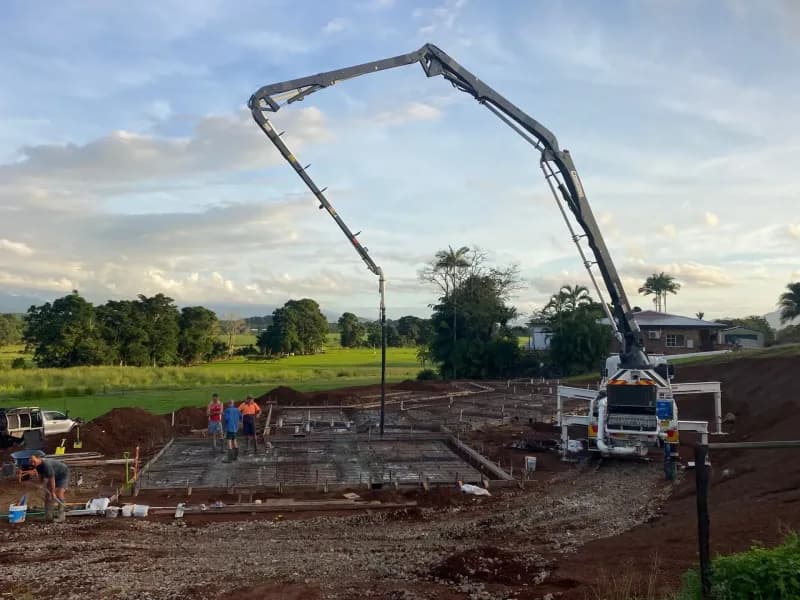
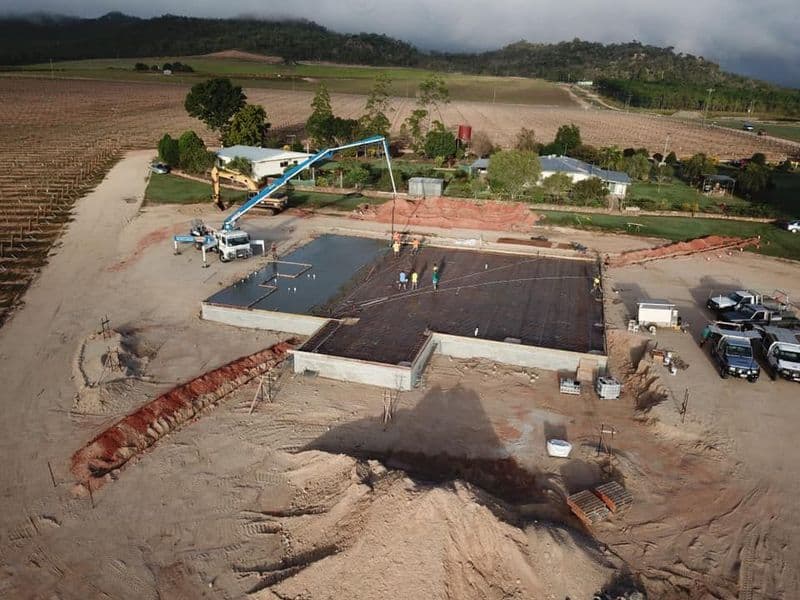
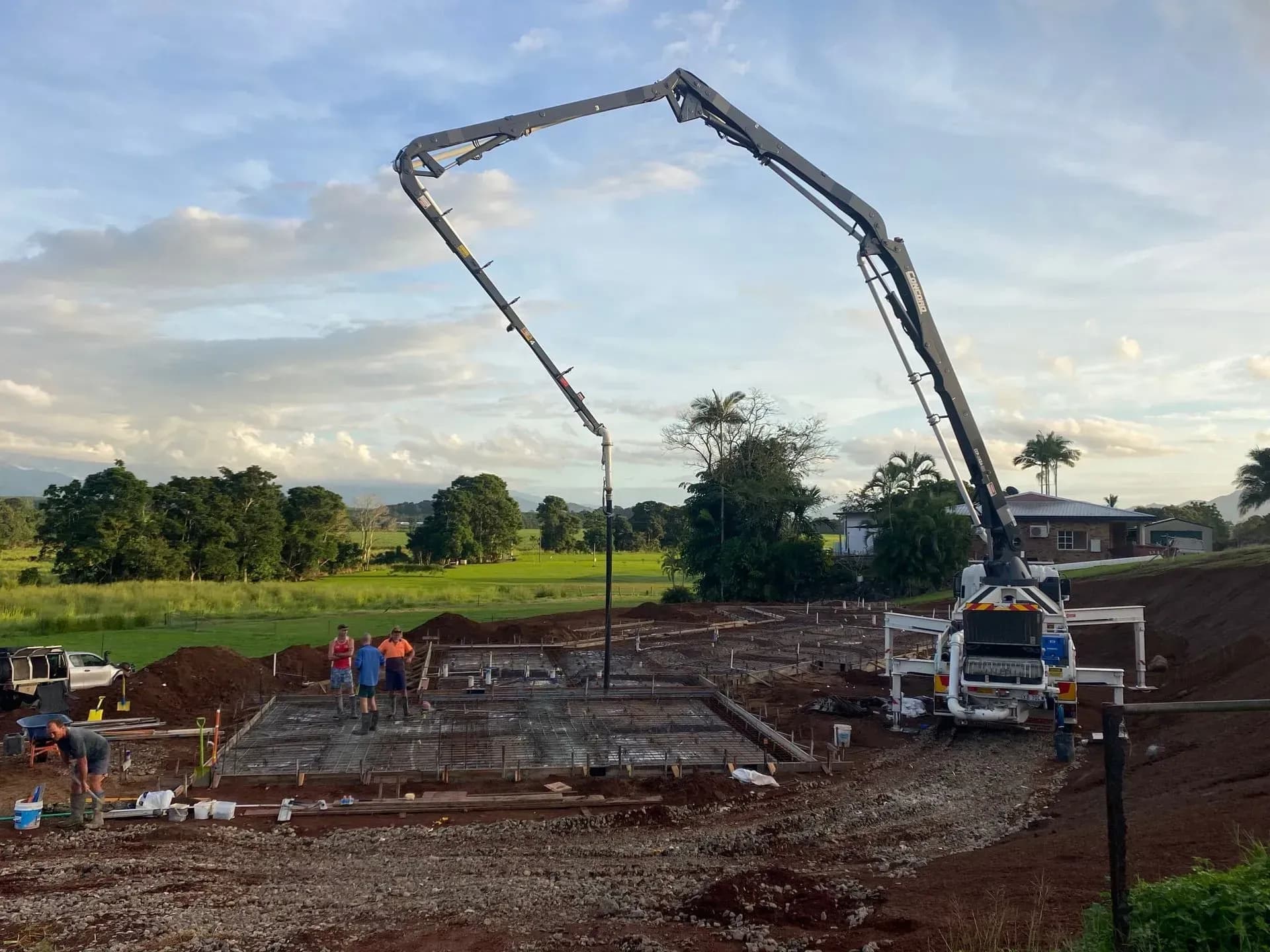
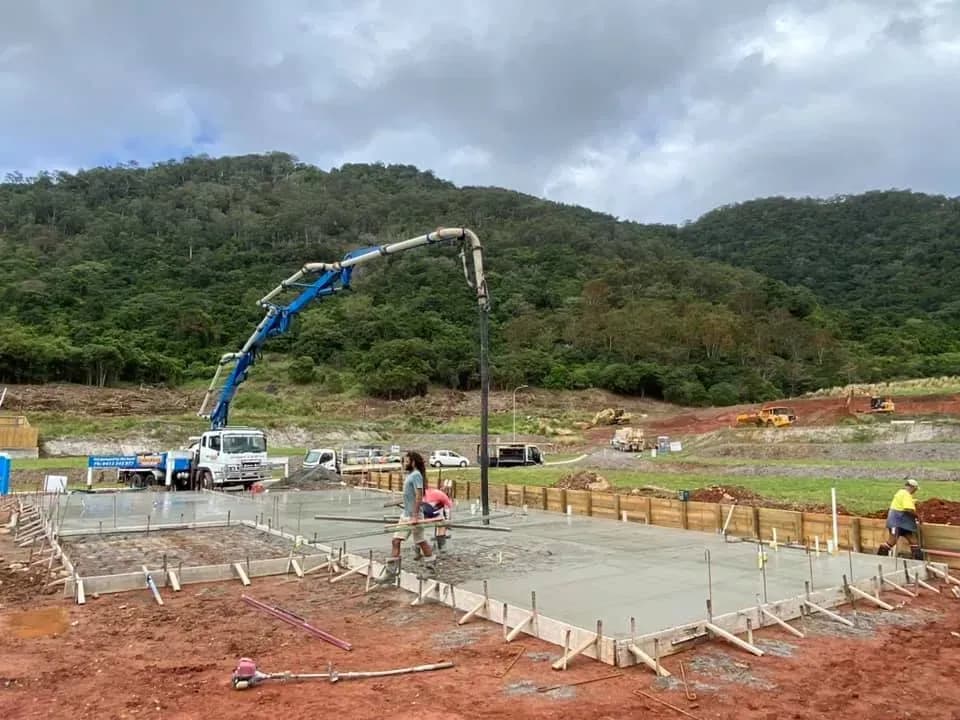
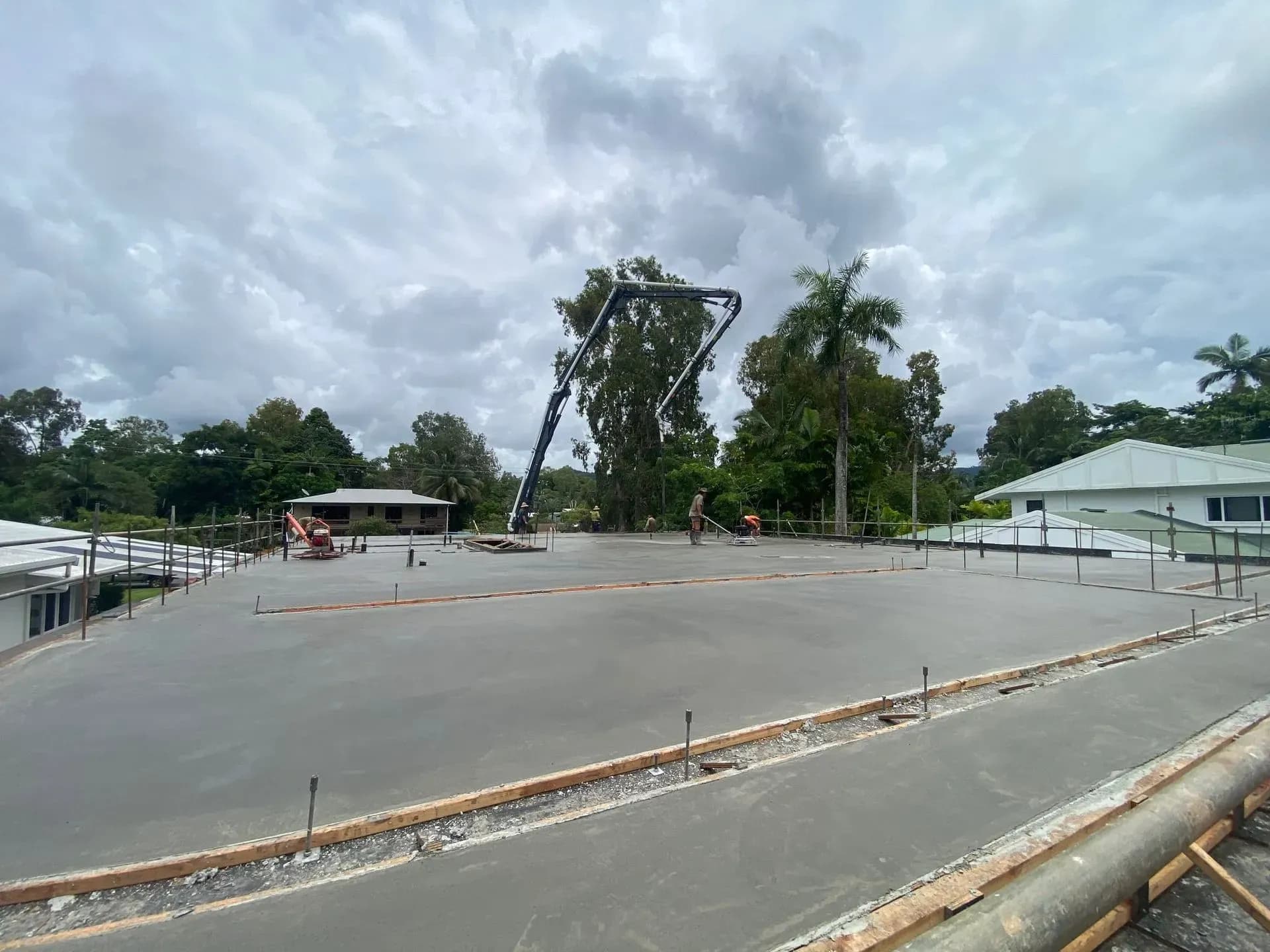
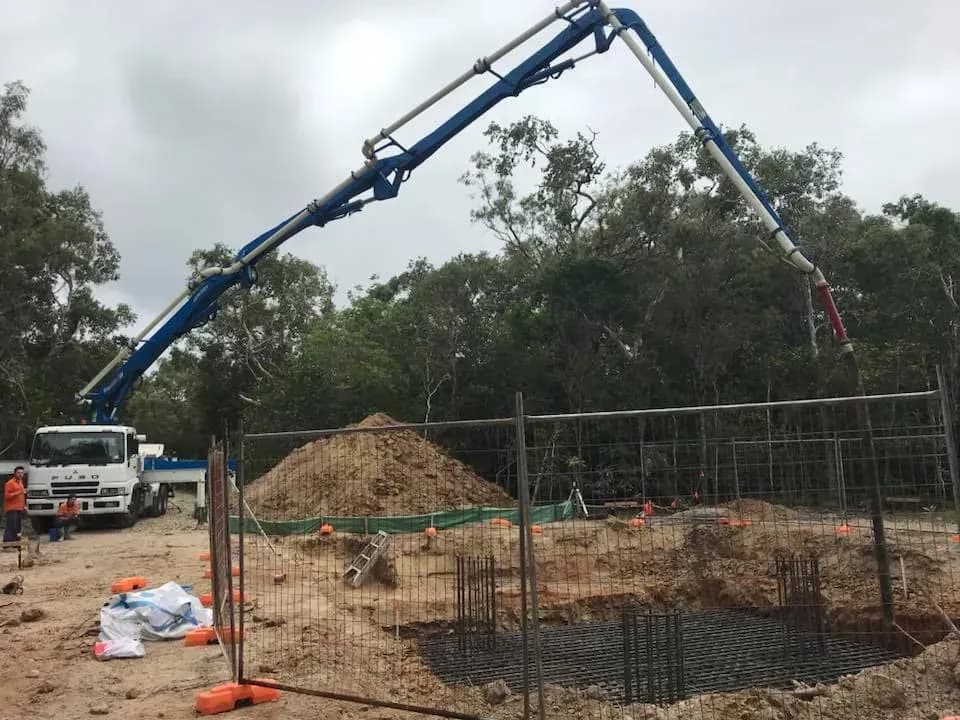
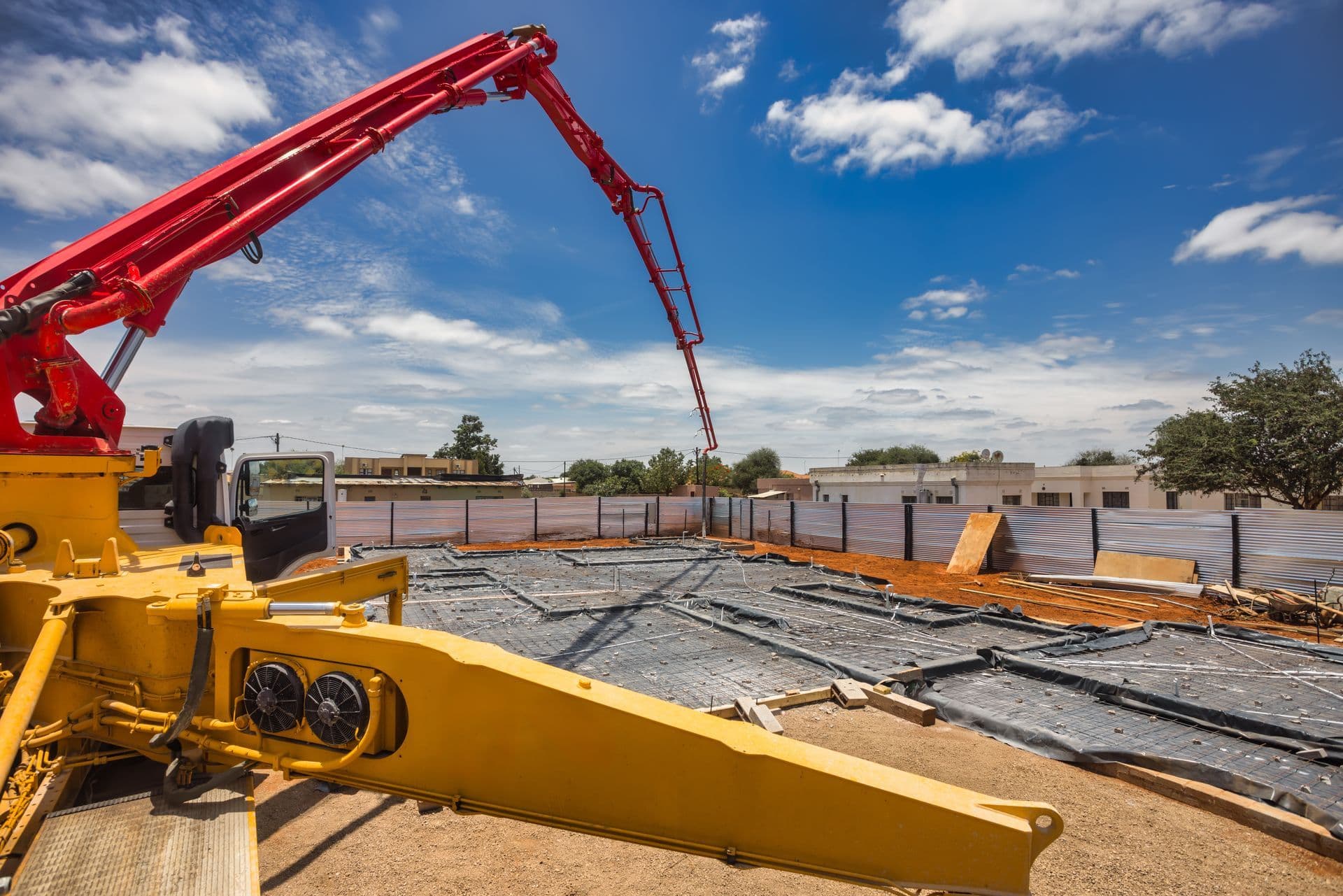
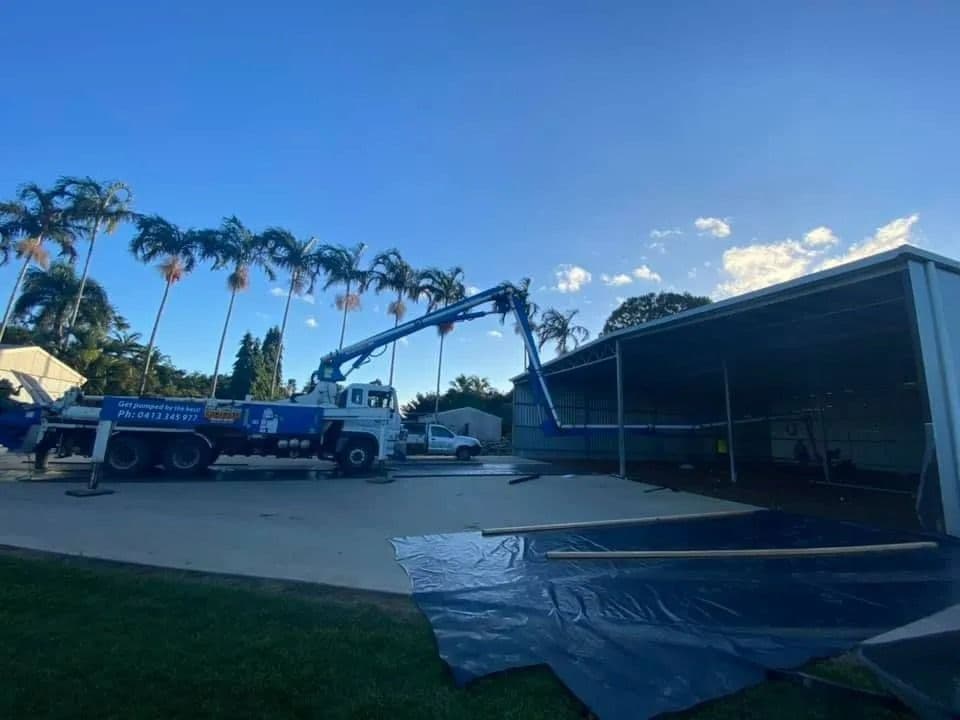
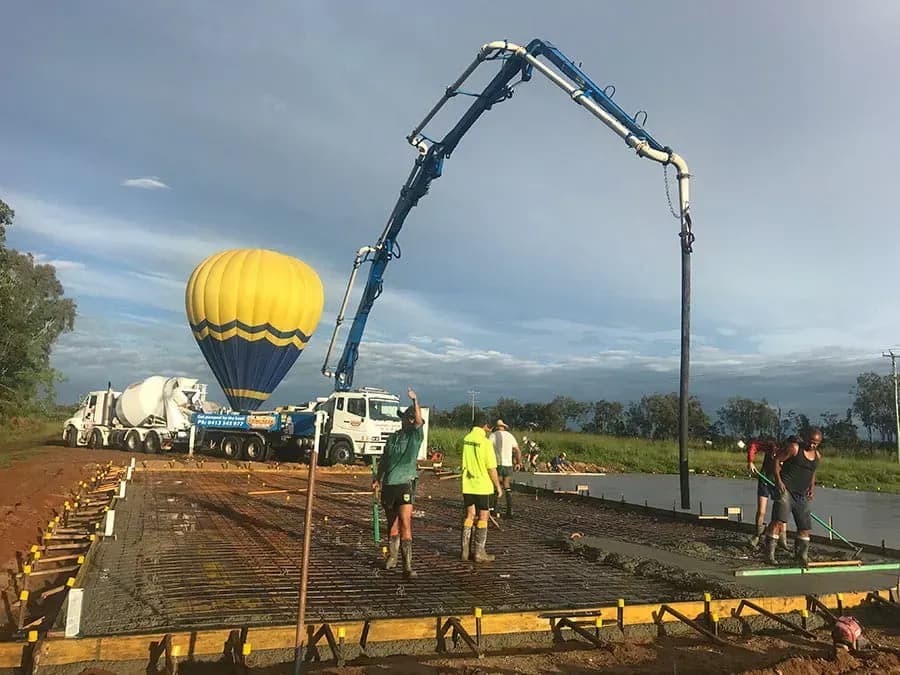
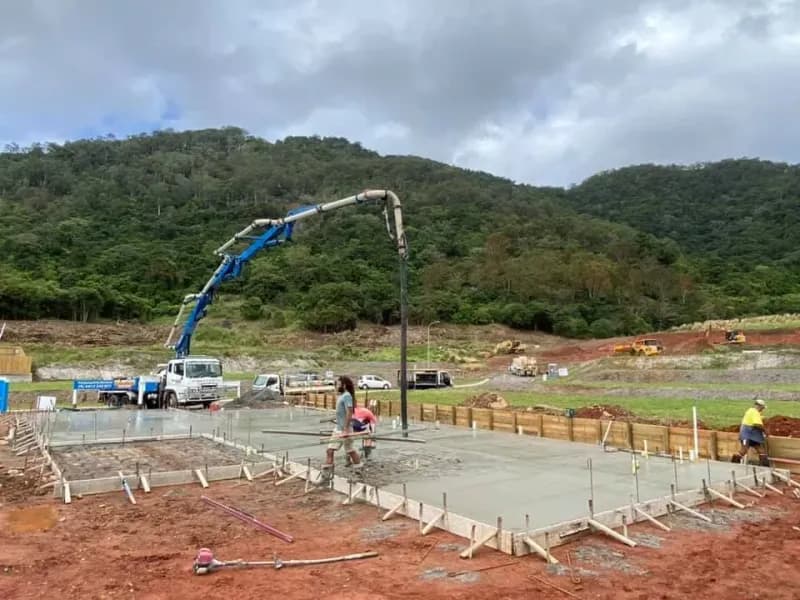
A concrete pump needs a set-up spot that is level, clear and big enough for the outriggers fully extended, plus a path for the concrete trucks to reach its hopper. The Queensland code says the pumping business should tell the site the area it needs with outriggers out, as a length by width in metres, and the person in control of the site should make sure that room exists for both setting up and packing up. Ask for that footprint when you book and mark it out on the ground. If the pump has to set up in the street, the code notes this may mean road or footpath closures from the relevant authority, and traffic control should be planned for single, multiple or continuous truck delivery. Short legging, where an outrigger is only partly extended, should be avoided wherever practicable because it increases the risk of the pump overturning.
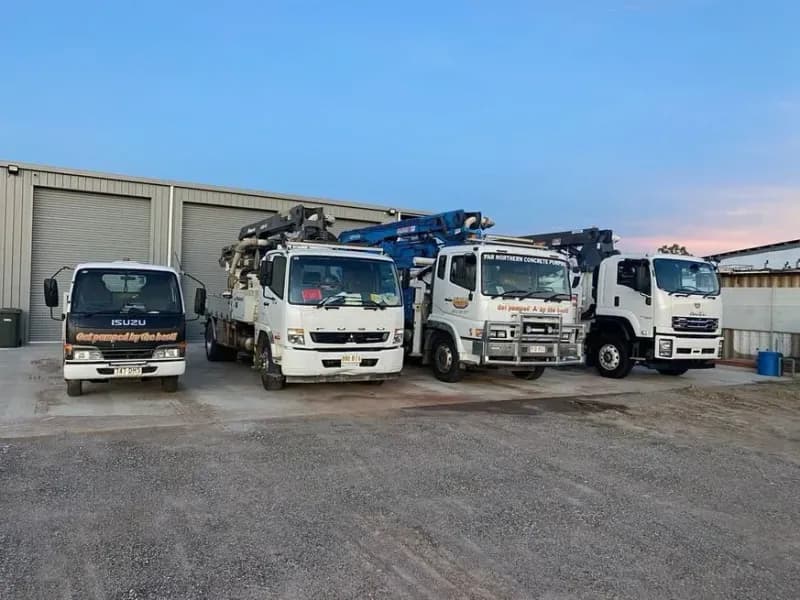
Where there is no room to stabilise a boom, a line pump runs hoses along the ground instead. If there are tight spaces or obstacles like trees, fences or buildings, let us know in advance so the right concrete pumping equipment comes on the day. Our fleet is a 31m boom pump, 28m boom pump, 20m boom pump and line pump, and the line pump vs boom pump guide explains which suits which site.
Firm ground for the outriggers
Outriggers need firm, undisturbed ground. The Queensland code says a pump should not be positioned over or next to previously disturbed ground that has been backfilled, excavations, trenches, holes, cellars, pits, or soft and poorly compacted ground. It also warns that a firm surface crust can give the impression that ground is more stable than it is. When an operator lowers each outrigger and the pad starts to sink, the foot is retracted and the pad size increased; if the ground is not firm or is near an excavation, the operator should refer it to the principal contractor to move the pump. On sloping ground, timbers are cut in level rather than laid on the slope.
Minimum distance from outrigger timbers to an excavation (Concrete Pumping Code of Practice 2019)
| Ground type | Rule | Example: 3 metre deep trench |
|---|---|---|
| Compact, not crumbling | Distance at least equal to the depth (1:1) | At least 3 metres |
| Loose or backfilled | Distance at least twice the depth (2:1) | At least 6 metres |
Hidden voids are the hard part. In April 2026 a 38 metre concrete placing boom tipped when an outrigger punched into a void below the ground, and WorkSafe Queensland's alert says principal contractors and builders should give the operator detailed, accurate information on underground pipes, pits, tanks and services. Before You Dig Australia is a single point of contact for plans of underground and overhead infrastructure, so request them before pour day.
Overhead power lines
A concrete pump boom must be kept well clear of overhead powerlines, and planning for that starts before the truck arrives. The Queensland code says placing booms should not be operated over energised powerlines, and that workers, the boom and the drop hose should stay at least three metres from lines up to 132kV, with greater distances above that. WorkSafe lists concrete pumps among the plant that can enter an exclusion zone, and notes that lines sag or sway in hot or windy weather, which changes the safe distance. The most effective control is de-energising or re-routing the line, and the code says to arrange this with the electricity entity as early as possible because it can take time. To find the lines, the Look up and Live app maps Energex, Ergon and Powerlink powerlines. Avoid storing equipment under them in the lead-up to the pour.
Who needs a licence to operate a concrete placing boom is covered in concrete pump licence requirements.
Washout area
Every pour needs a clearly defined place to wash out the pump and the concrete trucks, agreed before the day. The Queensland code says the principal contractor or person in control of the site should provide a pump washout area that complies with environmental protection legislation and local authority requirements, and a way to collect concrete residue so wash-down from cleaning the pump and the delivery trucks does not reach stormwater drains. The code calls this out in particular for permanent or semi-permanent set-ups and for pumps set up in a roadway or public place. Pick a spot on your own site that the trucks can reach after the pour, away from drains, and check whether your council has its own rules. Tell us where it is when you confirm the booking, so the operator knows before the last truck empties.
Formwork and people ready on time
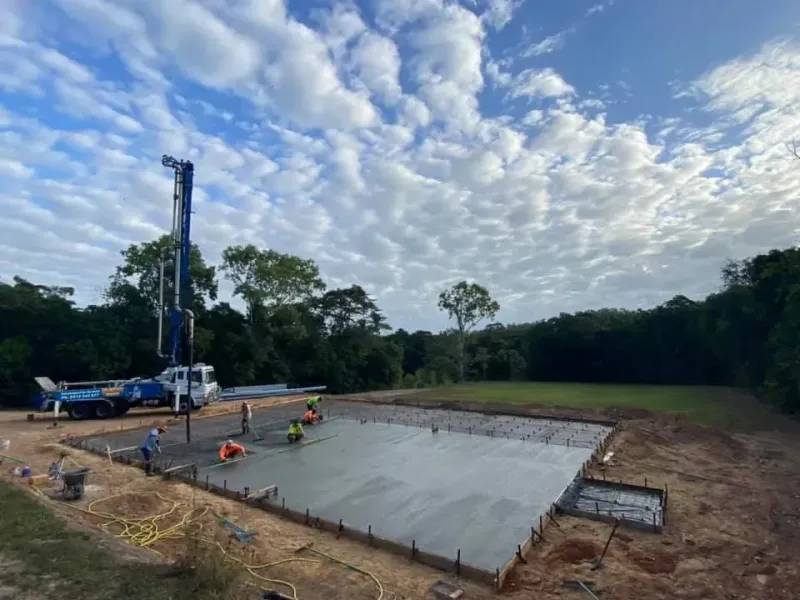
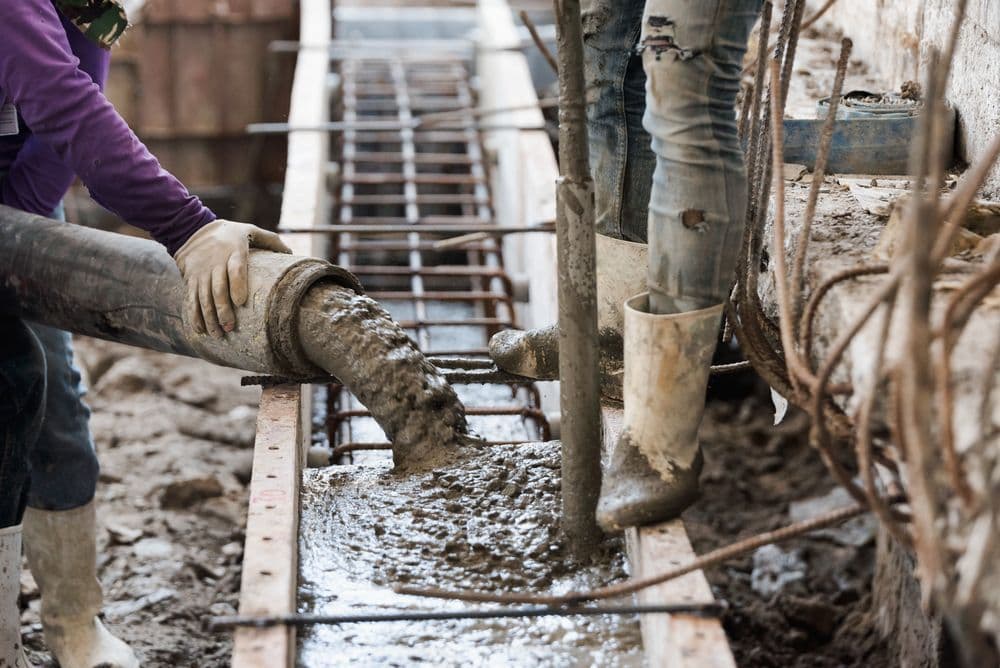
The pump should arrive to formwork that is finished and a crew that is ready, because pumped concrete keeps coming once the first truck starts. The Queensland code expects a pour plan that allows for weather, accessibility, the volume of concrete, site limitations and the concrete supplier's requirements. Confirm your volume with the how much concrete do I need calculator and plan truck spacing around the 90 minute rule. On the day, the code says unauthorised people should be kept away from the pump, anyone in the pumping exclusion zone should wear a high visibility vest and suitable PPE, and lighting should be provided for night or low light work.
- Formwork, set-downs and penetrations finished and checked before the booking.
- Enough line hands: the code sets one for every 10 metres of workable hose where the pipe is 76.2 mm or more, and every 20 metres where it is smaller.
- Neighbours, pets and children kept clear of the pump and the truck path.
- One person on site who can make decisions if something changes.
Wet season and the day before
In Far North Queensland, the day-before check is mostly about water, because rain changes ground that looked fine a week earlier. The Bureau of Meteorology says northern Australia's wet season runs from October to April, its peak time for rainfall, severe thunderstorms and tropical cyclones. At Cairns Aero, average rainfall tops 400 mm in each of January, February and March, against about 27 mm in August. WorkSafe notes that saturated earth dramatically reduces the bearing capacity of the ground, and that ground beside slabs and paving can be softer from run-off. The day before, walk the truck path and set-up spot again, look for ponding and soft patches, and call us on 0413 345 977 if the area has changed. Whether to pour at all in rain is covered in pouring concrete in the rain.
Next steps
Once the checklist is done, the next question is which pump reaches your pour from the spot you have cleared. Work that out in how far can a concrete pump reach, then contact us with the address, the pour type, the volume your supplier has quoted and photos of the access. For builders running larger jobs, see our commercial concrete pumping page.
Sources
- Concrete Pumping Code of Practice 2019, WorkSafe Queensland. Accessed 4 October 2026.
- Safe support of mobile plant on outriggers, WorkSafe Queensland. Accessed 4 October 2026.
- Mobile concrete placing boom overturn incidents, WorkSafe Queensland. Accessed 4 October 2026.
- Planning construction work near overhead powerlines, WorkSafe Queensland. Accessed 4 October 2026.
- Northern Australia's 2025 to 26 wet season summary, Bureau of Meteorology. Accessed 4 October 2026.
- Climate statistics for Australian locations: Cairns Aero, Bureau of Meteorology. Accessed 4 October 2026.
- Before You Dig Australia, Before You Dig Australia. Accessed 4 October 2026.