



In brief
Queensland's code lists blockage causes in the mix, the timing of deliveries, the truck and the line itself. The person ordering the concrete has a say in the mix and the timing. If a line does block, clearing it is the operator's job, and everyone else stays out of the pipeline area.
On this page
Blockage causes sit in the mix, the timing, the truck and the line
A concrete pump blockage is concrete that has stopped moving through the line. Queensland's Concrete Pumping Code of Practice 2019, published by WorkSafe Queensland, lists the causes in detail without ranking them, and they include the concrete itself, debris from the truck, timing on the day, and the condition of the pump and pipeline. Mix faults include a mix that is too stiff, poor mixing, aggregate that is too large, an inadequate water to cement ratio and too few fine materials. Debris from the truck, such as old concrete breaking off the mixer fins or clumps of unmixed cement, can jam the line too. Long waits between loads let the mix separate, bends and reducers add resistance, and worn hoses and leaking or missing joint rubbers are listed causes too. The table sorts the causes by who controls them.
| Cause | What happens in the line | Who controls it |
|---|---|---|
| Mix too stiff | It will not fill the pumping cylinders and pressure climbs too high | Whoever orders the concrete, with the supplier |
| Mix too wet | Heavier materials settle out and the mix segregates | The order, and anyone adding water on site |
| Aggregate too large for the line | Aggregate jams where the line narrows | The order and the line size |
| Lumps or debris from the truck | Hardened concrete or cement clumps jam the line | The concrete supplier |
| Long waits between trucks | The mix separates and starts to stiffen in the line | Truck scheduling |
| Bends, reducers, kinks and worn hose | Extra resistance, or exposed wire inside a worn hose | The pumping company |
| Pumping too fast | Aggregate is pushed ahead of the primer | The pumping company |
How a concrete line blocks: most often at the reducer, and more often in rubber hose than steel
A concrete line most often blocks at the reducer, the fitting that connects the concrete pump to the pipeline. The Queensland code names it as the most common place for a blockage, and says a reducer that is too abrupt can raise pumping pressure until a blockage results. Rubber hose is also a weak spot. The code says the effort needed to push concrete through one metre of rubber hose can equal three or more metres of steel pipeline, so blockages are much more likely in rubber hose than in steel line of the same diameter. That matters on a line pump job, because line pumps use flexible hoses run along the ground. Line size and aggregate size have to match as well: the code says the line diameter should be three to four times the maximum aggregate size. The code adds that sudden changes in line diameter can cause aggregate jams, because the concrete cannot be pushed through the smaller line.
Causes you control when ordering the concrete
The person ordering the concrete controls one of the listed causes of blockages: whether the mix suits a pump. The Queensland code says only a pumpable mix as specified by the concrete supplier should be pumped, because other concrete can block the line and cause hose whip. It also says to check that the mix is readily pumpable by talking to both the pumping company and the supplier, and that the engineer who designs the mix should be involved so the risk of blockages is minimised. Holcim says it needs to know the placement method, the type of pump and the size and length of the line when it designs a mix. Our equipment notes make the same point from the pump side: certain pumps may perform better with specific consistencies or aggregates. Slump and ordering are covered in detail in what is pump mix concrete.
- Tell the plant a pump is booked, which type, and the line size and length.
- Order the slump you need rather than planning to adjust it with water on site.
- Ask about aggregate size if the job uses a small line or a lot of hose.
- If the mix uses recycled or remanufactured aggregate, ask about a binding additive; the code says one may be needed.
Causes on the day: truck gaps, heat and water
On pour day, three blockage risks to manage are concrete waiting too long, hot weather stiffening the mix, and water added at the truck. The Queensland code warns that long waits between pumping let the materials in the mix separate, and that concrete must not be allowed to solidify in the line. When concrete does sit in the line, operators may kink the hose, shunt concrete through or circulate it back through the hopper. Cement Concrete & Aggregates Australia (CCAA) says delays are more of a problem on hot or windy days, when concrete dries out and stiffens more quickly, and Boral's hot weather advice is to discharge concrete from waiting trucks as soon as possible. Space the trucks so the pump never sits idle for long; the 90 minute rule explains the time limit on each load, and pouring concrete in hot weather covers planning a pour in the heat. Water is not the fix. CCAA says never just add water to make concrete more workable, and the code notes a mix that is too wet can segregate, and it links segregation to blockages.
Lumps from the truck: the supplier's side
Hardened concrete or foreign objects from the truck can jam a pump, so the code puts checks on the delivery as well as the mix design. It suggests asking the truck owner when hardened concrete was last removed from the bowl, so large lumps do not reach the pump. The person at the hopper should watch the consistency of each load, and if lumps or objects turn up, the operator should be told to do an emergency stop. The delivery driver should tell the pump operator about any visible change to the mix that could affect pumping. The code also says to confirm the concrete delivered matches what was ordered by checking the order or the delivery docket. On your side, that means having the order details on hand when the first truck arrives, and letting the operator know if a load looks different from the last one.
Priming the line matters before the first truck
Priming lubricates the pump line before concrete goes in, and the Queensland code lists adequate priming and lubrication of the pipeline as a blockage control before pumping starts. Boral's concrete guide describes grout, a mix of cement and water with perhaps some fine material, as one of the materials used to prime concrete pumps. The code also warns that pumping too quickly can push the aggregate ahead of the primer. Ask the operator when you book who supplies the priming material and whether it needs to be ordered with the concrete, so the first truck brings what the pump needs. Air in the line is a related risk: when pumping restarts, the code says workers should stand clear of the end hose until air has been pushed out.
During a blockage, stand clear and leave it to the operator
When a line blocks, anyone who is not clearing it should move away from the pipeline and the hose. The code says the pressure gauge will likely show line resistance rising, and a fast rise suggests the blockage is near the pump. The operator may free a minor jam by reversing and resuming pumping a few times, but the code says no amount of pressure will clear a major blockage and repeated reversing can make it tighter. Everyone except the workers clearing the line should be kept out of the pipeline area. The danger is stored pressure. Hose whip is the uncontrolled, rapid motion of a flexible hose, and with 20 metres of loose hose anyone within 20 metres of the fixed end is at risk. Dislodged concrete can fly out and strike workers and members of the public. The code says never open a pressurised line, never use compressed air on a suspected blockage, and never try to hold the hose by hand.
How much concrete is lost in the pump and line
The Queensland code describes three ways to clean concrete out of the line at the end of a pour, and how much is wasted depends on the method. Reversing the pump with a sponge in the line sucks the concrete back into the hopper, and that concrete has to be discarded. Pushing water through the line behind a sponge lets most of the concrete go into the pour, because the volume in the line can be calculated, though the code says this is more common on high-rise systems. Compressed air blows the concrete out with a sponge; the code calls it the highest risk of the three and the least preferred, and says water should be used in preference to air where practicable. Ask the pump operator for the allowance on your job, and add it to the volume you order.
A blockage prevention checklist for your pour
Several of the blockage controls in the Queensland code come down to checks you can run before and during pour day:
- Book the pump first, then give the concrete plant the pump type, line size and line length.
- Order a pump mix at the grade on your plans, with the slump agreed with the plant.
- Ask the operator about priming and whether you need to order anything for it.
- Space the trucks so concrete is not left waiting, especially on hot afternoons.
- Do not add water at the truck without the supplier's approval.
- Check each delivery docket against the order as the trucks arrive.
- Tell the operator straight away if a load looks stiffer, wetter or lumpier than the last.
- Keep people, pets and vehicles clear of the line and the end hose throughout.
Next steps
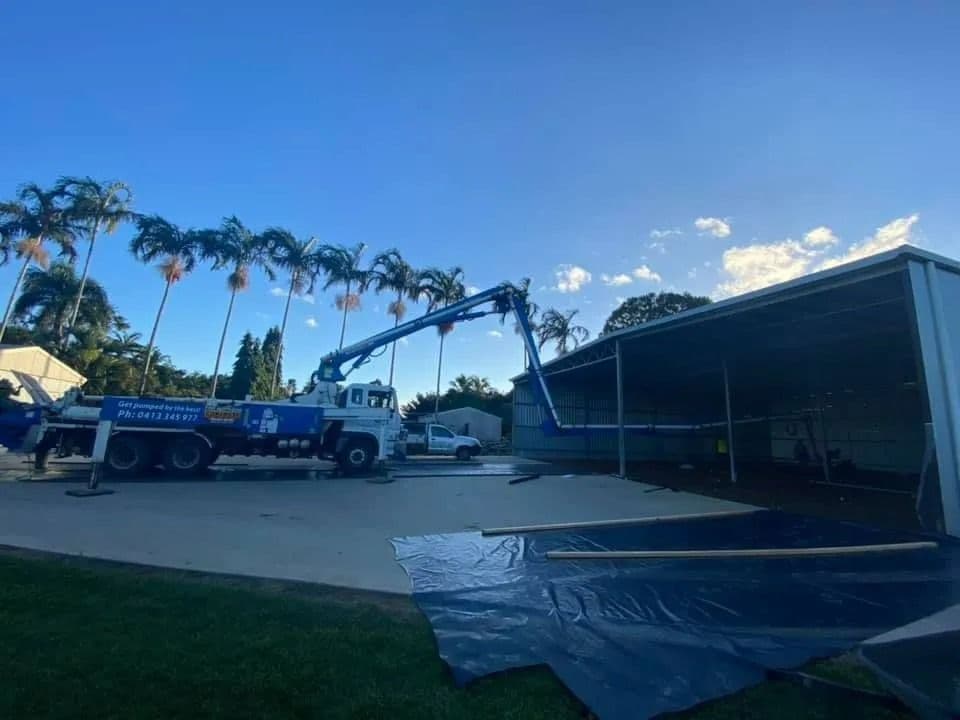
The pump type shapes the mix and the line, so settle that first. Our line pump vs boom pump guide compares the two, and preparing your site for a concrete pump covers access and set-up. Our operators have access to a 31m boom pump, 28m boom pump, 20m boom pump and line pump for concrete pumping and commercial pours. When you have the volume from your supplier, contact us with the address, the type of pour and the volume, and we will confirm which pump is coming so you can pass its details to the plant.
Sources
- Concrete Pumping Code of Practice 2019, WorkSafe Queensland. Accessed 30 October 2026.
- Concrete Basics: A Guide to Concrete Practice (seventh edition, February 2010), Cement Concrete & Aggregates Australia. Accessed 30 October 2026.
- 5 Essential Things You Need to Know When Ordering Premixed Concrete, Holcim Australia. Accessed 30 October 2026.
- Australian Concrete Guide (2023), Boral. Accessed 30 October 2026.