
In brief
Cement Australia says about 110 bags of its 20 kg Concrete Mix make one cubic metre, which is 2.2 tonnes of bags to lift and mix. Ready-mix arrives batched at the plant to your order, but small loads can attract minimum load fees, so check your local plant's terms.
On this page
The short answer: bags for small jobs, ready-mix once the volume adds up
Bagged concrete is made for small jobs, and ready-mix is made for everything bigger. Cement Australia describes its bagged Concrete Mix as a blend of cement, sand and aggregates designed for small projects around the home or garden, and lists garden edges, mower strips, paths, garden slabs, footings, posts and pergola uprights among its uses. Ready-mix, also called premix, is batched at a concrete plant and delivered in an agitator truck. Premix supplier Hunter Readymixed Concrete says ordering premix avoids the manual labour of site mixing and the problem of finding space to stockpile cement, sand and aggregate.
The decision usually comes down to four things: how much concrete the job needs, whether the plans call for a set strength, whether a truck can get close, and how many people you have to mix and place it. The sections below take each in turn, and the table near the end puts them side by side.
How much concrete a bag makes: about 110 x 20 kg bags per cubic metre
A 20 kg bag of Cement Australia's Concrete Mix makes roughly 9 litres of concrete, because the maker says about 110 bags are needed for one cubic metre (1,000 litres). That yield is for one product. Other brands and blends differ, so read the yield printed on the bag you buy. The table converts common job volumes into bags and mixing water at that published rate, using the 1.75 litres of water per bag the product page gives. Cement Australia also lists Concrete Mix in a 1.1 tonne size, which at the same yield works out to about 55 bags' worth, or roughly half a cubic metre. Work out your volume first: our guide to how much concrete you need covers slabs and paths, and concrete for post holes covers round holes.
Bags of 20 kg Concrete Mix by job volume (about 110 bags per m3, 1.75 L water per bag)
| Volume | Bags (rounded up) | Weight of bags | Mixing water |
|---|---|---|---|
| 0.1 m3 | 11 | 220 kg | About 19 L |
| 0.25 m3 | 28 | 560 kg | About 49 L |
| 0.5 m3 | 55 | 1,100 kg | About 96 L |
| 1 m3 | 110 | 2,200 kg | About 193 L |
| 2 m3 | 220 | 4,400 kg | About 385 L |
| 3 m3 | 330 | 6,600 kg | About 578 L |
Labour: every cubic metre from bags is about 2.2 tonnes to lift and mix
Mixing a cubic metre from bags means lifting about 2.2 tonnes of product, measuring close to 200 litres of water and mixing 110 bags, a few at a time, in batches sized to your mixer. Cement Australia says a 20 kg bag of cement based product needs two people to lift it safely, and recommends load-shifting equipment such as a wheelbarrow or trolley where possible. WorkSafe Queensland notes that sprains and strains are the most common workplace injury, and that the vast majority are caused by hazardous manual tasks. Shifting a pallet of bags by hand is manual handling, so plan the lifting before the mixing.
The mixer sets the pace. The Cement Concrete & Aggregates Australia guide Concrete Basics says to check how much your mixer holds, not to overload it because each batch then takes longer to mix properly, and to avoid delays between batches. It allows small quantities to be mixed by hand with a shovel on a clean board or in a wheelbarrow. Plan to finish on the day: Cement Australia recommends using an opened bag the same day and discarding what is left.
- Count the bags from your volume, then add a few for spillage and a bag that turns out hard.
- Check the mixer's capacity before you hire it.
- Line up helpers and a barrow or trolley for moving bags.
- Have a bucket and measuring jug ready so every batch gets the same water.
Consistency and finish: hand-measured batches vary, a truckload is batched once
Bagged concrete mixed in many small batches is harder to keep consistent than a load batched at a plant, because every batch is a fresh chance to change the water. Cement Australia says a shovel should never be used to measure ingredients, and recommends a bucket for dry materials and a measuring jug for water to get consistent results with each batch. Concrete Basics gives the same warning, saying volumes can vary widely when a shovel is the measure. Water matters most: CCAA says adding more water gives a weaker hardened concrete, and Cement Australia's mixing instructions for Concrete Mix put it bluntly, saying too much water ruins good concrete.
Batches can also look different once they cure. For coloured work, Cement Australia lists changes in the water added, cement colour, aggregate colour or sizing, curing temperature and finishing among the causes of colour variation, and recommends one source of raw materials for the whole project. Premixed concrete, by contrast, is batched at the plant to the job requirements, according to CCAA, and the truck's drum keeps turning on the way to site. If an even finish across a whole slab matters to you, that is a point in favour of ready-mix.
Strength: if the plans name a grade, order ready-mix
When a job calls for a defined strength, ready-mix is the way to get it. Cement Australia's own advice is that a project needing a defined strength, such as 20 MPa concrete to set the posts for a raised deck, should have concrete delivered from a ready mixed truck, which it calls the only way to guarantee the structural strength in the concrete. Premix is supplied in standard strength grades of N20, N25, N32, N40 and N50, according to Hunter Readymixed Concrete, and the plant batches to the grade you order.
Some bagged products do publish strength figures. Cement Australia says its PROSTRENGTH Extra Strength Concrete Mix is designed to deliver 50 MPa, but adds that the figure was achieved under controlled laboratory conditions and should be used only as a guide to potential strength. A hand-mixed batch on site, with its own water and mixing time, is not the same thing as a graded load from a plant.
Ready-mix: ordering, small-load fees and time on site
Ready-mix is ordered by the cubic metre, and a small order can cost more per cubic metre than the headline rate because of minimum load fees. Hunter says concrete can be ordered in multiples of 0.1 m3. Regional fee schedules show how small loads are treated. Boral's Queensland Country service fees, effective 14 October 2026, apply a minimum delivery charge to loads under 3.0 m3, charged as if the truck were carrying 3 m3. Holcim's North Queensland schedule, effective 1 May 2026, applies a fee to delivered loads under 4 m3, calculated on the undelivered part of the load. Terms differ between plants and change over time, so ask your local supplier before you compare the cost against bags. Our guide to concrete truck sizes covers mini-mix trucks and how much a truck holds.
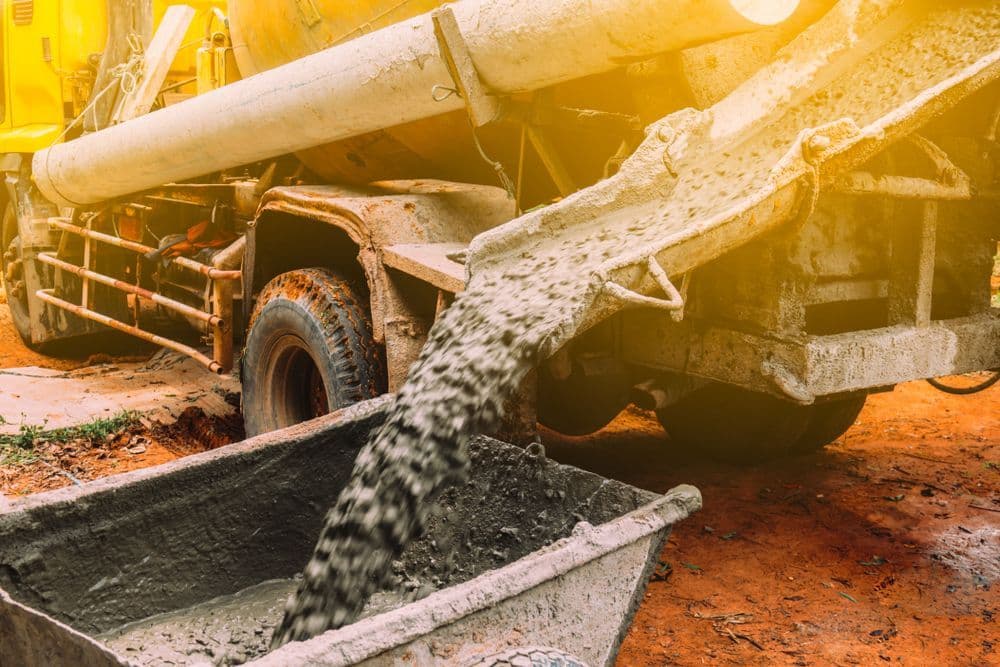
Get the volume right the first time, because Holcim says plus or balance loads depend on truck availability and may incur extra fees. Then be ready when the truck arrives. Hunter notes the supplier has a set time to empty the truck, and Holcim's DIY guide says one or two helpers on the shovels help reduce waiting time charges. Our 90 minute rule guide explains the clock on the concrete itself.
Where a pump changes the sums
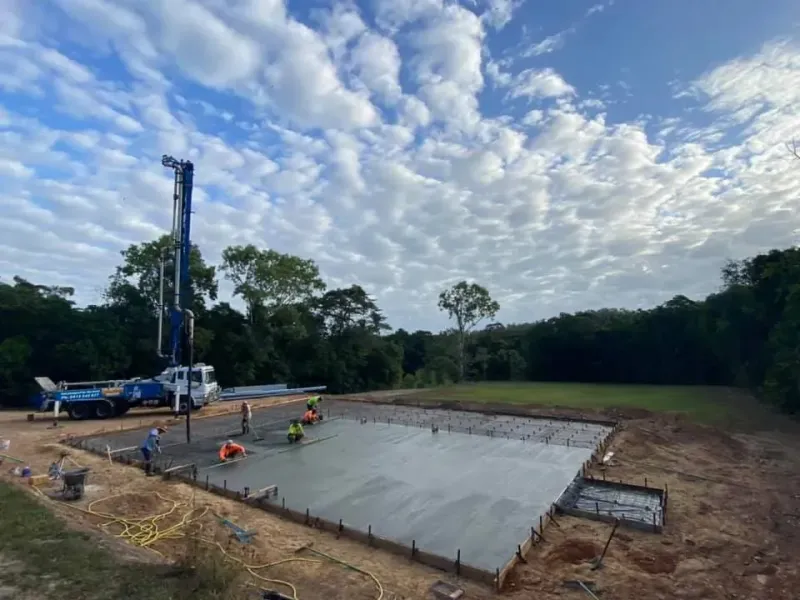
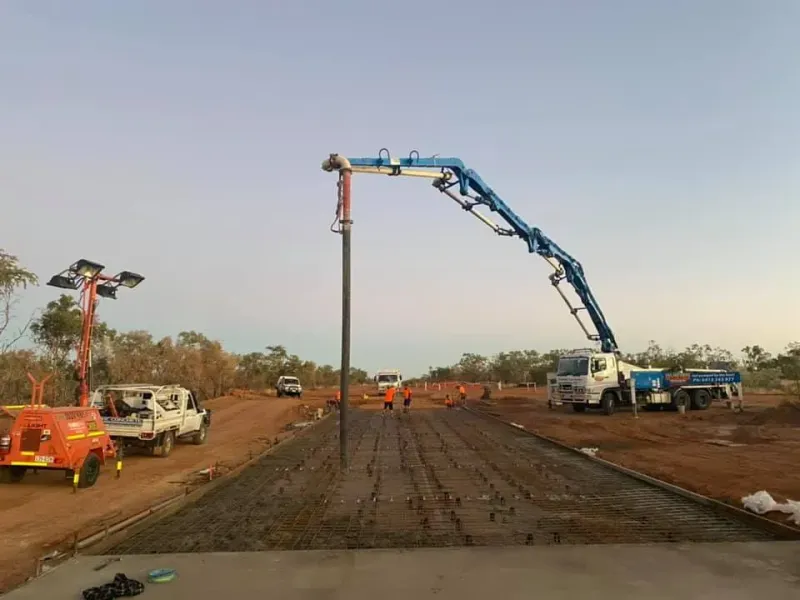
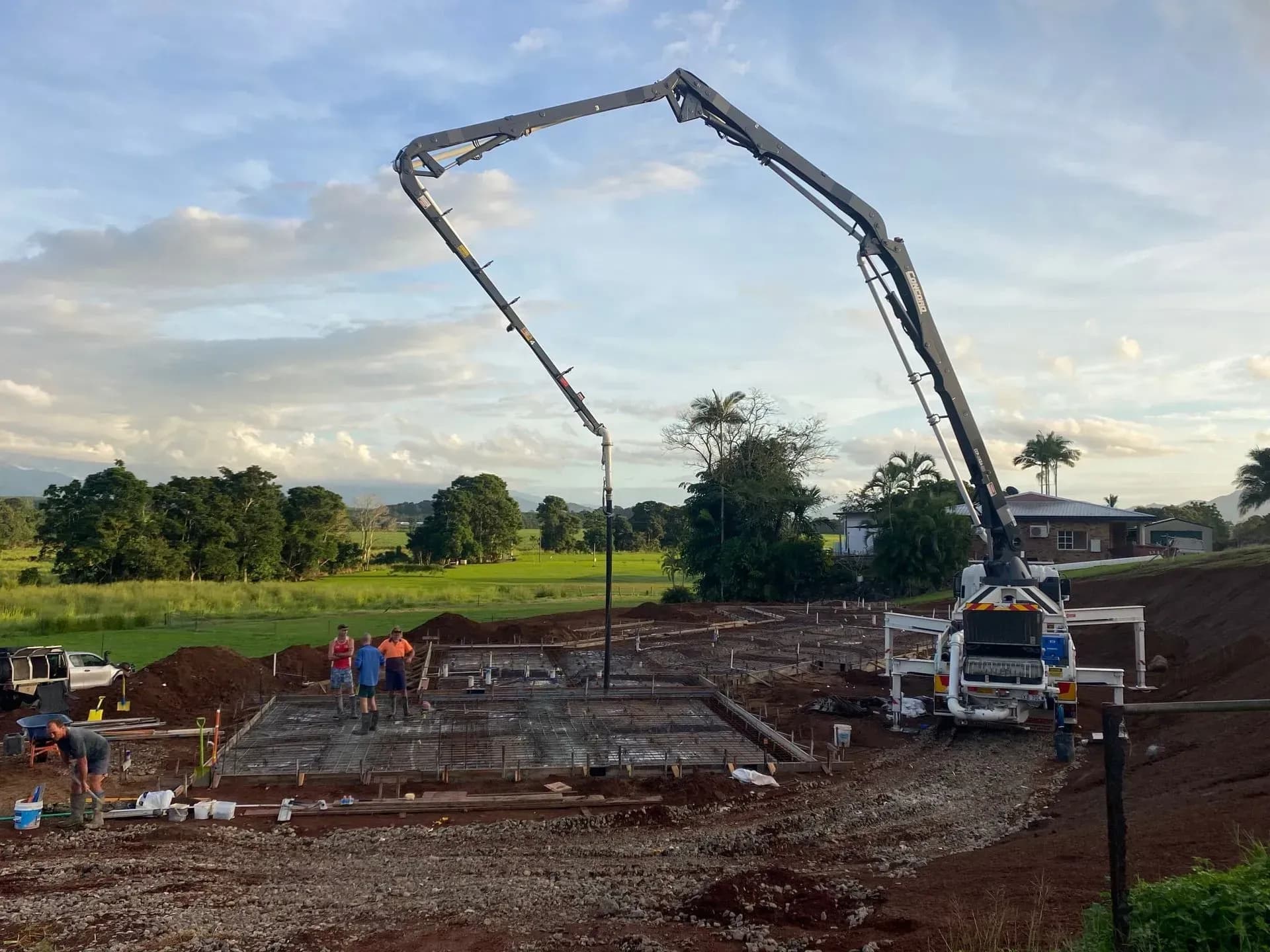
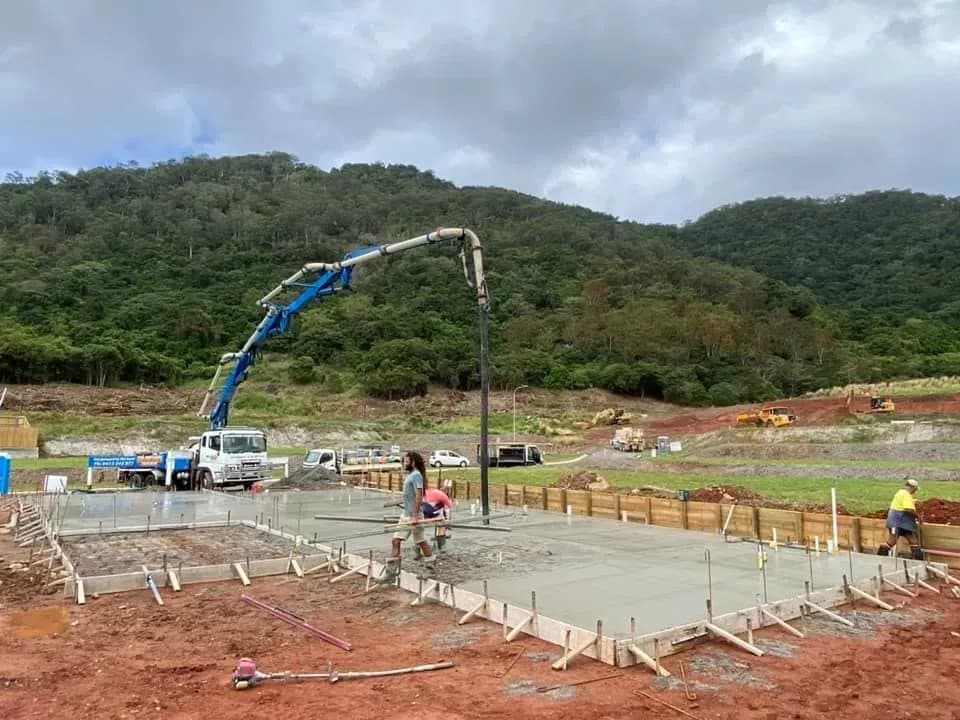
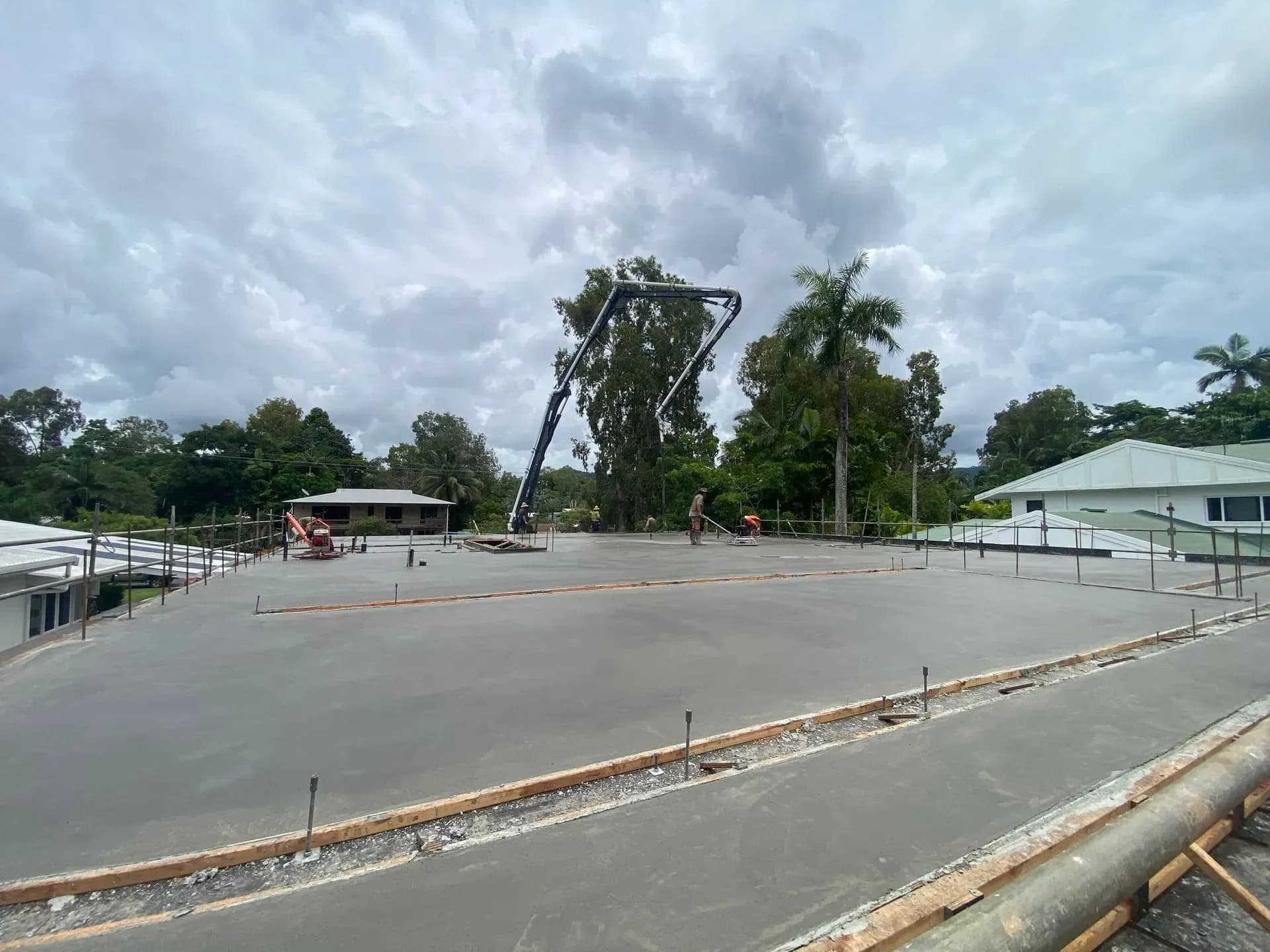
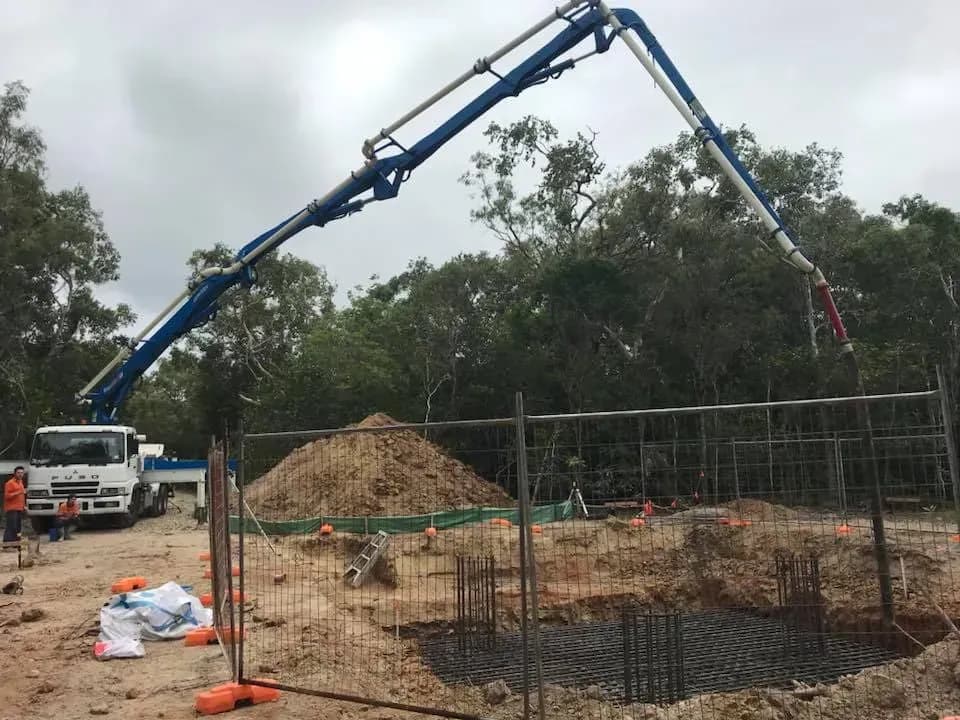
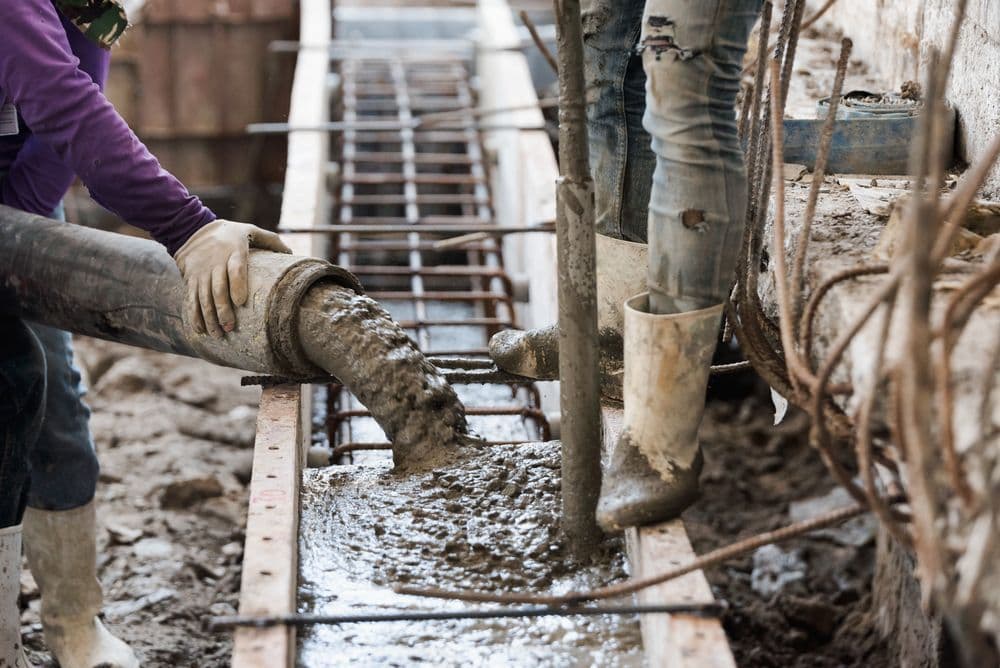
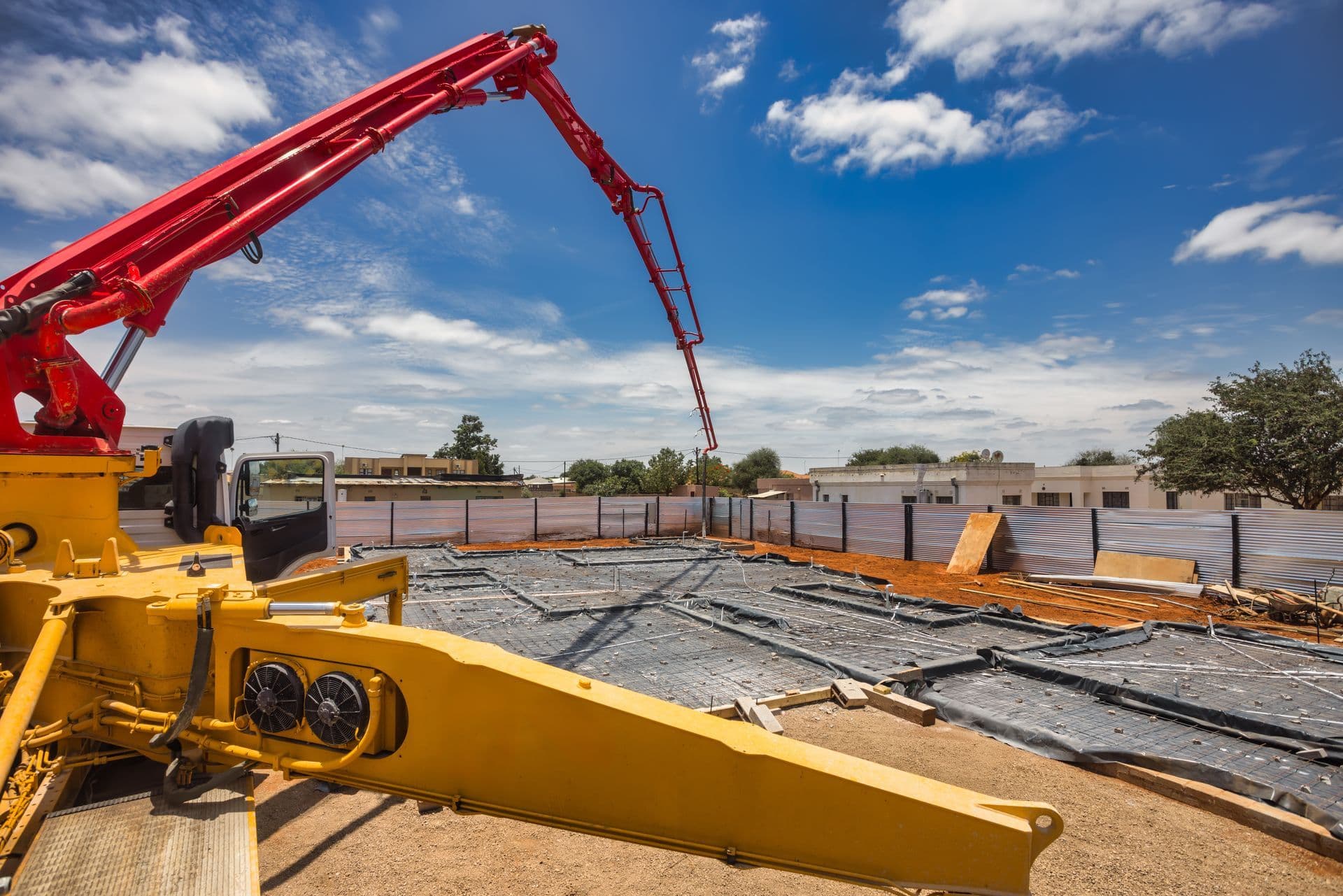
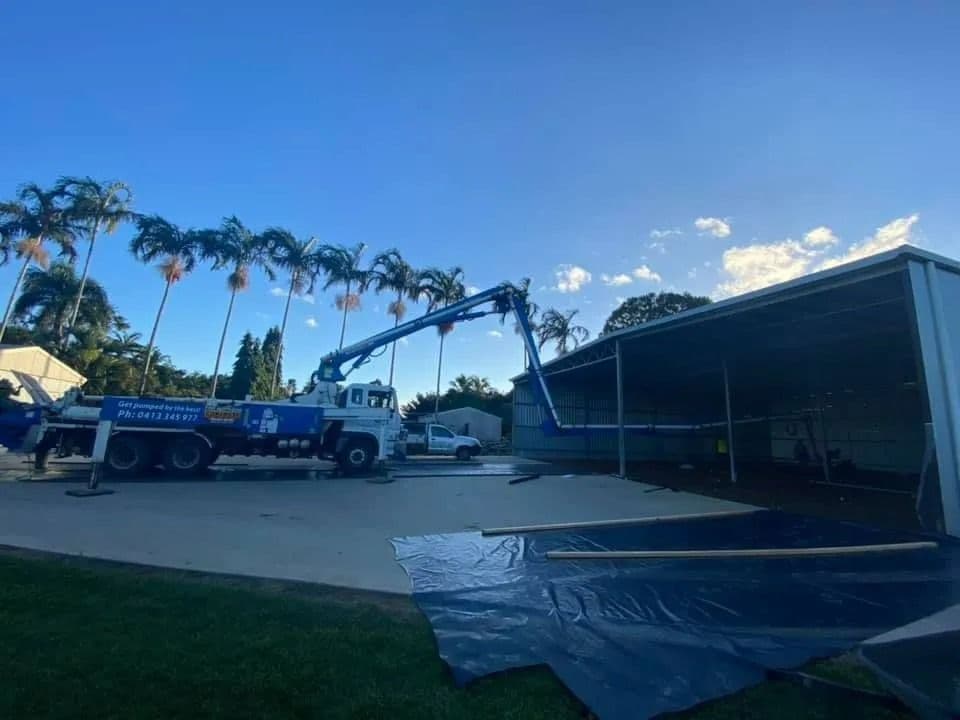
A pump lets you order ready-mix even when the truck cannot reach the pour, which often removes the reason for choosing bags in the first place. Hunter says access problems may be overcome by using a concrete pump, with a mix designed to pass through the pump and line. The alternative is barrowing: Hunter puts one cubic metre at 20 trips in a 50 litre wheelbarrow, at about 120 kg a load. Our guide to whether you need a concrete pump runs through the access checks.
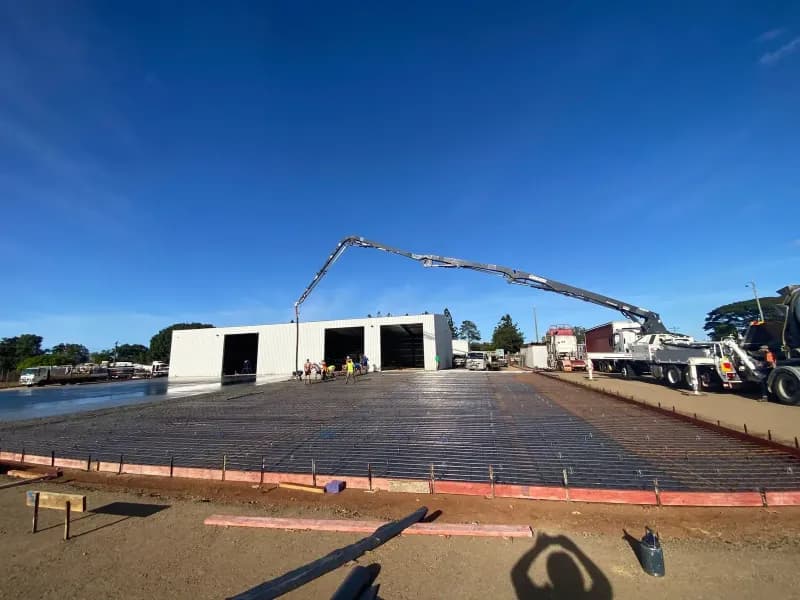
A pump is fed from the truck, not from a mixer. WorkSafe Queensland's Concrete Pumping Code of Practice 2019 says concrete is normally delivered to the pump by a concrete truck discharging into the pump's hopper. Our boom and line pumps both need a concrete mixer truck to supply them. Tell the plant it is a pumped pour: Holcim says it needs the placement method, the pump type and the line size and length to design the mix. Our guide to pump mix concrete explains why.
Bags, ready-mix or ready-mix and a pump: a decision table
Use the table to match your job to a supply method. It compares factors rather than naming a winner, because the right answer depends on the volume, the access and the specification on your plans.
Bagged concrete, ready-mix and ready-mix with a pump compared
| Factor | Bagged concrete | Ready-mix off the chute | Ready-mix with a pump |
|---|---|---|---|
| Volume | Small jobs; about 110 x 20 kg bags per m3 (Cement Australia Concrete Mix) | Some suppliers take orders in 0.1 m3 steps; small loads can attract minimum load fees | As for ready-mix; the pump keeps the truck at the street |
| Specified strength | Strength depends on site mixing; Cement Australia advises a truck for a defined MPa | Supplied in standard grades such as N20 and N25 | Supplied in standard grades, with a mix designed for the pump |
| Labour | Lift, measure, mix and place every batch | Crew to spread and finish within the truck's unloading time | Crew to spread and finish at the end of the hose or boom |
| Consistency | Varies with water and measuring in each batch | Batched at the plant to the order | Batched at the plant to the order |
| Access | Bags can be carried anywhere | Truck must reach the pour, or the concrete is barrowed from the chute | Truck at the street, concrete pumped to the pour |
| Timing | Mix at your own pace; use opened bags the same day | Unload within the supplier's allowed time | Pump and trucks booked for the same window |
Next steps
Start with the volume: our concrete volume calculator turns your measurements into cubic metres, and the cement vs concrete guide explains what is in the bag and the truck. Far Northern Concrete Pumping places concrete; we do not supply it. You order the concrete from a premix supplier, and we pump it from the truck to the formwork with a line pump or a 31 m, 28 m or 20 m boom pump. Based in Mareeba, we pump residential jobs across the Tablelands and Cairns, including smaller pours such as garden paths, patios and small shed slabs. See how our concrete pumping service works, then contact us or call 0413 345 977 with the location, the type of pour and the volume your concrete supplier has quoted.
Sources
- Concrete Mix, Cement Australia. Accessed 30 October 2026.
- FAQs, Cement Australia. Accessed 30 October 2026.
- PROSTRENGTH Extra Strength Concrete Mix, Cement Australia. Accessed 30 October 2026.
- Concrete Basics: A Guide to Concrete Practice (seventh edition, February 2010), Cement Concrete & Aggregates Australia. Accessed 30 October 2026.
- Ordering Premixed Concrete, Hunter Readymixed Concrete. Accessed 30 October 2026.
- 5 Essential Things You Need to Know When Ordering Premixed Concrete, Holcim Australia. Accessed 30 October 2026.
- Home renovator's step by step guide to laying concrete, Holcim Australia. Accessed 30 October 2026.
- North Queensland Service Fees (effective 1 May 2026), Holcim Australia. Accessed 30 October 2026.
- Concrete Service Fees: QLD Country (effective 14 October 2026), Boral. Accessed 30 October 2026.
- Concrete Pumping Code of Practice 2019, WorkSafe Queensland. Accessed 30 October 2026.
- Hazardous manual tasks, WorkSafe Queensland. Accessed 30 October 2026.