In brief
A full-size Australian agitator carries up to about 7 or 8 cubic metres and a mini-mix about 2 to 3.6, depending on the supplier. Loaded, they weigh from about 10 to 32 tonnes. Divide your order by the truck size to count trucks, then check the truck can reach and the ground can carry it before you book.
On this page
The short answer: up to about 7 or 8 cubic metres
A full-size concrete agitator truck in Australia carries up to about 7 or 8 cubic metres (m3) of concrete, and a mini-mix truck about 2 to 3.6 m3. The exact figure depends on the supplier and the truck. Hunter Readymixed Concrete, an Australian premix supplier, lists 7.0 m3 for its 8 wheelers and 8.0 m3 for its 10 wheelers, and says its fleet covers carrying capacities from 0.4 to 8.0 m3. Concrete Sales lists 0.4 to 2.2 m3 for its mini mix trucks, up to 5.8 m3 for its maxi trucks and up to 7.0 m3 for its twin steer trucks. Both suppliers start their ranges at 0.4 m3, so a truck does not have to arrive full. The maximum load tells you how many trucks a pour needs. The truck's size and loaded weight tell you whether it can reach the formwork at all.
Concrete agitator truck sizes in Australia
Australian concrete agitator trucks fall into a few size classes, from mini mix trucks for small pours to 8 and 10 wheelers for full loads. The table below collects the specifications two suppliers publish for their own fleets. Concrete Sales names its trucks by weight class (10T, 23T and 28T), and Hunter lists a weight it labels CML for each of its trucks. Look at the access columns as closely as the capacity column. Concrete Sales asks for 2.5 m of width and 2.8 m of height for a mini mix, but 3.0 m of width and 4.0 m of height for its maxi and twin steer trucks. Hunter asks for a minimum 3.9 m clearance overhead and lists its trucks as 2.5 m wide, or 3.1 m including the mirrors. Measure carports, gateways and overhanging branches on the way in against these figures before the truck is booked.
Concrete truck sizes published by Australian suppliers (accessed October 2026)
| Truck (supplier) | Carries | Loaded weight | Width or access | Height or clearance | Chute length |
|---|---|---|---|---|---|
| Mini mix (Concrete Sales) | 0.4 to 2.2 m3 | 10 tonnes | 2.5 m access | 2.8 m access | 2.5 m |
| Maxi (Concrete Sales) | 0.4 to 5.8 m3 | 22.5 tonnes | 3.0 m access | 4.0 m access | 2.8 m |
| Twin steer (Concrete Sales) | 0.4 to 7.0 m3 | 27.5 tonnes | 3.0 m access | 4.0 m access | 2.8 m |
| 8 wheeler (Hunter) | 7.0 m3 | 28 tonnes (CML) | 2.5 m, 3.1 m with mirrors | 3.9 m minimum clearance | 3.4 m from truck centre |
| 10 wheeler (Hunter) | 8.0 m3 | 32 tonnes (CML) | 2.5 m, 3.1 m with mirrors | 3.9 m minimum clearance | 3.4 m from truck centre |
Length matters on tight blocks and steep driveways too. Concrete Sales lists its mini mix at 5.5 m long, its maxi at 7.3 m and its twin steer at 8.9 m, and Hunter lists 8.0 m for its 8 wheeler and 8.8 m for its 10 wheeler.
Mini-mix trucks and small loads
A mini-mix truck is a small agitator built for small pours and tight sites. Concrete Sales describes its mini mix trucks as used for small loads and restricted access sites, carrying 0.4 to 2.2 m3 and weighing 10 tonnes loaded. Mini-mix sizes vary between suppliers: Minimix Concrete, for example, advertises a 3.6 m3 mini mix truck. A mini-mix is also one answer to the weight problem. Hunter Readymixed Concrete suggests asking, before you order, whether a fully laden truck driven onto the property would damage driveways, paths, patios or pipes in the ground. If it would, Hunter says a smaller truck such as a mini-mix may avoid the problem, or the concrete can be pumped from the street instead. On a larger pour, the trade-off is the number of trips, as the truck count table further down shows.
What a small delivery costs is set by each supplier's minimum load terms. Hunter says concrete can be ordered in multiples of 0.1 m3, but some suppliers charge a fee on small loads. Boral's Queensland Country service fees charge any load under 3.0 m3 as if the truck carried 3 m3; Boral's own example is 1.2 m3 despatched, with an extra charge on the missing 1.8 m3. Holcim's North Queensland fee schedule, dated effective 1 May 2026, charges a fee on delivered loads smaller than 4 m3. Those are two suppliers' terms at one point in time, so ask your local plant how it treats small loads before you split an order across trucks.
How heavy a loaded concrete truck is: about 10 to 32 tonnes
A loaded concrete truck weighs from about 10 tonnes for a mini mix to about 32 tonnes for a 10 wheeler agitator, going by Australian supplier figures. Concrete Sales lists 10 tonnes loaded for its mini mix, 22.5 tonnes for its maxi and 27.5 tonnes for its twin steer. Hunter lists 28 tonnes for its 8 wheeler and 32 tonnes for its 10 wheeler. Much of that weight is the concrete. Hunter puts one cubic metre of concrete at about 2,400 kg, so a full 8 m3 load is roughly 19 tonnes of concrete before the truck itself is counted. On public roads, the National Heavy Vehicle Regulator explains that General Mass Limits are the basic limits for all heavy vehicles, set for each axle and axle group under the Heavy Vehicle (Mass, Dimension and Loading) Regulation, and that local signage can restrict particular roads.
On site, the question is whether the ground can carry that weight. Boral's delivery requirements ask for a road surface compacted, or able, to sustain 23 tonnes for a 6 wheeler, 28 tonnes for an 8 wheeler and 32 tonnes for a 10 wheeler concrete truck. Hunter's list of what a fully laden truck can damage on the way in includes driveways, paths, patios and services in the ground such as stormwater and sewer pipes.
How many trucks your pour needs
The number of concrete trucks a pour needs is the order volume divided by the load each truck carries, rounded up to a whole truck. Start with the total you will order, including your wastage allowance, worked out in our concrete volume guide. Then divide by the size of truck your supplier will send. Concrete Sales notes that, depending on the job and worksite, concrete may need to come in more than one truck. The table below uses the maximum capacities listed earlier, so read it as a planning guide rather than a delivery schedule. Your supplier may load each truck differently.
- Work out the order volume in m3, with your allowance included, rounded up to the next 0.1 m3.
- Ask the supplier which truck it will send and how much that truck carries.
- Divide the order volume by the truck capacity and round up to a whole truck.
- Check whether the last truck is a small part load, and ask whether a minimum load fee applies to it.
Trucks needed by order volume (maximum listed capacities, illustrative arithmetic)
| Order volume | Mini mix, 2.2 m3 | Maxi, 5.8 m3 | 7.0 m3 truck | 10 wheeler, 8.0 m3 |
|---|---|---|---|---|
| 5 m3 | 3 loads | 1 truck | 1 truck | 1 truck |
| 10 m3 | 5 loads | 2 trucks | 2 trucks | 2 trucks |
| 20 m3 | 10 loads | 4 trucks | 3 trucks | 3 trucks |
| 30 m3 | 14 loads | 6 trucks | 5 trucks | 4 trucks |
A 20 m3 slab, for example, is three full-size trucks at 7 or 8 m3 each, four maxi trucks, or ten mini-mix loads.
Trucks and the pump: spacing, part loads and waiting time
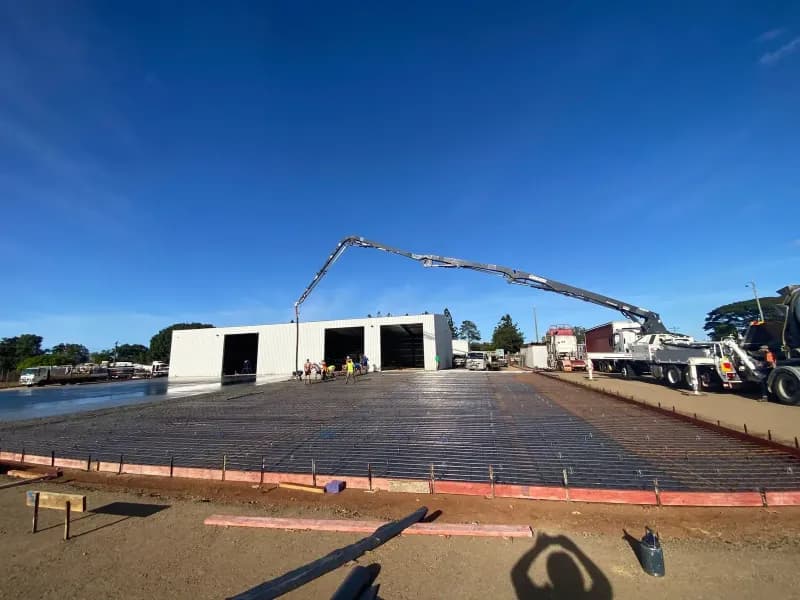
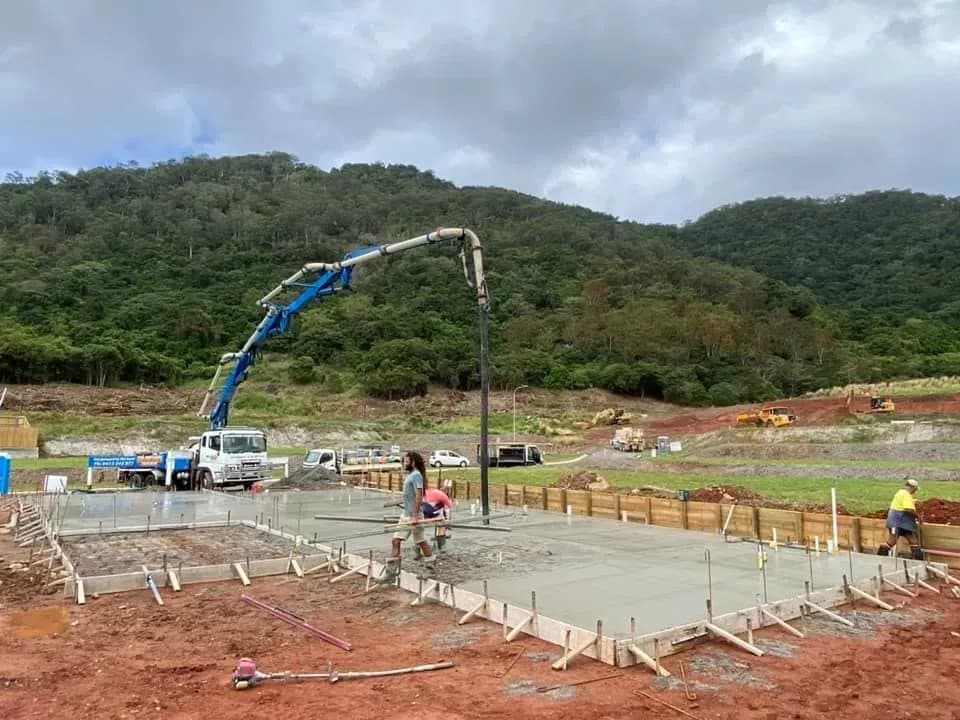
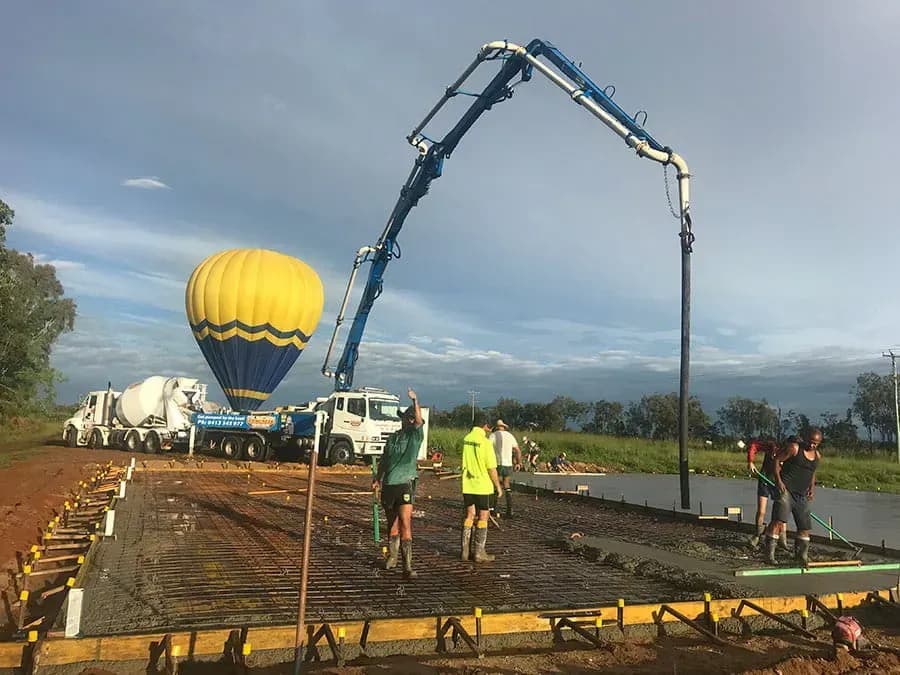
When a concrete pump is on the job, the trucks feed the pump rather than the formwork, so the gap between trucks matters as much as their size. WorkSafe Queensland's Concrete Pumping Code of Practice 2019 says concrete is normally delivered to the pump by a concrete truck discharging into the pump's hopper, and that the pump operator should ensure pump flow rates match the discharge rates of the delivery trucks. Hunter Readymixed Concrete says that if more than one truckload is needed, the supplier must know how long is required between deliveries, and that you should check how long the trucks have on site to discharge. Cement Concrete & Aggregates Australia (CCAA) says the required rate of placing the concrete is important, and Holcim asks for the rate of placement so it can plan production and schedule deliveries to match. Holcim also says the size of truck and traffic management should be planned so there are no delays on the day.
Time on site is limited and charged. Boral's Queensland Country fees give 30 minutes to unload a vehicle from its arrival on site, and Holcim's North Queensland schedule charges waiting time after 30 minutes on site. Running short can cost more too: Holcim notes that plus or balance loads are subject to truck availability and may incur additional fees. Where two trucks feed the pump in turn:
- Boral requires 600 mm clearance between two trucks feeding a pump hopper at the same time, and Holcim asks for at least 600 mm between the trucks and other stationary objects.
- Where more than one truck must approach the hopper at once, WorkSafe Queensland's code says the principal contractor or person with management or control of the workplace should ensure a spotter or traffic controller directs the trucks.
- The same code says no person should stand between a reversing concrete truck and the hopper.
When the truck cannot get close: chute reach vs pump
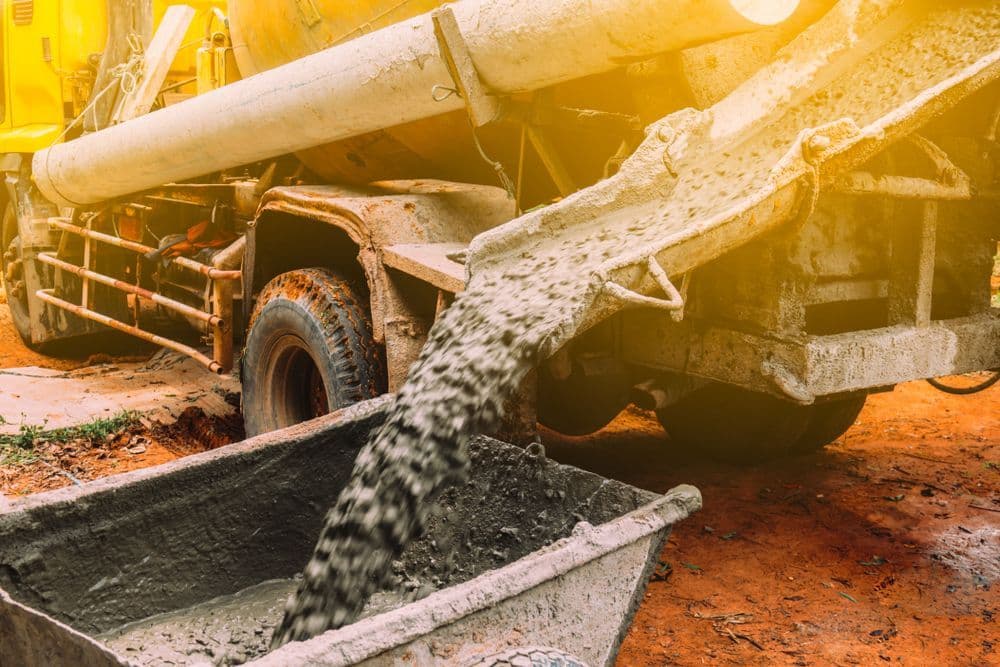
Without a pump, a concrete truck reaches only as far as its chute, and published chute lengths run from about 2.5 to 3.4 metres. Concrete Sales lists 2.5 m on its mini mix and 2.8 m on its maxi and twin steer trucks. Hunter lists 3.4 m but measures it from the centre of the truck, so part of that length sits over the truck itself. Some suppliers will not add extra chute sections: Holcim does not allow chutes to be added beyond those supplied on its trucks. Getting the truck close enough has its own limits. Boral asks for an access road at least 3 metres wide and clear of building materials and forward gradients no steeper than 1 in 10. Hunter's advice is simple: if you are in doubt whether a standard truck can reach the pour, check with your supplier.
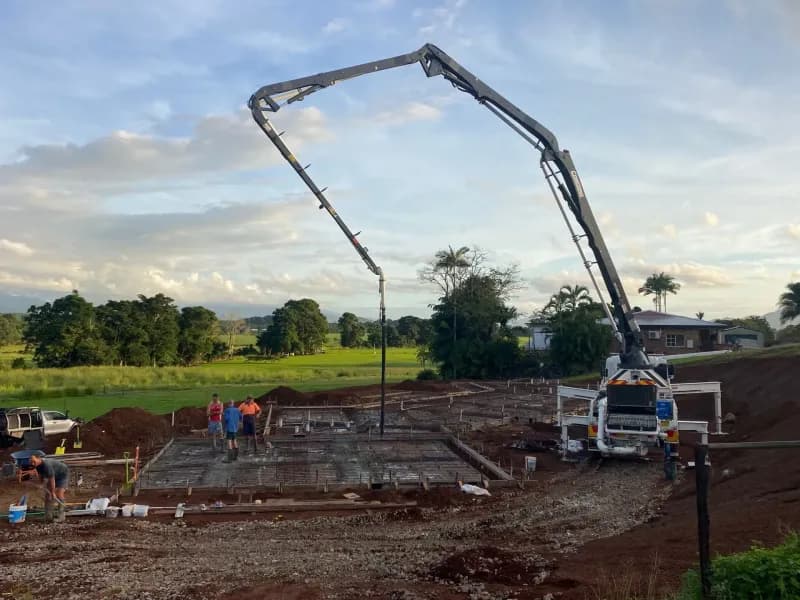
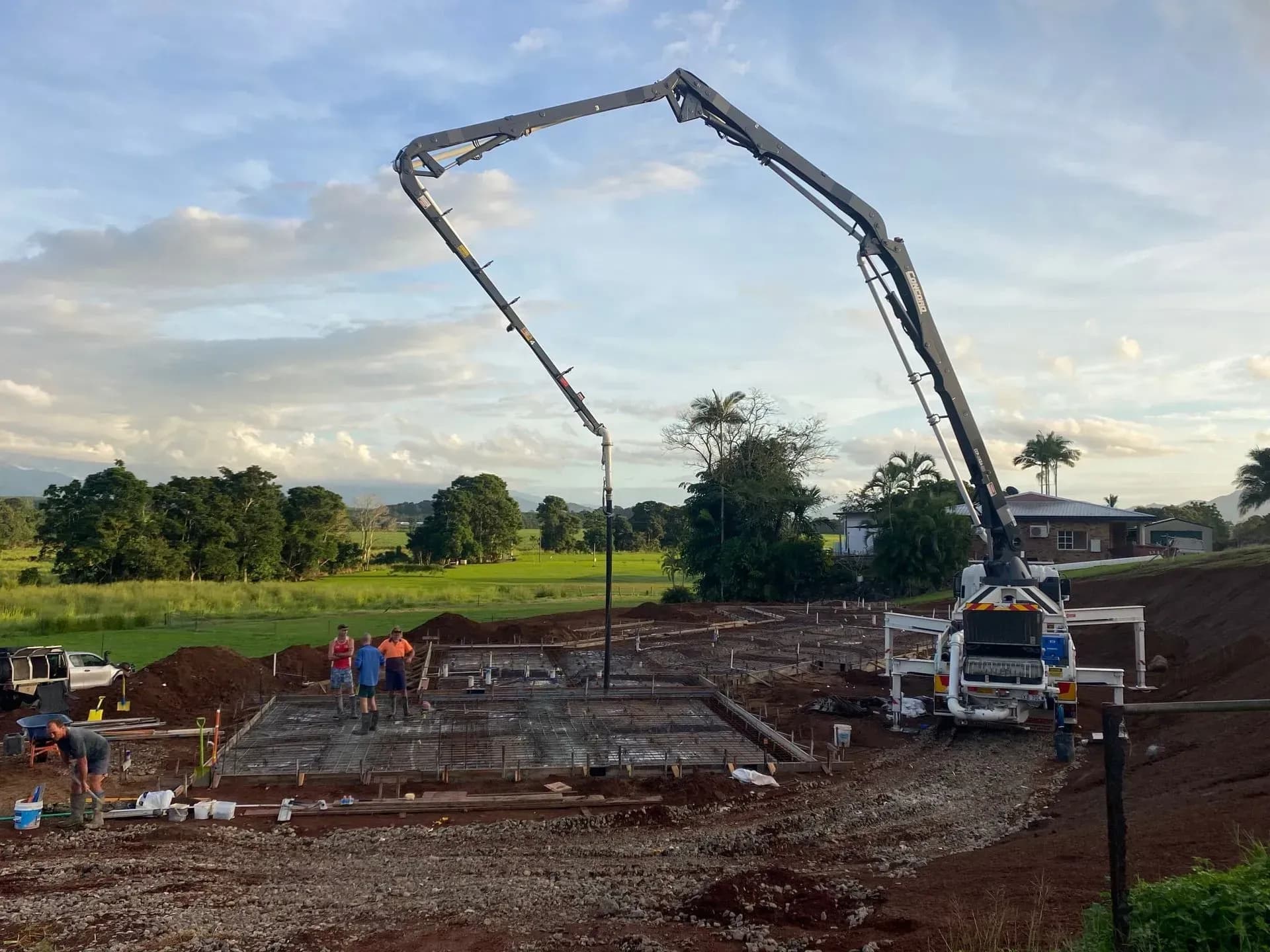
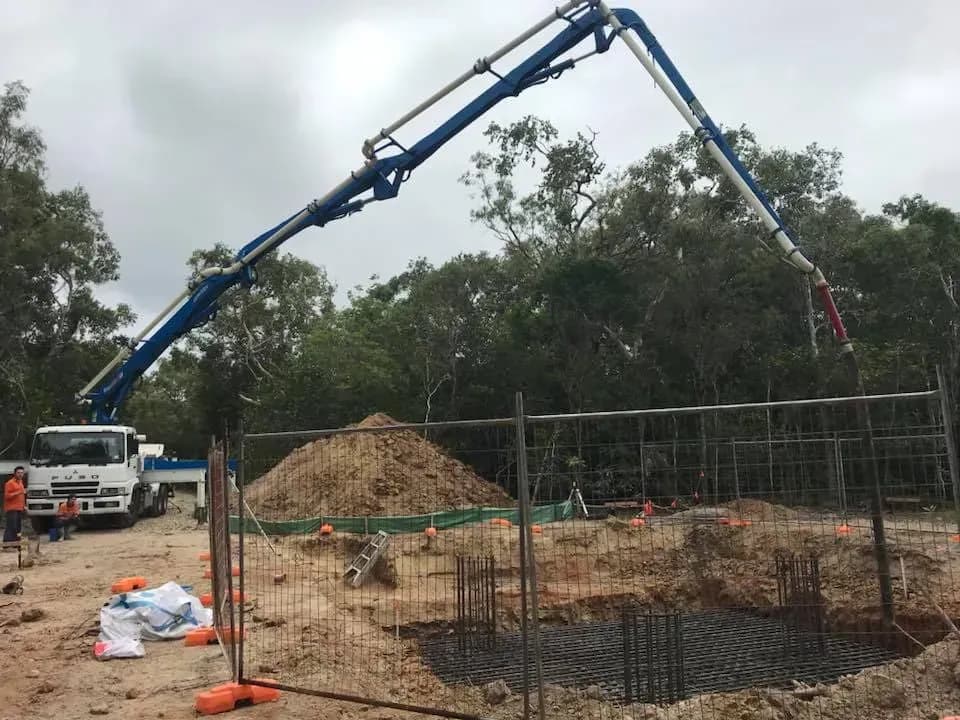
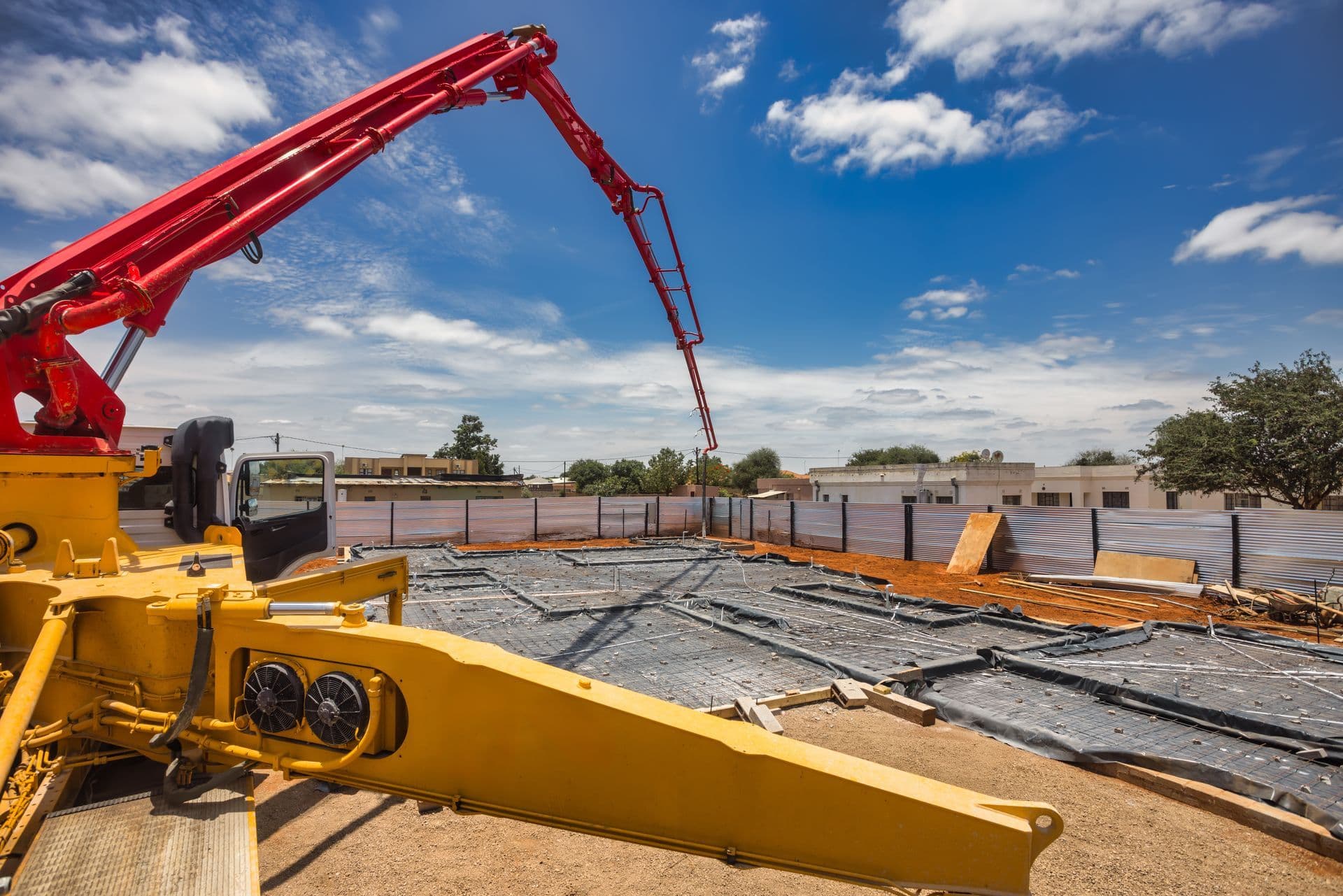
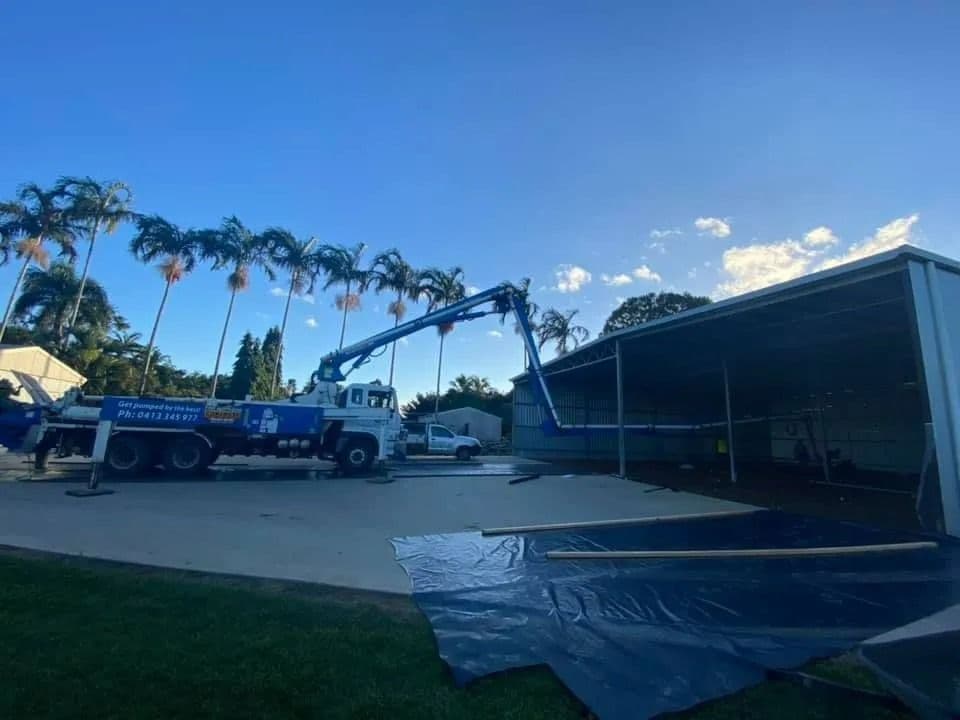
When the truck cannot park within chute reach, the choice is barrows or a pump, and Concrete Sales notes a pump can carry concrete to a location a conventional truck cannot reach. Our guide do I need a concrete pump runs a five-check site access test, how far a concrete pump can reach covers boom and line pump reach, and the site preparation checklist covers setting up for the trucks and the pump on the day.
Converting US cubic yard figures
Many truck capacity answers online are in US cubic yards, so convert them before comparing with an Australian quote. Multiply cubic yards by 0.7646: the US National Institute of Standards and Technology (NIST) lists one cubic yard as 0.7645549 cubic metres. A 10 yard truck therefore carries about 7.6 m3, close to the 7 and 8 m3 full-size trucks Australian suppliers list. At Hunter's figure of about 2,400 kg per cubic metre, that load is roughly 18 tonnes of concrete before the truck is counted. Australian suppliers such as Hunter take orders in cubic metres, in steps of 0.1 m3, so work in metric from the start. Travel time also shapes the order, because CCAA describes the requirement for concrete to be discharged within 90 minutes of the commencement of mixing, explained in our 90 minute rule guide.
Next steps
Once you know how many trucks your pour needs and whether they can reach the formwork, the next question is usually what the pump will cost. Our concrete pump hire cost guide walks through what drives the price. Far Northern Concrete Pumping is based in Mareeba. Our operators have access to a 31m boom pump, 28m boom pump, 20m boom pump and line pump, and our compact line pump reaches tight or sloped spaces. We help on residential projects across the Tablelands and work right across Cape York. See our concrete pumping and residential services, then contact us or call 0413 345 977 with your address, the volume your supplier has quoted and the truck spacing. We are open 24 hours, Monday to Sunday.
Sources
- Meet The Fleet, Hunter Readymixed Concrete. Accessed 30 October 2026.
- Ordering Premixed Concrete, Hunter Readymixed Concrete. Accessed 30 October 2026.
- Truck Fleet, Concrete Sales. Accessed 30 October 2026.
- "NEW" 3.6 cubic meter mini mix truck, Minimix Concrete. Accessed 30 October 2026.
- Concrete Delivery Requirements 2024, Boral. Accessed 30 October 2026.
- Service Fees, Boral Concrete, Queensland Country, Boral. Accessed 30 October 2026.
- North Queensland Service Fees (effective 1 May 2026), Holcim Australia. Accessed 30 October 2026.
- 5 Essential Things You Need to Know When Ordering Premixed Concrete, Holcim Australia. Accessed 30 October 2026.
- Safe Site Delivery, Holcim Australia. Accessed 30 October 2026.
- Ordering Premixed Concrete (data sheet), Cement Concrete & Aggregates Australia. Accessed 30 October 2026.
- Concrete Pumping Code of Practice 2019, WorkSafe Queensland. Accessed 30 October 2026.
- General Mass Limits (GML), National Heavy Vehicle Regulator. Accessed 30 October 2026.
- NIST Guide to the SI, Appendix B: Conversion Factors, National Institute of Standards and Technology. Accessed 30 October 2026.