





In brief
The 90 minute rule says ready-mixed concrete should be discharged within 90 minutes of the start of mixing at the batching plant, not 90 minutes from when the truck reaches your site. In Australia it comes from AS 1379, the standard for the specification and supply of concrete. The 2007 edition set the limit and allowed it to be waived or varied if the customer and supplier agreed before supply. Standards are revised over time, so check the current edition and your supplier's terms. Heat and travel time both eat into that window, which matters on Far North Queensland jobs a long way from the plant.
On this page
The 90 minute rule in one answer
The 90 minute rule for concrete is a time limit: ready-mixed concrete should be out of the agitator within 90 minutes of the commencement of mixing. The clock starts when the load is mixed at the batching plant, so the drive, any wait at the site gate and the pour itself all come out of the same 90 minutes. Boral's national conditions of supply, for example, count it from the time the truck leaves the plant. The limit matters because concrete loses workability with time, and more quickly in hot weather. Cement Concrete & Aggregates Australia (CCAA) says delays cause concrete to dry out and stiffen, and that this happens faster on hot or windy days. Stiff concrete is harder to place and compact, and adding water to loosen it costs strength.
Where the 90 minutes goes on a typical pour
| Stage | Counts toward the 90 minutes? | Who can shorten it |
|---|---|---|
| Mixing at the batching plant | Yes, the clock starts here | Supplier |
| Travel from plant to site | Yes | Supplier, by choice of plant and route |
| Waiting on site for the pump, forms or crew | Yes | Builder, by being ready for the first truck |
| Discharge into the pump hopper and placing | Yes, must finish inside the window | Builder and pump crew |

Where the rule comes from in Australia
In Australia the 90 minute rule comes from AS 1379, the Australian Standard for the specification and supply of concrete. The 2007 edition required concrete to be discharged within 90 minutes of the commencement of mixing. Standards are revised over time, so check the current limit in your supplier's terms. CCAA's Ordering Premixed Concrete data sheet (2017) explains that the AS 1379 requirement for concrete to be discharged within 90 minutes of the commencement of mixing may be waived, or varied depending on weather conditions, provided the customer and the supplier agree before supply. That last condition is the practical point: a longer limit is arranged when the concrete is ordered, not negotiated with the driver once a load is already running late.
Some suppliers write the limit into their terms of sale. Boral's national conditions of quotation and supply list discharge from the agitator more than 90 minutes from the time ex-plant among the things that reduce Boral's liability, next to water added without the approval of its representative. Queensland's Department of Transport and Main Roads (TMR) is stricter on its own road and bridge work: its MRTS70 concrete specification sets placement limits of 75 or 60 minutes depending on concrete temperature, and rejects the hottest loads outright.
What happens when concrete runs over time
When concrete runs past 90 minutes, two things change: who carries the risk, and how the concrete behaves. On risk, supplier terms such as Boral's reduce the supplier's liability for a late discharge, so if the work later shows a defect the builder may carry more of it. On behaviour, CCAA's hot weather data sheet explains that reduced setting time and workability raise the chance of inadequate compaction, cold joints and poor finishes. CCAA's Concrete Basics adds that when concrete stiffens quickly, a cold unbonded joint can form between concrete already in place and the next load.
The common reaction to a stiff, late load is to hose water into the agitator. CCAA's advice is to never just add water to make concrete more workable, because extra water decreases strength and increases permeability. TMR's MRTS70 bans adding water to offset long travel or wait times, and does not allow water to be added for workability once 45 minutes has passed from charging the mixer.
What shortens the window: heat, distance, delays
Heat, distance from the plant and delays on site are the three things that shrink the practical working window for concrete. CCAA's hot weather data sheet states that as concrete temperature increases, the setting time, and with it the time to place, compact and finish, is reduced, and that higher temperatures cut workability more quickly over time. CCAA's hot weather data sheet notes a 35 degree limit on concrete temperature at delivery under earlier editions of AS 1379, and recommends precautions once air temperature rises above 30 degrees. Bureau of Meteorology averages show why that matters here: Mareeba Airport's mean maximum is 31.9 degrees in November and 32.1 degrees in December, and Cairns averages 31.5 degrees in December and January. So on an average early-summer afternoon in the Far North, you are already past the point where CCAA suggests taking precautions.
What squeezes the 90 minute window and what helps
| Factor | Effect on the window | What helps |
|---|---|---|
| Heat | Concrete sets sooner and loses workability faster | Pour in the cooler part of the day, or at night where allowed |
| Distance from the plant | Travel time is taken from the same 90 minutes | Talk to the supplier early and agree any retarder or varied limit before supply |
| Site delays | Trucks wait with the clock running | Forms, equipment and workers ready for the first delivery |
| Truck spacing | Loads arrive faster than they can be placed | Space trucks so one load is placed before the next arrives |
Planning a pour around the clock
Planning a pour around the 90 minute rule starts at the ordering stage, because the supplier schedules batching from what you tell them. CCAA's Concrete Basics says to give the supplier the time of the first truckload and the time between truckloads, leaving enough time to place and compact one load before the next arrives. A practical pre-pour sequence looks like this:
- Tell the supplier the concrete is going through a pump, plus the type of pump and the size and length of line, as these affect the mix design.
- Advise the supplier of any delays you expect and of site access conditions, such as a long or steep driveway.
- Book the first truck for the cooler part of the day. CCAA suggests programming concreting for the cooler parts of the day, or night-time placement if possible.
- Have forms, equipment and workers ready before the first delivery, and book the pump to be set up before the first truck arrives so loads are not queuing.
- Space truck arrivals so each load can be placed and compacted before the next one turns up.
- If heat or a long haul makes 90 minutes tight, agree a set-retarding admixture or a varied limit with the supplier before supply, not on the day.
- Let the supplier know promptly if the schedule changes, so trucks are not batched into a wait.
For the pump side of the plan, see our guide to preparing your site for a concrete pump, and if storms are forecast for pour day, read pouring concrete in the rain.
Remote and regional pours in Far North Queensland
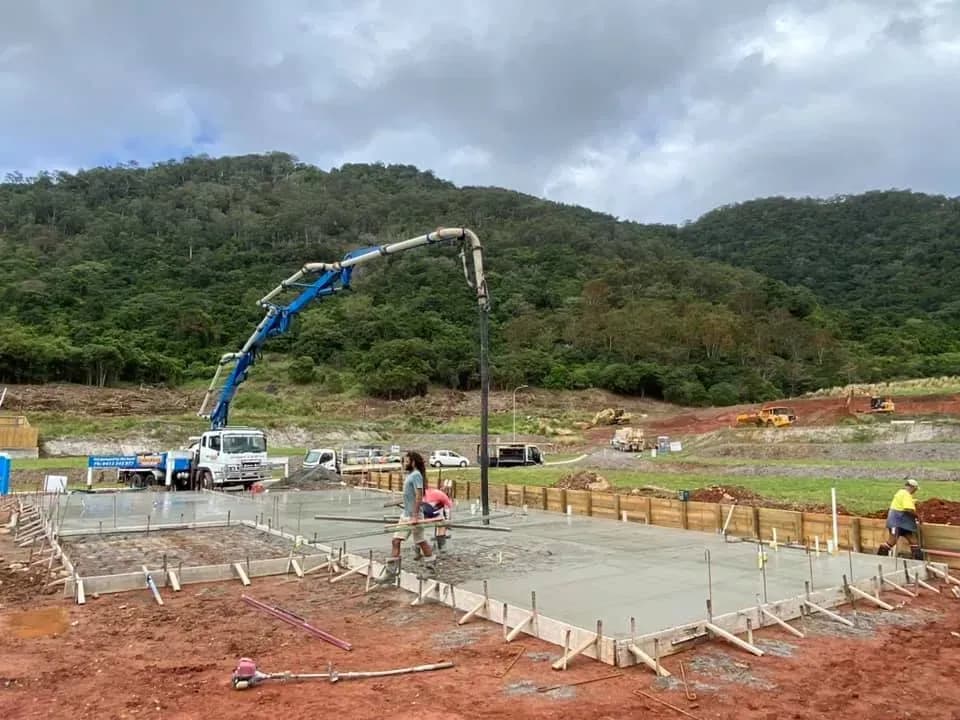
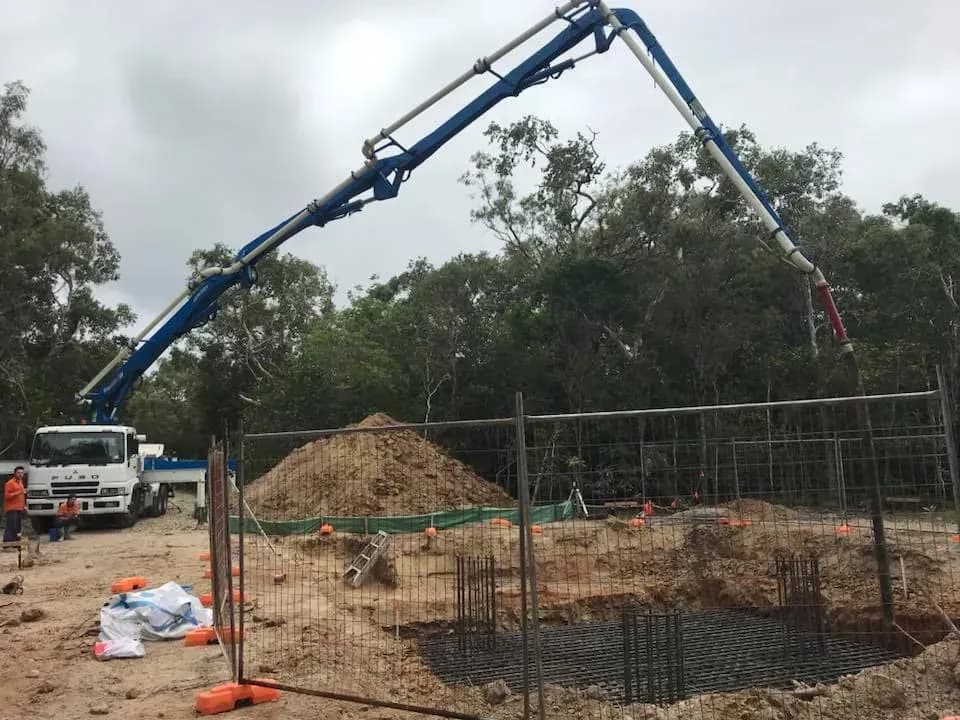
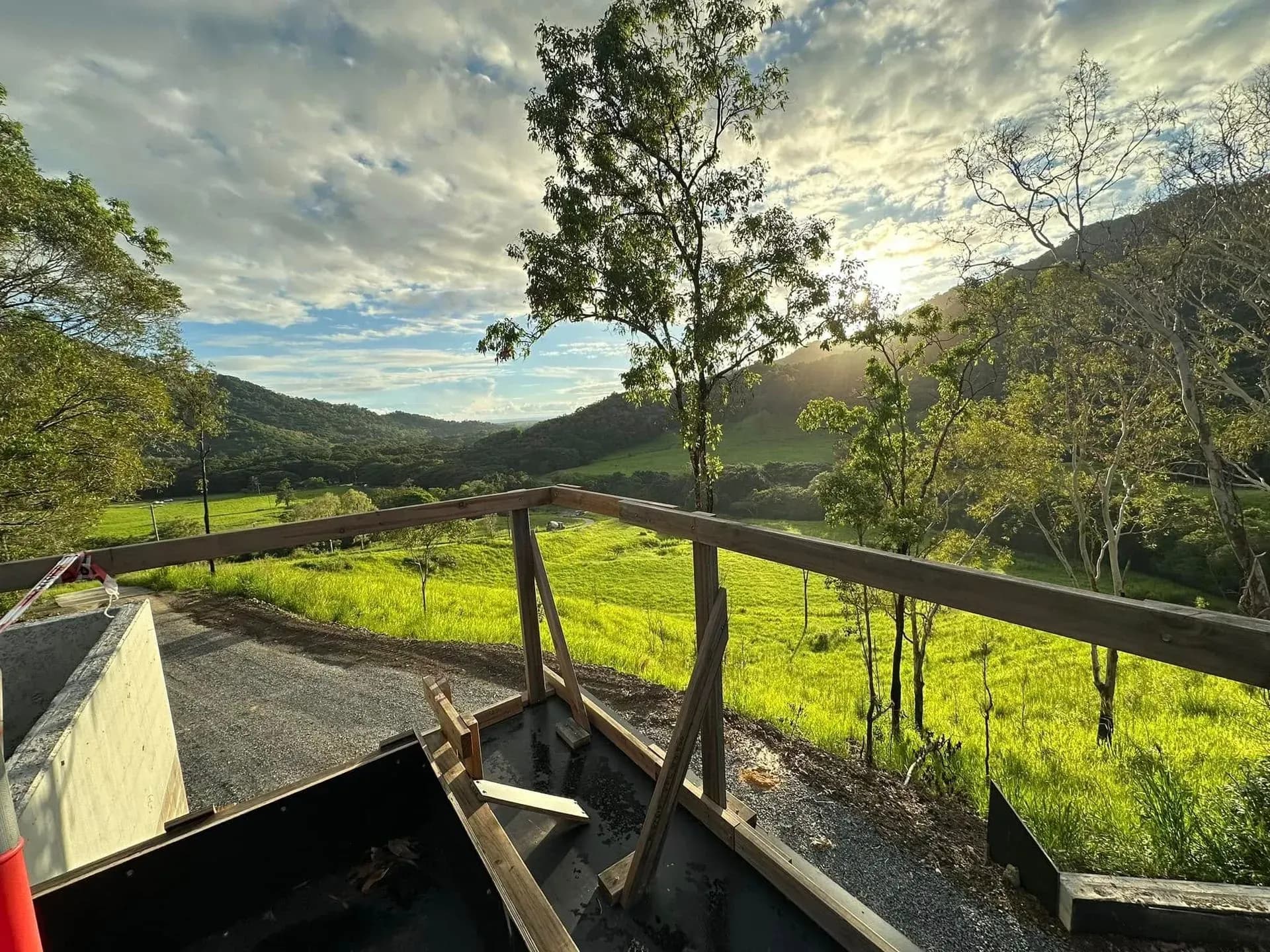
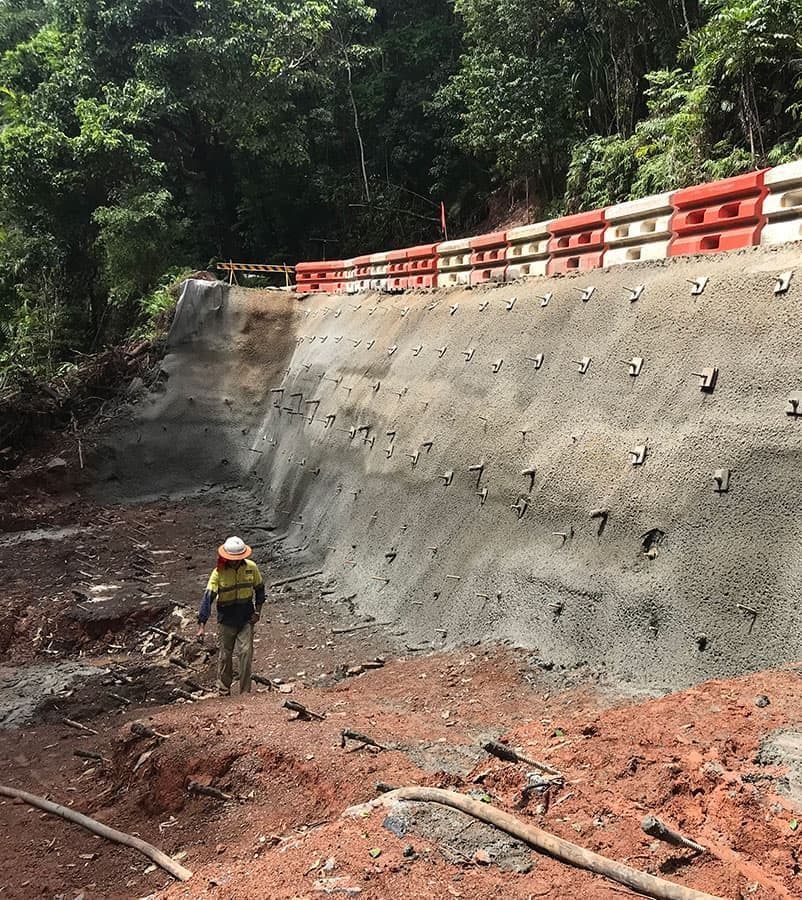
Remote and regional pours in Far North Queensland put the most pressure on the 90 minute rule, because a long drive from the plant can use a large share of the window before the truck reaches site. Far Northern Concrete Pumping is based in Mareeba and covers the Tablelands, Cairns, the coast north to Port Douglas and Cooktown, and south through Innisfail and Tully, and we extend our services to rural and remote worksites and mine sites. For coastal jobs, see Cairns concrete pumping. Our civil work includes roads and remote access pours. On a Cape York or Tablelands job, ask the supplier at the ordering stage which plant will batch the concrete, how long the run takes, and whether the mix needs a retarder or an agreed variation.
TMR's MRTS70 shows how long hauls are handled on state road work. Where travel or placement times have to exceed its limits, a long-distance travel procedure must be submitted for approval six weeks before concreting begins, with options such as a set retarding admixture added at the batch plant for up to 90 minutes. Outside TMR work the lesson still carries over: sort out extended time with the supplier weeks ahead, not on the morning of the pour. On our side, the fleet of 31m, 28m and 20m boom pumps and a line pump is maintained in our own workshop, which is how we commit to a start time and hold it.
Next steps
Before you lock in a pour date, run through our site preparation checklist so the pump is set up and waiting when the first truck arrives. To see the pumps we run, visit concrete pumping. When you are ready to book, contact us or call 0413 345 977. We are open 24 hours, Monday to Sunday.
Sources
- Ordering Premixed Concrete (hosted by Hunter Concrete), Cement Concrete & Aggregates Australia. Accessed 4 October 2026.
- Conditions of Quotation and Supply: Quarry Materials (National), Boral. Accessed 4 October 2026.
- MRTS70 Concrete, Technical Specification, Queensland Department of Transport and Main Roads. Accessed 4 October 2026.
- Hot-Weather Concreting data sheet, Cement Concrete & Aggregates Australia. Accessed 4 October 2026.
- Concrete Basics: A Guide to Concrete Practice, Cement Concrete & Aggregates Australia. Accessed 4 October 2026.
- Climate statistics: Mareeba Airport, Bureau of Meteorology. Accessed 4 October 2026.
- Climate statistics: Cairns Aero, Bureau of Meteorology. Accessed 4 October 2026.