

In brief
Cement is the binder; concrete is the finished building material. Cement makes up only about 10 to 15 percent of a concrete mix by volume, while sand and stone make up most of the rest. When you order a slab, you order concrete.
On this page
Cement vs concrete: cement is one ingredient of concrete
Cement is an ingredient of concrete, not another name for it. Cement Australia explains that although the two words are often used interchangeably, concrete is basically a mixture of aggregates and paste. The aggregates are sand and gravel or crushed stone, and the paste is water and Portland cement. Cement makes up only 10 to 15 percent of the concrete mix by volume.
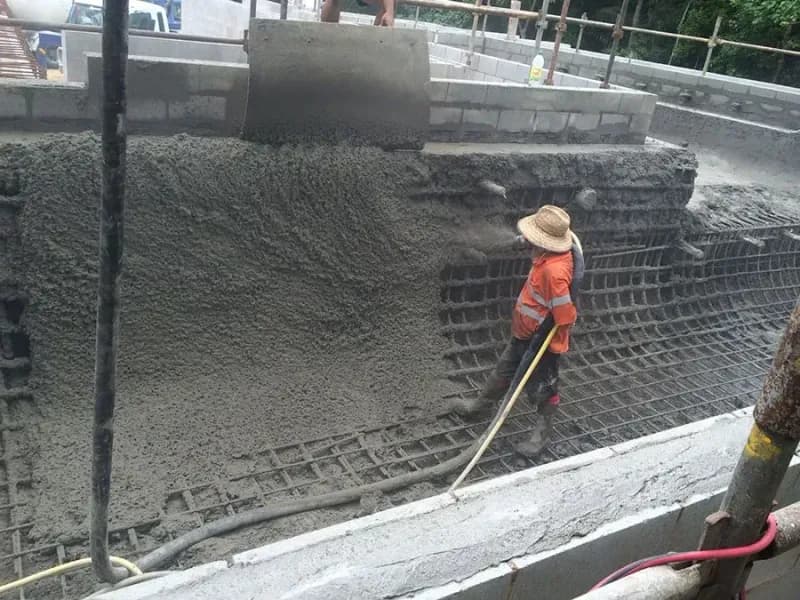
The difference matters because the two behave so differently. Cement on its own is a dry powder. Concrete is the mixed material that, through a chemical process called hydration, sees the cement and part of the water react and harden, binding the sand and stone into a rocklike mass. Boral puts the practical point plainly: on a building or landscaping project you will almost always use concrete, not cement alone. So when a builder talks about pouring a cement slab or a cement driveway, the material in the formwork is concrete.
What cement is and how it is made
Cement is a fine powder that acts as the glue in concrete. Boral describes it as a dry powder made from limestone and other minerals. Cement Australia sets out how it is produced: raw materials are quarried or dredged, crushed and ground, blended in the correct proportions and burned at high temperature in a kiln. The cooled product is called clinker, and the clinker is then ground to a fine powder with gypsum added. That powder is the cement used in concrete.
General purpose cement in Australia is made from Portland cement clinker, gypsum and limestone, according to Cement Australia. The word Portland often causes confusion. Portland cement is not a brand name but the generic term for the type of cement used in virtually all concrete. On its own, cement is not a finished building material. It needs water to react, and sand and stone to become concrete.
What concrete is made of: cement, water, sand, stone and admixtures
Concrete is made by mixing cement, water, coarse and fine aggregates and, if required, admixtures. That list comes from Concrete Basics, the guide published by Cement Concrete & Aggregates Australia (CCAA). Each ingredient has a job:
- Cement: mixed with water it forms a paste that acts like glue and holds or bonds the aggregates together.
- Water: reacts with the cement. It must be clean and fresh, and CCAA warns against sea water in reinforced concrete because it may rust the steel.
- Coarse aggregate: crushed rock, gravel or screenings.
- Fine aggregate: fine and coarse sands and crusher fines. CCAA says the sand should be concreting sand, not brickies sand or plasterers sand.
- Admixtures: added to change properties such as the time concrete takes to set and harden, or its workability.
By volume the stone and sand do most of the work: Cement Australia says aggregates form up to 80 percent of the volume of concrete. The cement paste is the smaller share that holds or bonds the aggregates together.
Cement, concrete and mortar compared
Mortar is the other mix people confuse with concrete, and the difference is the stone. Mortar is cement and sand without the coarse aggregate, used to lay bricks and blocks. Cement Australia's bagged Sand & Cement is a blend of graded sands and cement designed as a general purpose mortar, and its Trade Mortar is a pre-blended bricklaying mortar of cement, sand and additives made to AS 3700. Its bagged Concrete Mix, by contrast, adds aggregates to the cement and sand. The table compares the three.
Cement, mortar and concrete side by side
| Material | What is in it | Typical uses named by Australian makers |
|---|---|---|
| Cement | Ground clinker with gypsum; GP cement also contains limestone | Making mortar, small patch repairs, as a bonding agent (Boral) |
| Mortar | Cement and sand, sometimes with additives | Laying bricks, masonry blocks and stonework (Cement Australia) |
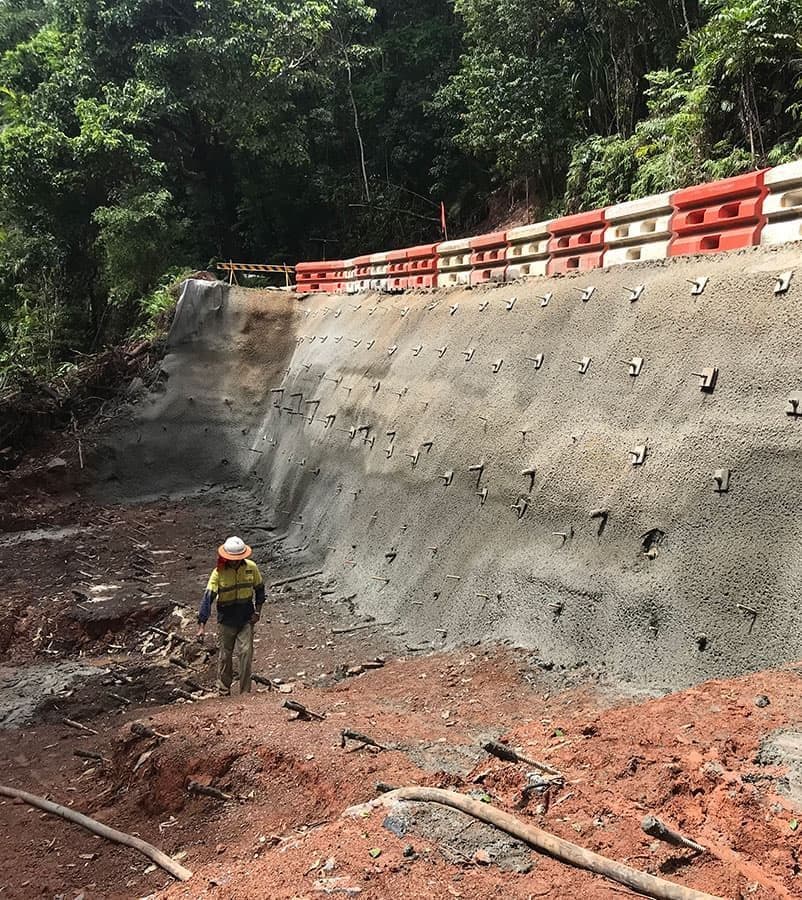
| Concrete | Cement, water, sand, gravel or crushed stone, and admixtures if required | Driveways and footpaths, slabs and foundations, retaining walls, fence posts (Boral) |
Cement Australia also notes that masonry cement, a type made for mortar, is unsuitable for use in structural concrete, so the bag matters as much as the mix.
GP and GB cement: the two common Australian types
GP cement is general purpose Portland cement, and GB cement is general purpose blended cement that replaces part of the Portland cement with materials such as fly ash. CCAA lists six major types of cement sold in Australia and says GP and GB are the most commonly used. Both types are made to AS 3972, the Australian Standard for general purpose and blended cements, and Cement Australia states that its GP and GB products comply with it.
Cement Australia's Builders Cement is its GB product, a blend of GP cement and fly ash. It says concrete made with it gains improved workability, later-age strength and durability and a lower carbon footprint, but early strength gain may be lower than with GP cement and curing may be more critical for full strength. The table lists all six types.
The six major cement types sold in Australia
| Type | Name | Where it is used, per Cement Australia |
|---|---|---|
| GP | General Purpose Portland | General use in all types of building and construction |
| GB | General Purpose Blended | General use; early strength gain may be lower than GP |
| HE | High Early Strength | Where early strength is critical, such as early stripping of formwork |
| LH | Low Heat | Where the rise in concrete temperature must be limited, such as mass concrete |
| SR | Sulfate Resisting | Where high resistance to sulfates is required, such as sulfate-bearing soils |
| SL | Shrinkage Limited | Where drying shrinkage must be limited for crack control |
How concrete reaches your site: premix trucks, bags or site mixing
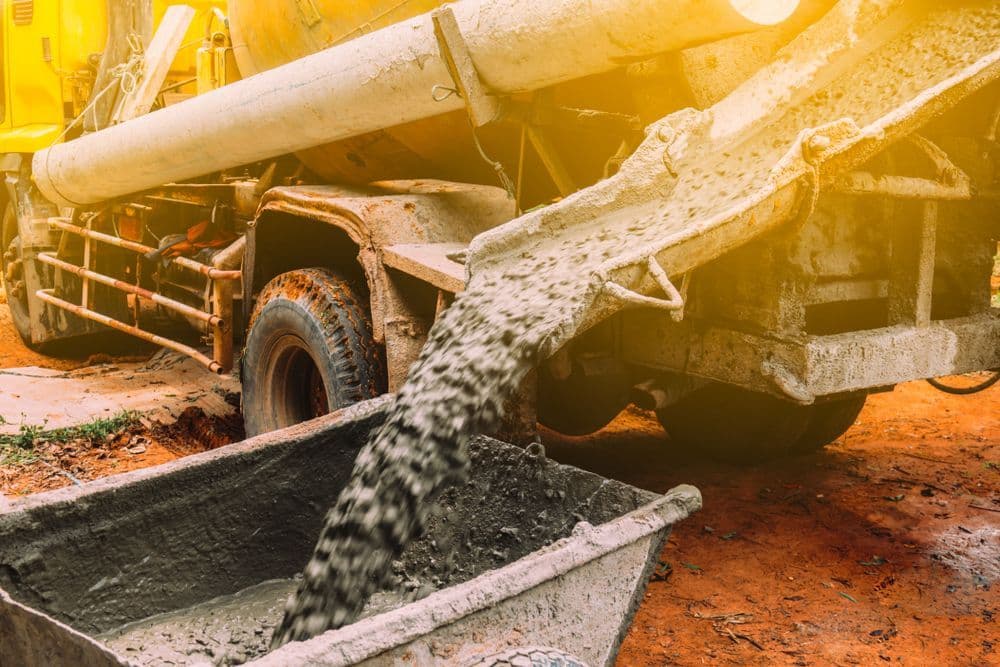
Premixed concrete arrives on site already mixed. CCAA explains that premixed concrete is batched, or proportioned, at the plant to the job requirements, the materials are normally added to the truck at the batching plant, and the truck's drum keeps rotating to agitate the concrete on the way to site. Cement itself travels differently: Cement Australia delivers bulk cement by pneumatic tanker into a silo, so the truck with the spinning drum is carrying concrete, not cement.
For small jobs, bagged concrete is cement, sand and aggregate pre-blended so you only add water. Cement Australia pitches its Concrete Mix at garden edges, paths, footings and posts, and says about 110 bags of 20 kg make one cubic metre. Mixing from scratch means buying cement by the bag, by weight and type such as 20 kg of Type GP. Where a job needs a defined strength, such as 20 MPa, Cement Australia advises having concrete delivered from a ready mixed truck.
Why cement paste matters when concrete is pumped
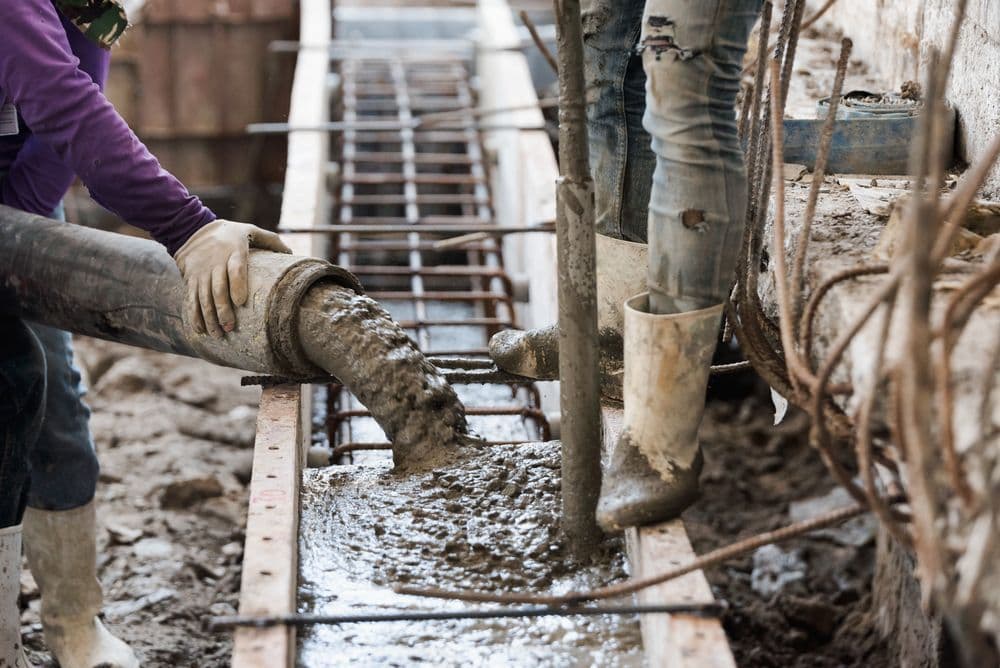
The cement paste helps concrete move through a pump line, so the mix needs enough paste and fines for a pumped pour. CCAA describes the paste as the soft or liquid part of the mix and says more paste makes a mix more workable. The American Concrete Pumping Association, a United States body, adds a pump operator's view: cement is the sliding agent in concrete while sand is abrasive, and higher cement content mixes are generally easier to pump.
Queensland's regulator reflects the same point from the safety side. WorkSafe Queensland's concrete pumping code of practice tells operators to ensure adequate priming and lubrication of the pipeline before pumping starts, and lists unmixed clumps of cement, an inadequate water to cement ratio and an inadequate content of fine materials among the causes of line blockages. Water is not the fix: CCAA says that as the water to cement ratio increases, strength and durability decrease, and that a mix should never be made more workable just by adding water. That is why CCAA asks you to tell the supplier when concrete will be pumped, along with the pump type and the line size and length, so the plant can design the mix. Our guide to pump mix concrete covers that order in detail.
Who decides the mix: where this guide stops
The strength and type of concrete for a structural job are set by the designer, not chosen from a guide like this one. CCAA notes that AS 1379, the Australian Standard for the specification and supply of concrete, sets minimum requirements, and that the class of concrete and all its other requirements need to be set out on the plans or specification, and that they should not be varied without the designer's approval. For context, normal class concrete comes in strength grades from N20 to N50, meaning 20 to 50 MPa at 28 days, and CCAA says N20 and N25 are the common grades ordered for domestic driveways and paths. Cement content affects that strength: CCAA notes that as cement content increases, so do strength and durability. Your premix supplier designs the actual proportions to meet the grade on your plans.
How we fit into a concrete pour
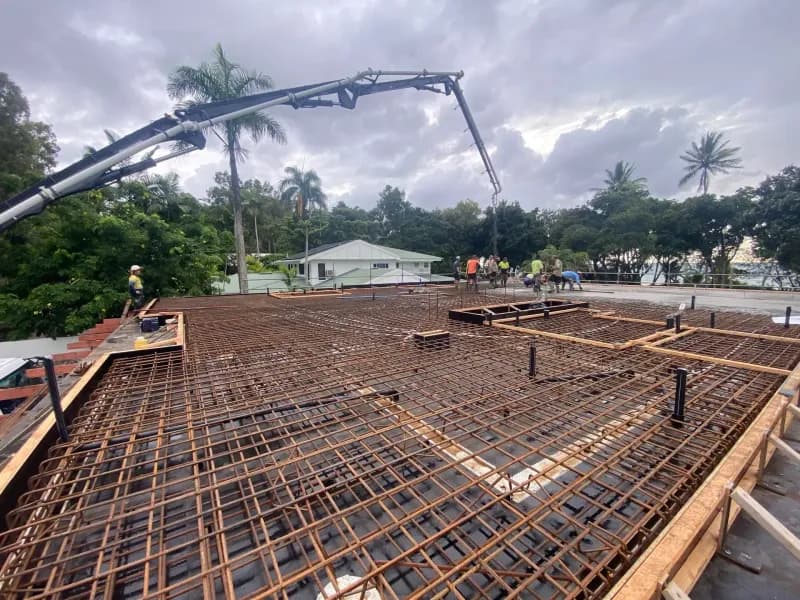
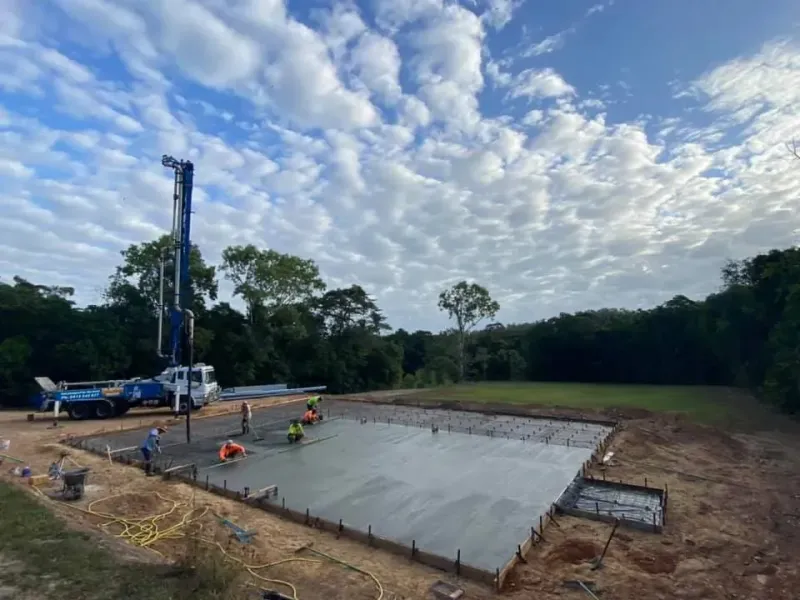
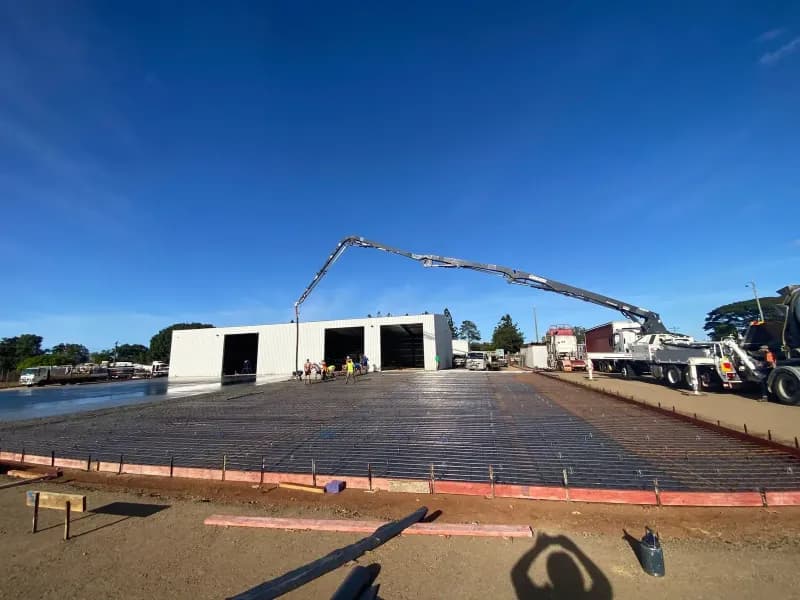
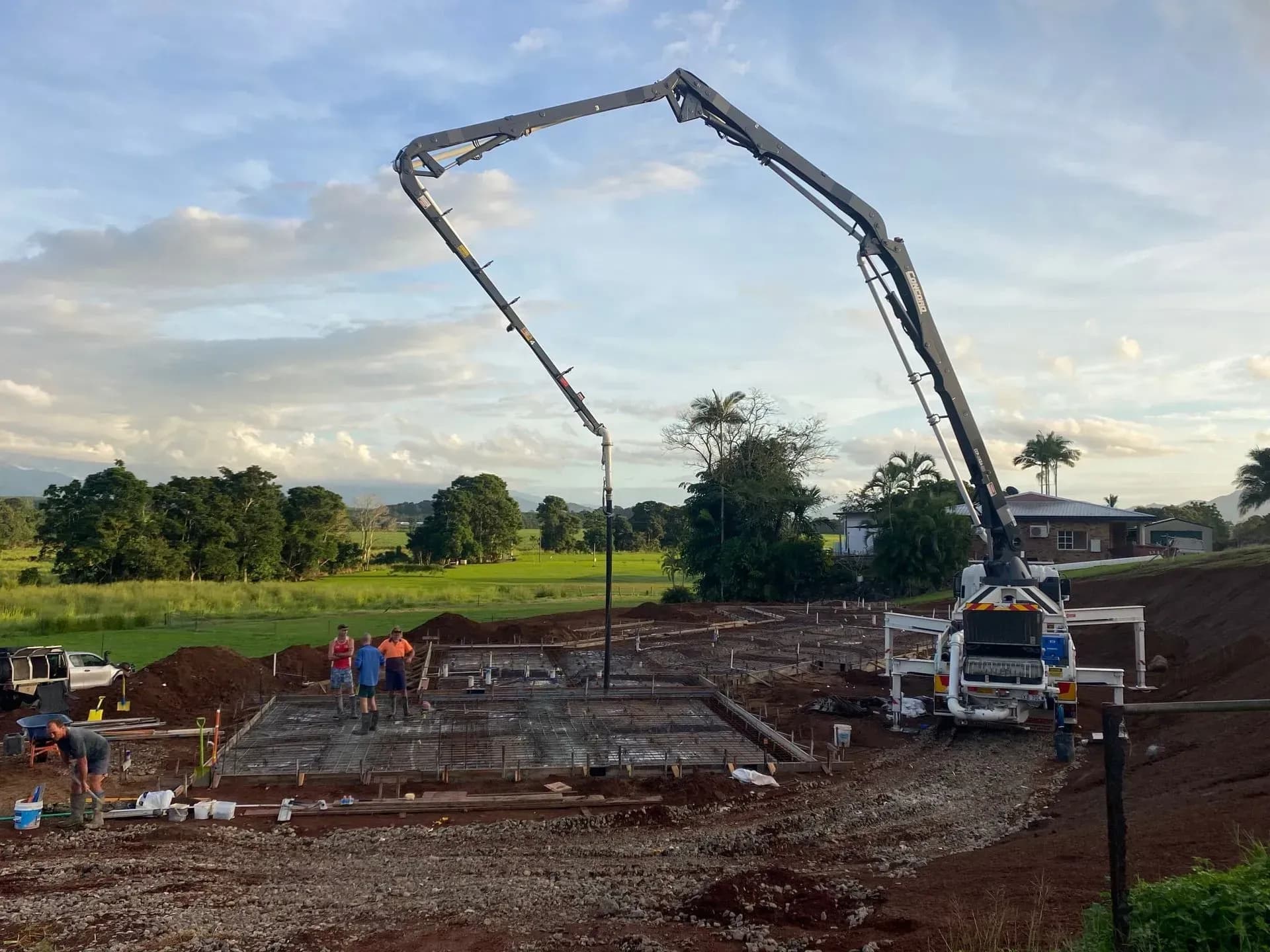
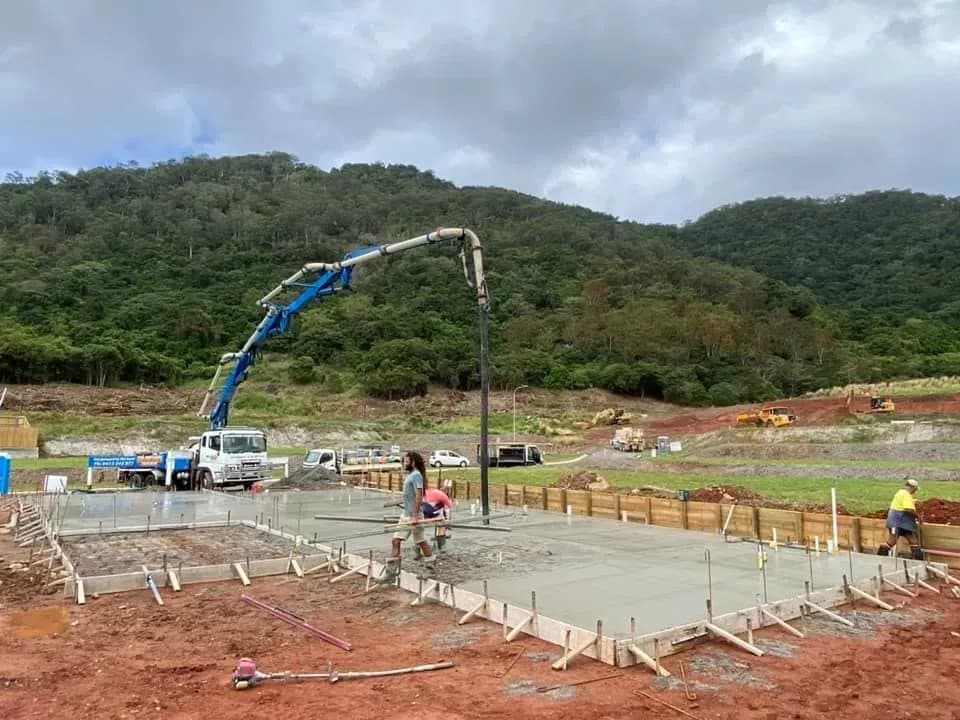
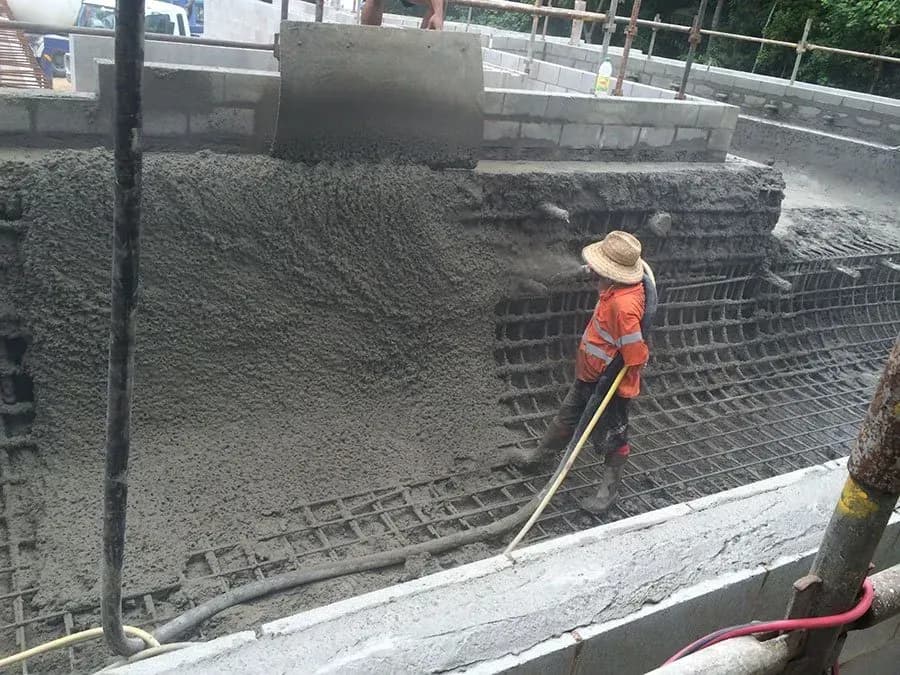
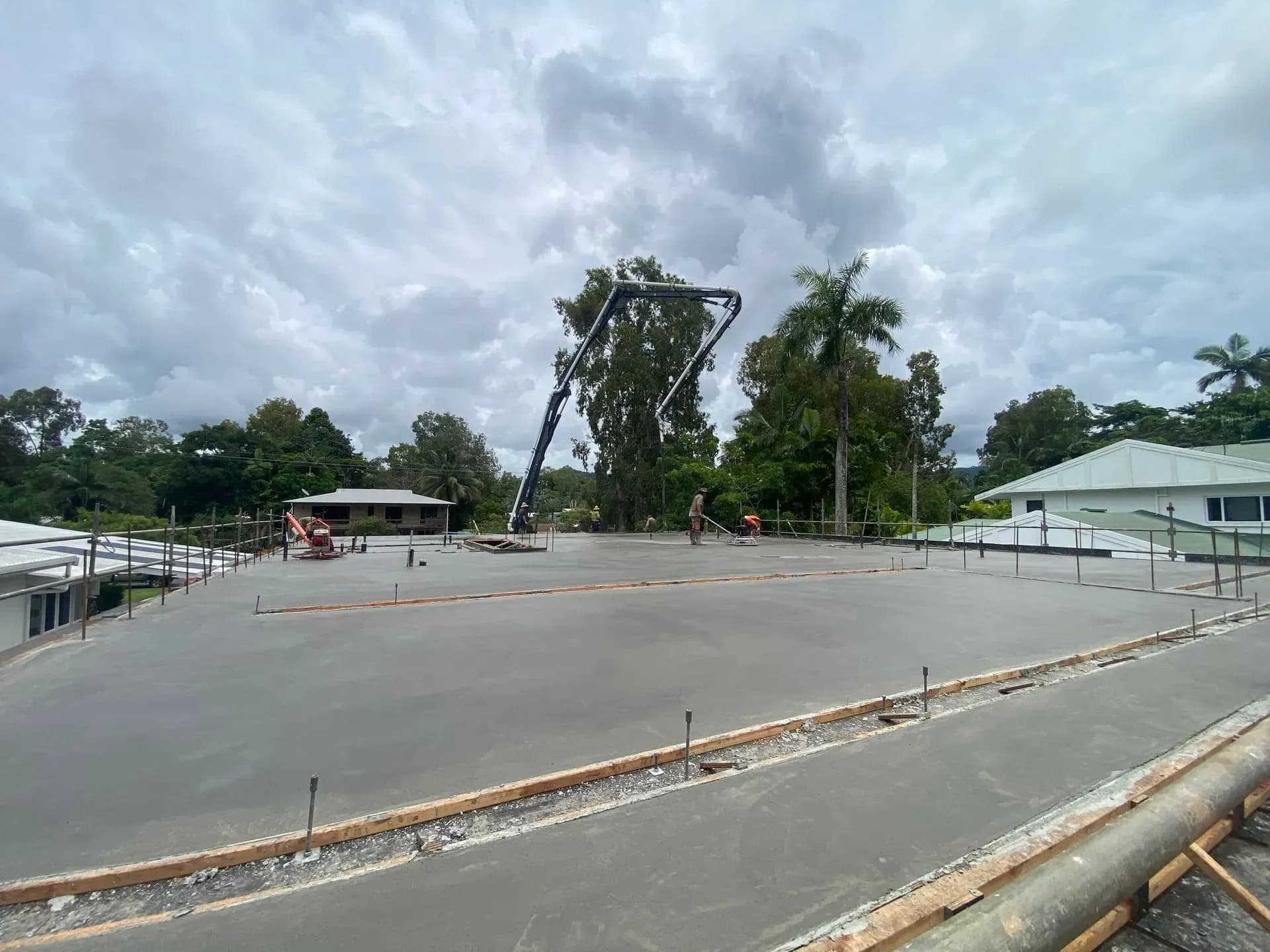
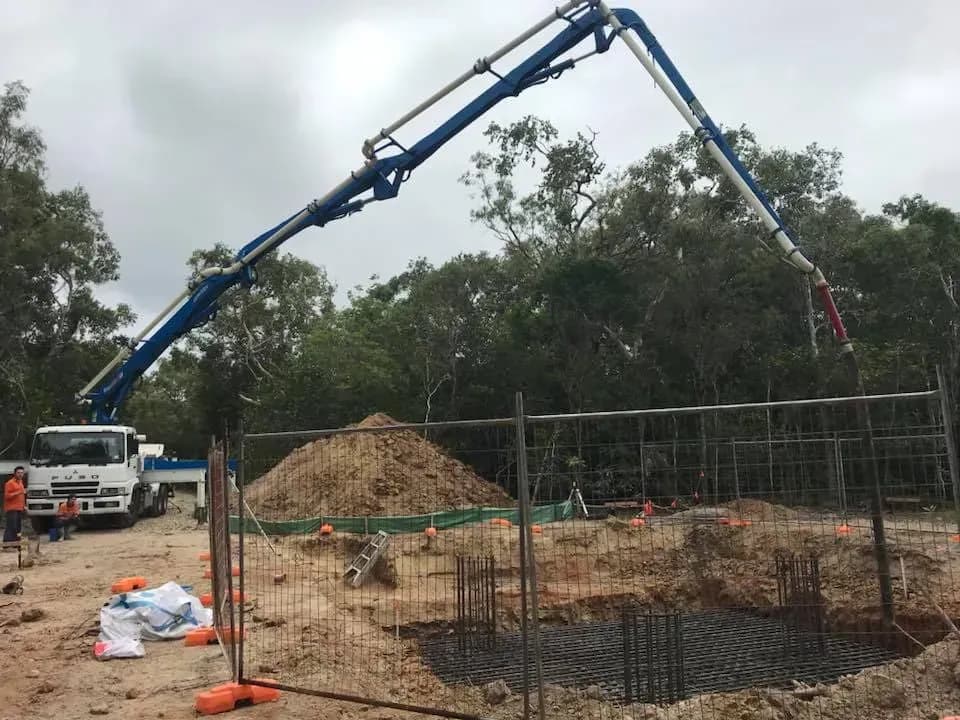
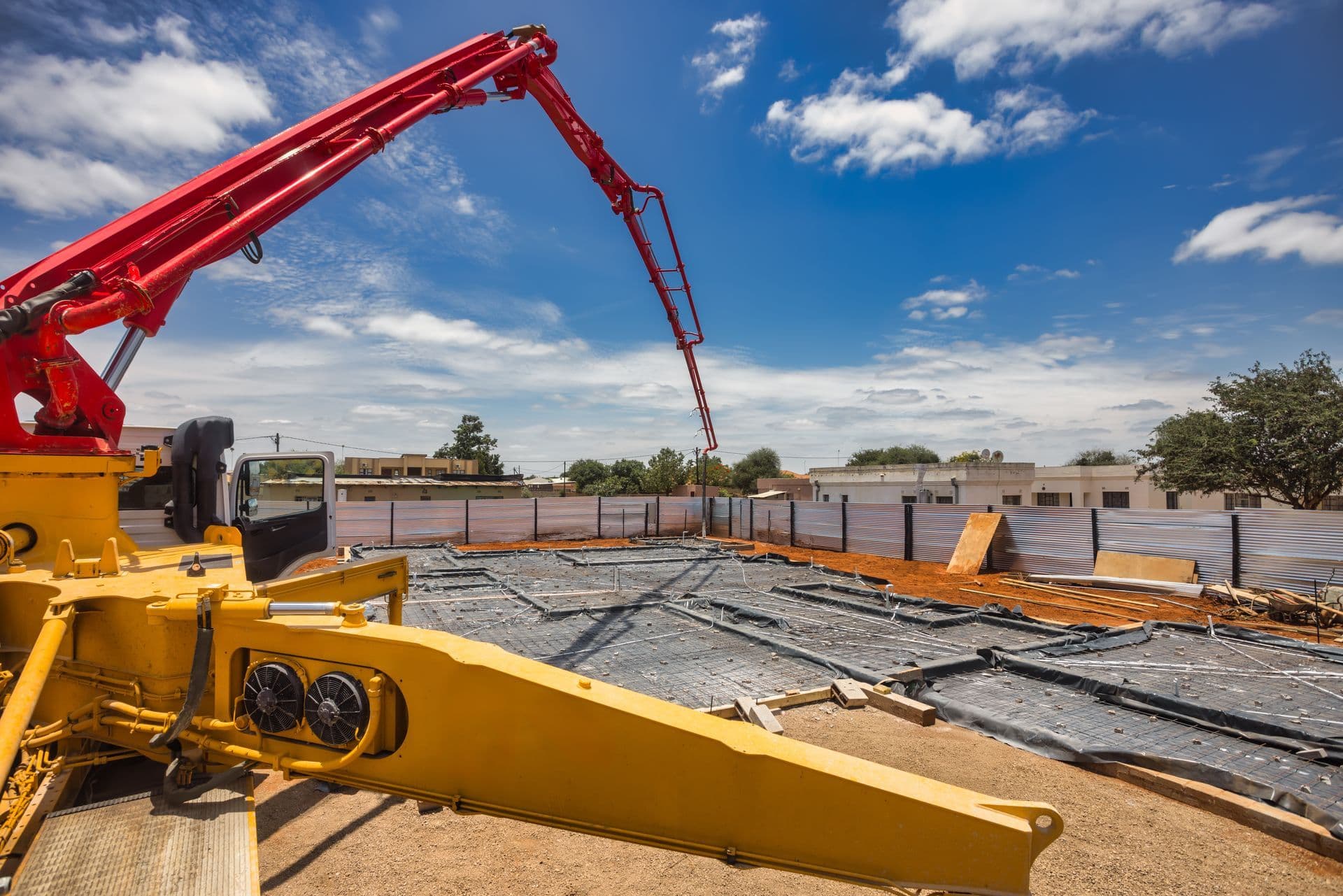
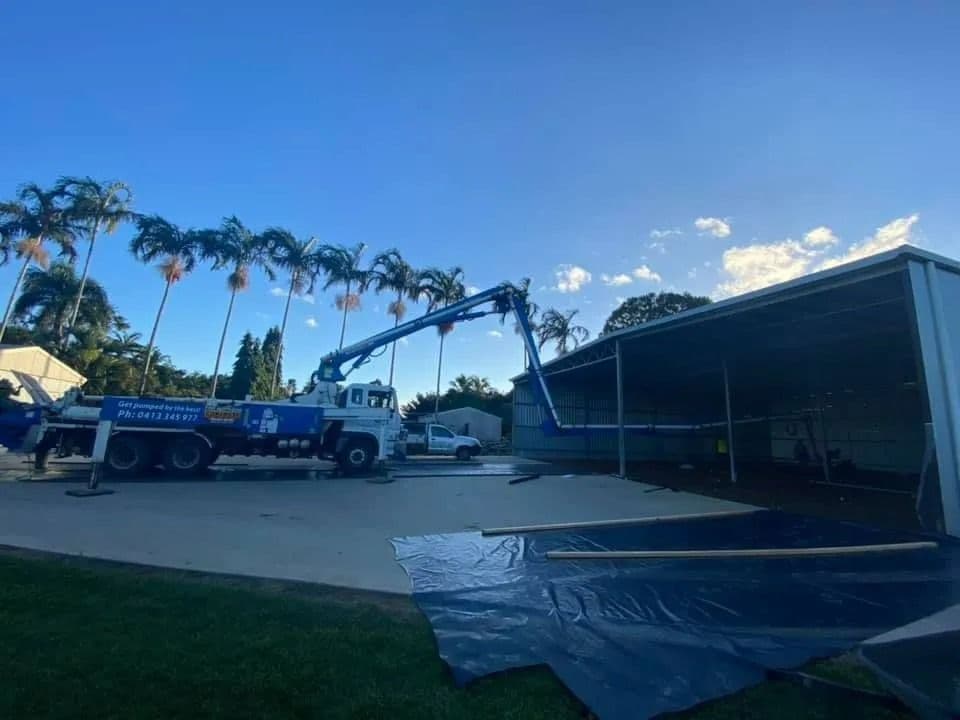
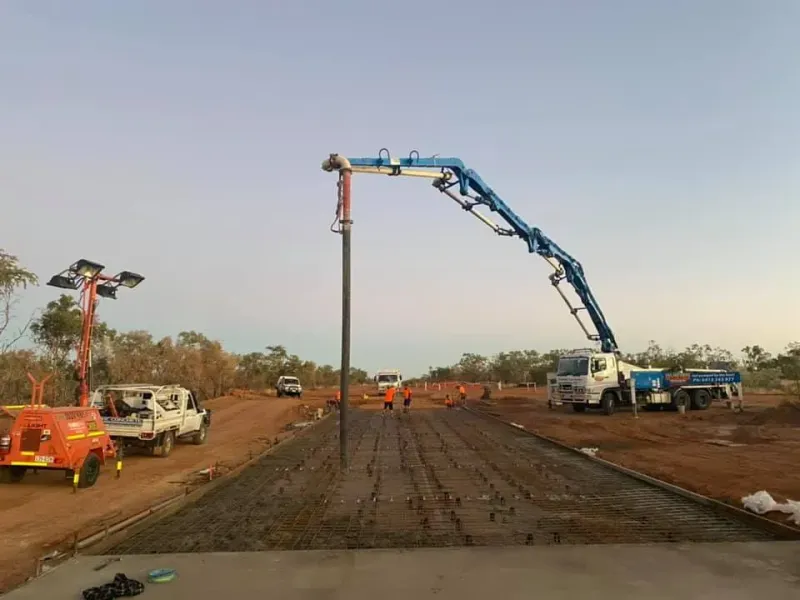
Far Northern Concrete Pumping places concrete; we do not supply it. You order the concrete from a premix supplier, and we pump it from the truck to the formwork. We have operated since 2014 from our base in Mareeba and cover the Tablelands, Cairns and its suburbs, the coast north to Port Douglas and Cooktown, and south through Innisfail and Tully. Our operators have access to a 31m boom pump, 28m boom pump, 20m boom pump and line pump, and we match the machine to the job. The mix plays a part in that choice, because certain pumps may perform better with specific consistencies or aggregates. Once the pump is confirmed, pass its details to your supplier so the concrete is designed to suit it.
Next steps
Once you know you are ordering concrete, the next question is how much. Our guide to how much concrete you need converts slab and driveway dimensions to cubic metres. For house slabs, driveways and pools, see our residential concrete pumping page, read how our concrete pumping service works, or check the areas we cover. When you have the volume from your supplier, contact us or ring 0413 345 977 with the location and type of pour.
Sources
- FAQs, Cement Australia. Accessed 30 October 2026.
- General Purpose Cement, Cement Australia. Accessed 30 October 2026.
- Builders Cement (General Blend), Cement Australia. Accessed 30 October 2026.
- Sand & Cement, Cement Australia. Accessed 30 October 2026.
- Trade Mortar, Cement Australia. Accessed 30 October 2026.
- Concrete Mix, Cement Australia. Accessed 30 October 2026.
- Concrete vs Cement: What's the Difference and What's Best for Your Project?, Boral. Accessed 30 October 2026.
- Concrete Basics: A Guide to Concrete Practice (seventh edition, February 2010), Cement Concrete & Aggregates Australia. Accessed 30 October 2026.
- Ordering Premixed Concrete (data sheet, September 2017), Cement Concrete & Aggregates Australia. Accessed 30 October 2026.
- Concrete pumping code of practice 2019, WorkSafe Queensland. Accessed 4 October 2026.
- Concrete 101: A guide to understanding the qualities of concrete and how they affect pumping, American Concrete Pumping Association. Accessed 30 October 2026.