


In brief
Light rain that arrives during a pour can usually be managed by covering the slab, keeping runoff off it and removing, not trowelling in, any surface water, but heavy rain on concrete that is still setting can wash parts of the surface away or leave it pitted. Cement Concrete & Aggregates Australia's advice is simple: if rain looks likely, delay the pour. In Far North Queensland that means planning around a wet season the Bureau of Meteorology describes as running from about October to April across northern Australia, usually starting later and ending earlier outside the Top End, and around soaked ground that can stop trucks and pumps setting up.
On this page
The short answer: light rain can be managed, heavy rain on setting concrete can damage it
Light rain during a pour can be managed, but heavy rain on concrete that is still setting can damage the surface. Cement Concrete & Aggregates Australia (CCAA), the national industry body, says not to place concrete if rain looks likely, and if it is already placed and rain is coming, to cover it and stop water running across it. Its flatwork guide adds that re-trowelling after light rain is usually enough to fix minor damage, provided any surface water is removed rather than trowelled back in.
So the pour-day decision is about how hard it rains, when, and whether the crew can keep water off the surface while it sets. A shower before the trucks arrive is a nuisance; a storm in the hour after screeding can mean a damaged slab.
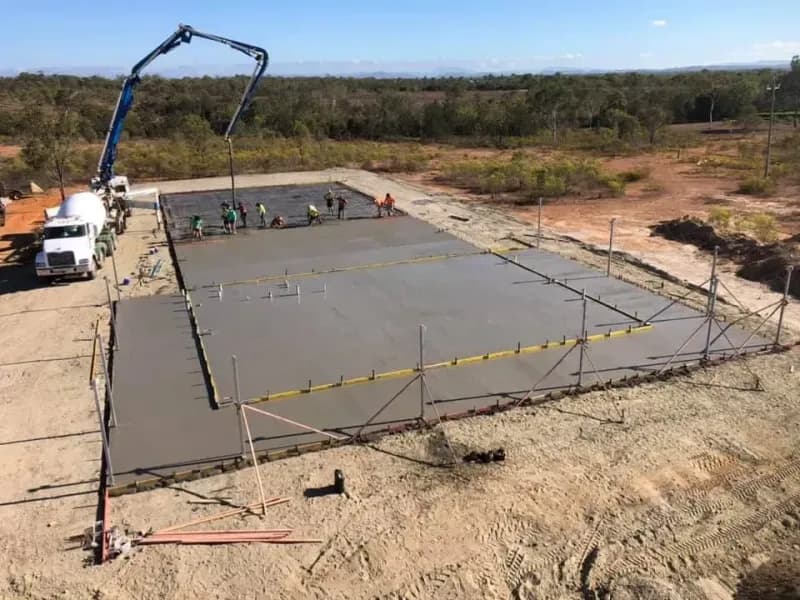
What rain does to fresh concrete
Rain damages fresh concrete in two ways: it adds water at the surface, and it marks or washes the finish. CCAA's Guide to Concrete Flatwork Finishes says heavy rain during placement may raise the water-cement ratio, resulting in lower strength, higher permeability, more drying shrinkage and dusting surfaces. CCAA's Concrete Basics puts the underlying rule plainly: adding more water to a mix gives a weaker hardened concrete.
The visible damage shows up as a stippled texture where large raindrops hit, or as the finish and colour washed away where runoff crosses the slab. Concrete Basics describes rain damage as a surface with bits washed away or many small dents, caused by heavy rain while the concrete is setting or rainwater running across it. Finishing during rain is also a listed cause of dusting.
Before the pour: reading the forecast
Reading a rain forecast for a concrete pour means checking how likely rain is in the hours you will be placing and finishing, not just the daily total. A Bureau of Meteorology "chance of any rain" figure is the chance of at least 0.2 mm falling, so 60% means a good chance of some rain, not 60% of the day being wet. The Bureau's 3-hourly forecasts give that chance for each three-hour block, which lines up better with a pour window.
Cement Australia recommends placing and finishing in the early morning, before temperature and wind rise and humidity drops. Check the ground too: CCAA notes the subgrade may be wet from earlier rain, and any ponded water should be removed, not mixed into the concrete, because it can delay finishing.
During the pour: protecting the surface
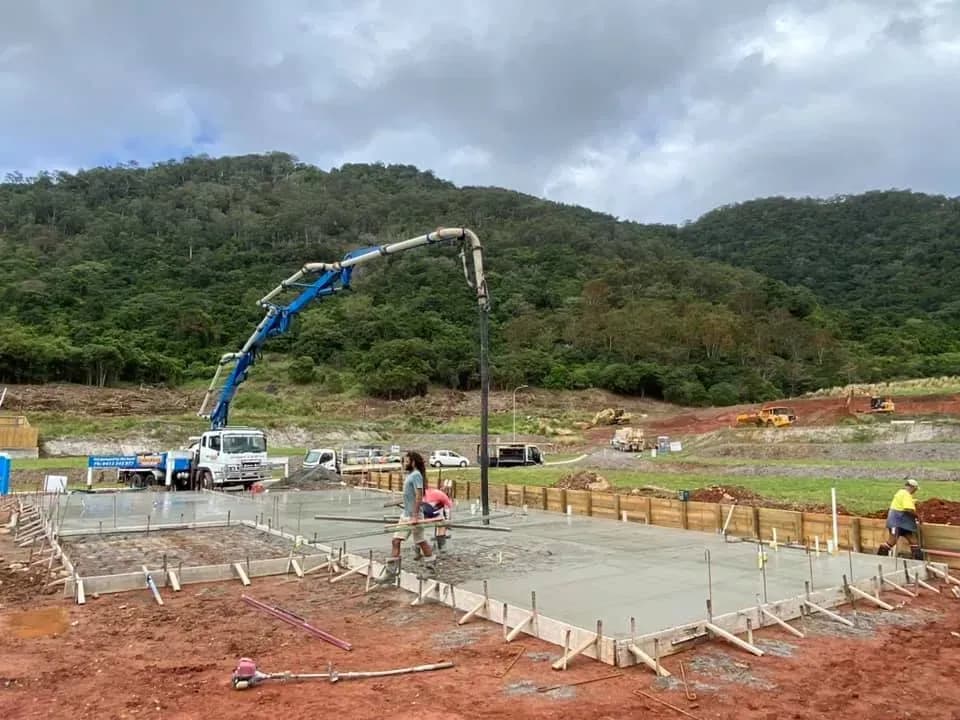
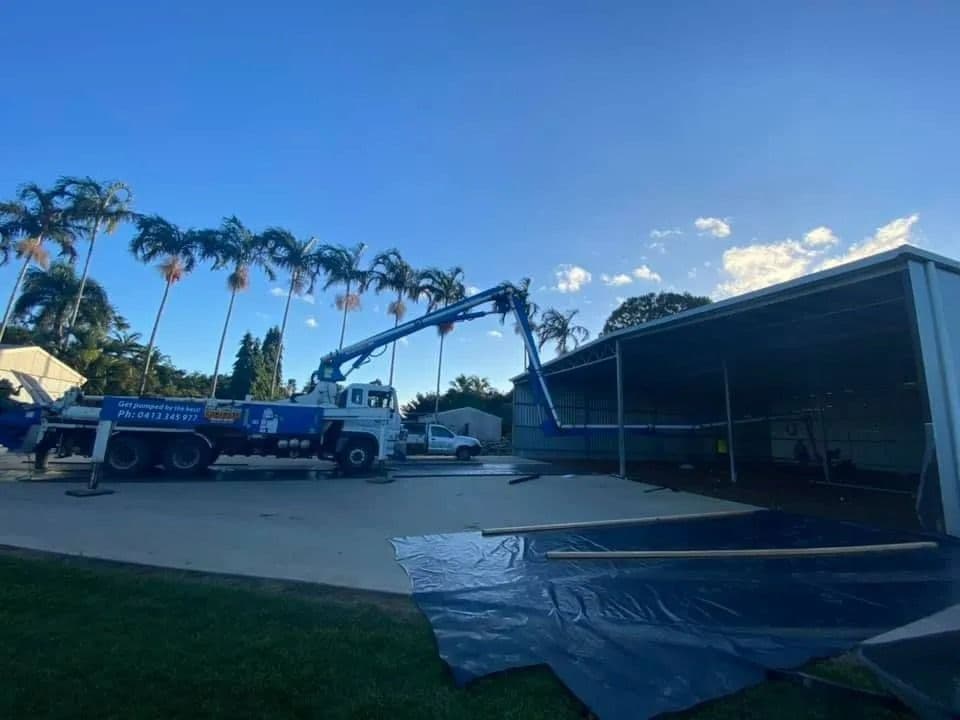
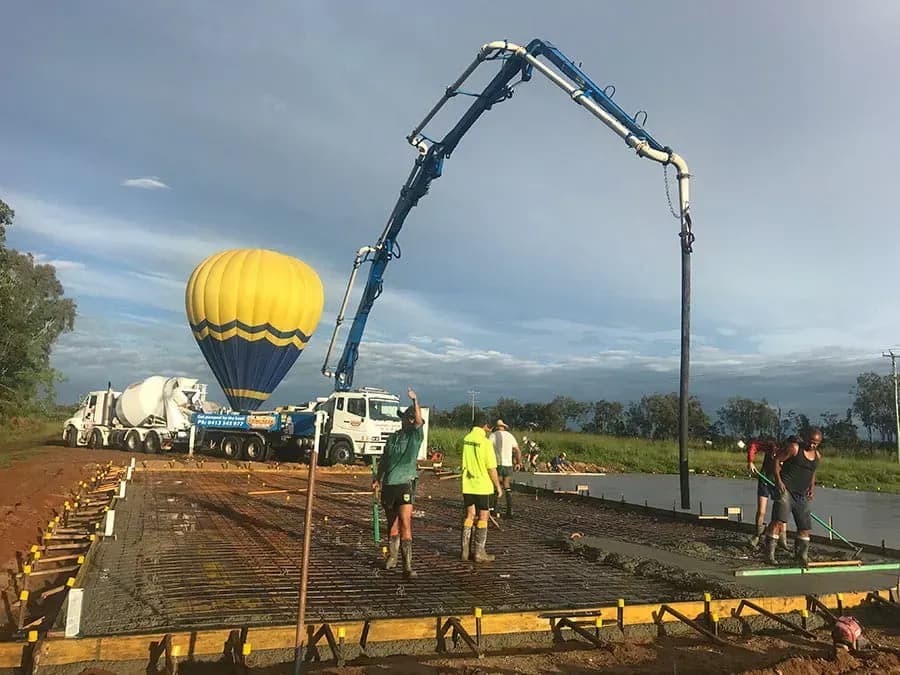
Protecting a concrete surface from rain during a pour means covering it, keeping runoff off it and never working rainwater into it. CCAA says the simplest protection is to cover the concrete, generally with plastic, and divert runoff away from the area. Depending on the finish, the cover may need to be held up off the surface so it does not mark or discolour it.
- Have sheeting, timber and weights on site before the first truck arrives. CCAA says sheets must be held down so they do not blow away, for example with sand, timber or bricks.
- Keep plastic off coloured concrete. Cement Australia warns direct contact can cause hydration staining that cannot be fixed later.
- Do not work the surface while bleed water or rainwater is sitting on it.
- Remove standing water with a lightweight hose dragged across the surface or a squeegee, as CCAA describes. Never throw dry cement on to soak it up.
After the pour: how long concrete needs before rain
Concrete is most exposed to rain from placement until the surface has been finished and has started to harden, a window measured in hours. Cement Australia describes leaving concrete 1 to 2 hours after screeding for bleed water to rise and evaporate before final floating, and the time varies with the mix and the day. Keep the cover ready until your concreter says the surface can take water.
After finishing, CCAA lists applying extra water as a normal curing method, with one warning: the spray must be a very fine mist or it will damage the surface. Heavy rain is different. CCAA says a surface that ends up rain damaged after work is complete will need rectification once hardened.
Pouring through the FNQ wet season
The Bureau of Meteorology describes northern Australia's wet season as running from about October to April, though it notes the season generally starts later and ends earlier outside the far north of the Northern Territory; active monsoon periods can occur any time from November to April. The Bureau notes an active monsoon can bring widespread rain and thunderstorms lasting a few days or a week or more. Its long-term averages show how different the coast and the Tablelands are:
Mean monthly rainfall and rain days, Bureau of Meteorology climate statistics: Cairns Aero (1942 to 2026) and Mareeba QWRC (1952 to 2008)
| Month | Cairns Aero rain (mm) | Cairns days of 1 mm or more | Mareeba rain (mm) | Mareeba days of 1 mm or more |
|---|---|---|---|---|
| January | 404.8 | 15.8 | 200.0 | 10.0 |
| February | 437.5 | 16.1 | 249.8 | 10.5 |
| March | 422.1 | 16.0 | 191.8 | 9.6 |
| April | 201.8 | 14.5 | 46.6 | 5.0 |
| August | 26.5 | 4.9 | 6.8 | 1.3 |
| September | 34.1 | 4.9 | 5.3 | 0.9 |
| October | 47.2 | 5.7 | 14.3 | 1.7 |
| Year | 2025.5 | 119.6 | 918.3 | 55.6 |
Cairns averages more than twice Mareeba's annual rainfall, and about 16 rain days a month from January to March against about 10 at Mareeba. For pours on the coast, see Cairns concrete pumping; for Mareeba, Atherton and surrounds, see concrete pumping on the Tablelands. Builders are busiest through the dry season, so book as early as you can.
Pump access on soaked ground
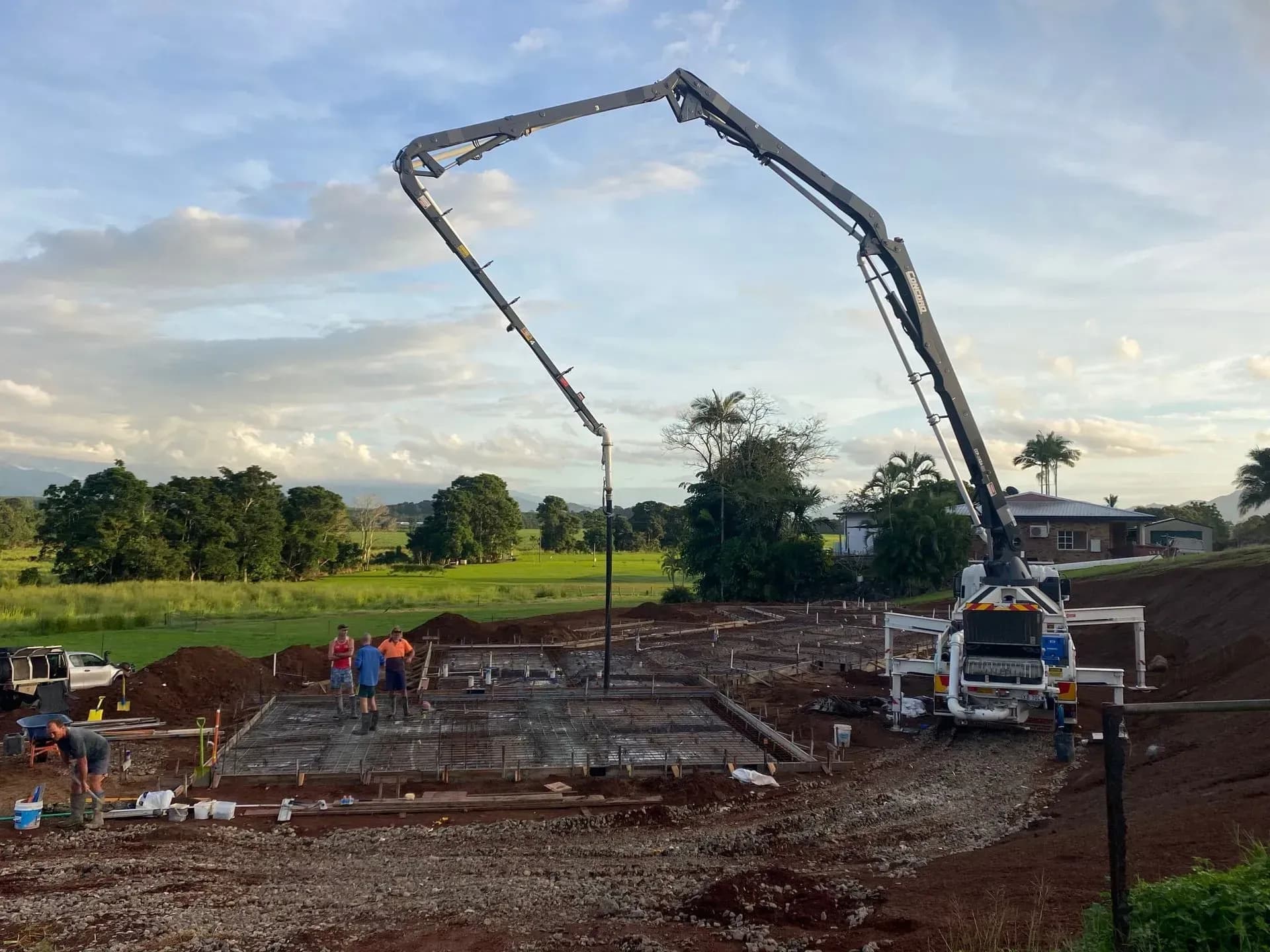
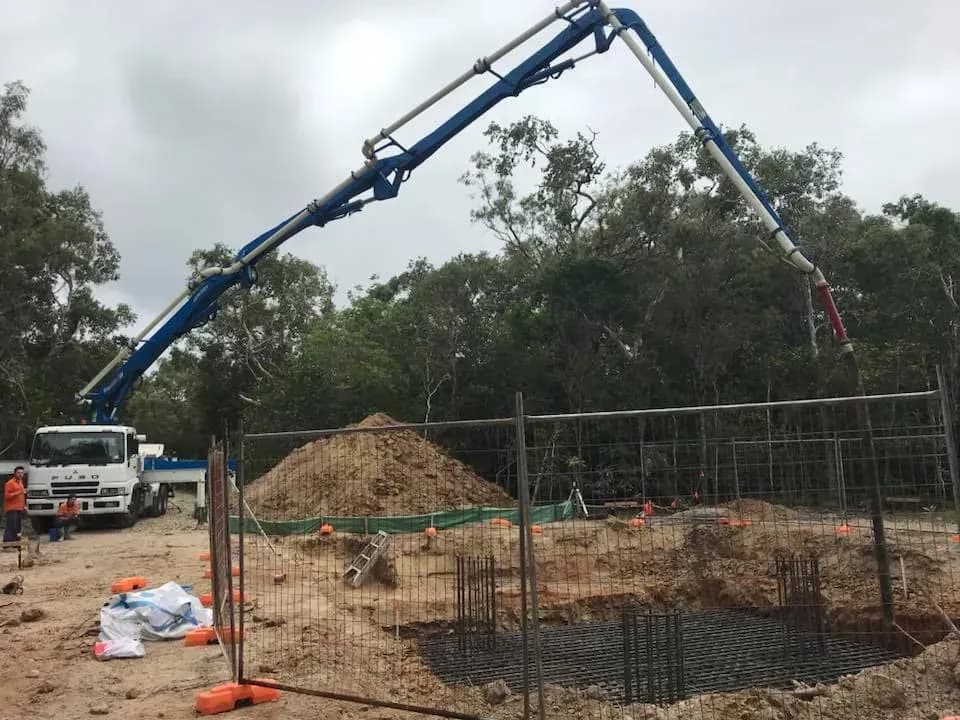
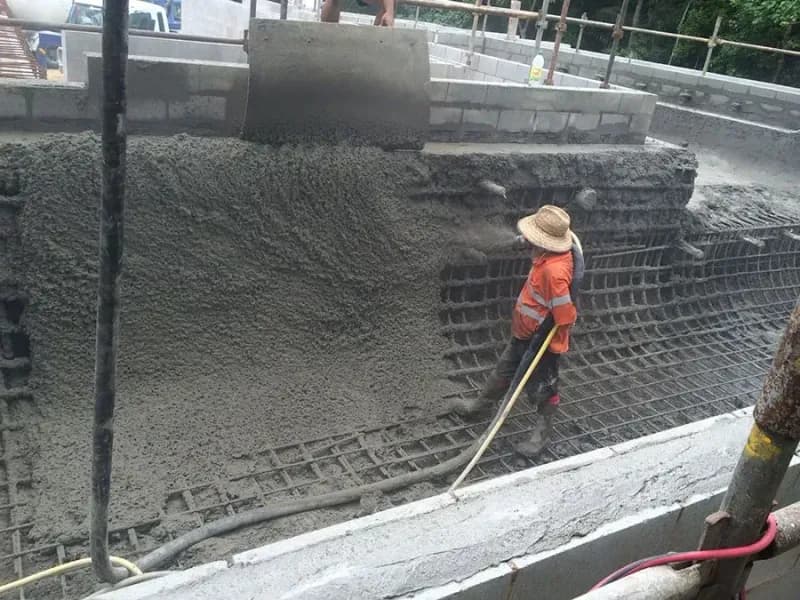
Wet ground limits where concrete trucks and boom pumps can safely set up. CCAA's flatwork guide suggests considering a pump when the weather is unpredictable, because overnight rain can limit site access, and says that if the soil's bearing capacity is in doubt, do not bring trucks onto the site; use pumps. A line pump feeds concrete through hoses run along the ground.
Boom pumps sit on outriggers, and WorkSafe Queensland's Concrete Pumping Code of Practice lists water in the ground, including mud, as a factor that reduces support. It warns that ground beside concrete pads can be softer from rainwater run-off, and that a firm crust can hide soft ground an outrigger may punch through. The Code's table of maximum permissible ground pressure shows how far wet clay falls:
Maximum permissible ground pressure by ground type, WorkSafe Queensland Concrete Pumping Code of Practice 2019 (Table 1)
| Ground type | Maximum ground pressure (tonnes per square metre) |
|---|---|
| Compacted gravel (up to 20% sand) | 80 |
| Asphalt | 40 |
| Compacted sand | 20 |
| Stiff clay (dry) | 20 |
| Soft clay (dry) | 10 |
| Loose sand | 10 |
| Wet clay | Less than 10 |
We run 31m, 28m and 20m boom pumps and a line pump, and assess every worksite for hazards before starting. Mention recent rain and soft spots when you book. Our guide to preparing your site for a concrete pump covers access in more detail.
When to reschedule
Reschedule a concrete pour when heavy rain is likely during placing and finishing, or when the site cannot safely take the trucks and pump. Concrete Basics says don't place concrete if rain looks likely, and CCAA's flatwork guide notes placing and finishing takes many hours while the weather can change quickly. Use this checklist the day before and again on the morning:
- The 3-hourly forecast shows a high chance of rain across the hours you will be placing and finishing.
- A monsoon burst or several days of rain is forecast, so the slab cannot be finished or protected properly.
- There is no cover, timber or weights on site, or no way to divert runoff around the pour.
- The subgrade has ponded water that cannot be removed before the concrete arrives.
- The ground where the trucks or pump will stand is soft or muddy. The Code says the operator should refer ground that is not firm to the principal contractor so the pump can be relocated.
- Wind is above the boom manufacturer's limit: the Code says placing booms must not be operated beyond it.
Rain delays also eat into the time concrete can sit in the truck. CCAA's flatwork guide, citing an earlier edition of AS 1379, gives the limit as discharge within 90 minutes of the start of mixing, or before the concrete can no longer be properly placed and compacted, whichever comes first. AS 1379 was revised in May 2026, so confirm the current limit with your supplier.
Next steps
To plan around the clock as well as the weather, read our guide to the 90 minute rule for concrete. For a driveway, house slab or pool surround, see our residential concrete pumping work. When you have a likely date, contact us or call 0413 345 977 and we'll pencil it in, then confirm once your concrete order is locked in.
Sources
- Concrete Basics: A Guide to Concrete Practice, Cement Concrete & Aggregates Australia. Accessed 4 October 2026.
- Guide to Concrete Flatwork Finishes, Cement Concrete & Aggregates Australia. Accessed 4 October 2026.
- How to lay a concrete slab, Cement Australia. Accessed 4 October 2026.
- FAQs, Cement Australia. Accessed 4 October 2026.
- Climate statistics for Australian locations: Cairns Aero, Bureau of Meteorology. Accessed 4 October 2026.
- Climate statistics for Australian locations: Mareeba, Bureau of Meteorology. Accessed 4 October 2026.
- Monsoon, Bureau of Meteorology. Accessed 4 October 2026.
- Northern Australia wet season lives up to its name, Bureau of Meteorology. Accessed 4 October 2026.
- Basic user guide for the Australian Digital Forecast Database precipitation elements, Bureau of Meteorology. Accessed 4 October 2026.
- Concrete pumping Code of Practice 2019, WorkSafe Queensland. Accessed 4 October 2026.