In brief
Queensland's Concrete Pumping Code of Practice 2019 says concrete pumping may include high risk construction work, and a SWMS must be prepared for that work before it starts. Where its pumping work is high risk construction work, the pumping business makes sure a SWMS covers it; the builder and other trades cover their own high risk work, and on a construction project the principal contractor collects every SWMS before the pour.
On this page
The short answer
Concrete pumping needs a SWMS whenever the pour is high risk construction work, and Queensland's code says pumping may include that kind of work. Queensland's Concrete Pumping Code of Practice 2019 says concrete pumping may include construction work defined as high risk construction work in the WHS Regulation, for which a safe work method statement must be prepared before the work starts. WorkSafe Queensland puts that duty on the person conducting a business or undertaking (PCBU) that carries out the work. On a construction project, which the WHS Regulation defines as construction work costing $250,000 or more, a copy of the SWMS must also go to the principal contractor before work starts.
This guide is for the builder, concreter or site manager booking a pump. It explains when a pumped pour crosses into high risk construction work, which SWMS the pumping business supplies and which ones stay with you, what a SWMS has to contain, and the hazards the Queensland code expects every pumped pour to control. It ends with a checklist to run before the pump starts. It is a plain-English summary, not a SWMS template.
When a pumped pour is high risk construction work
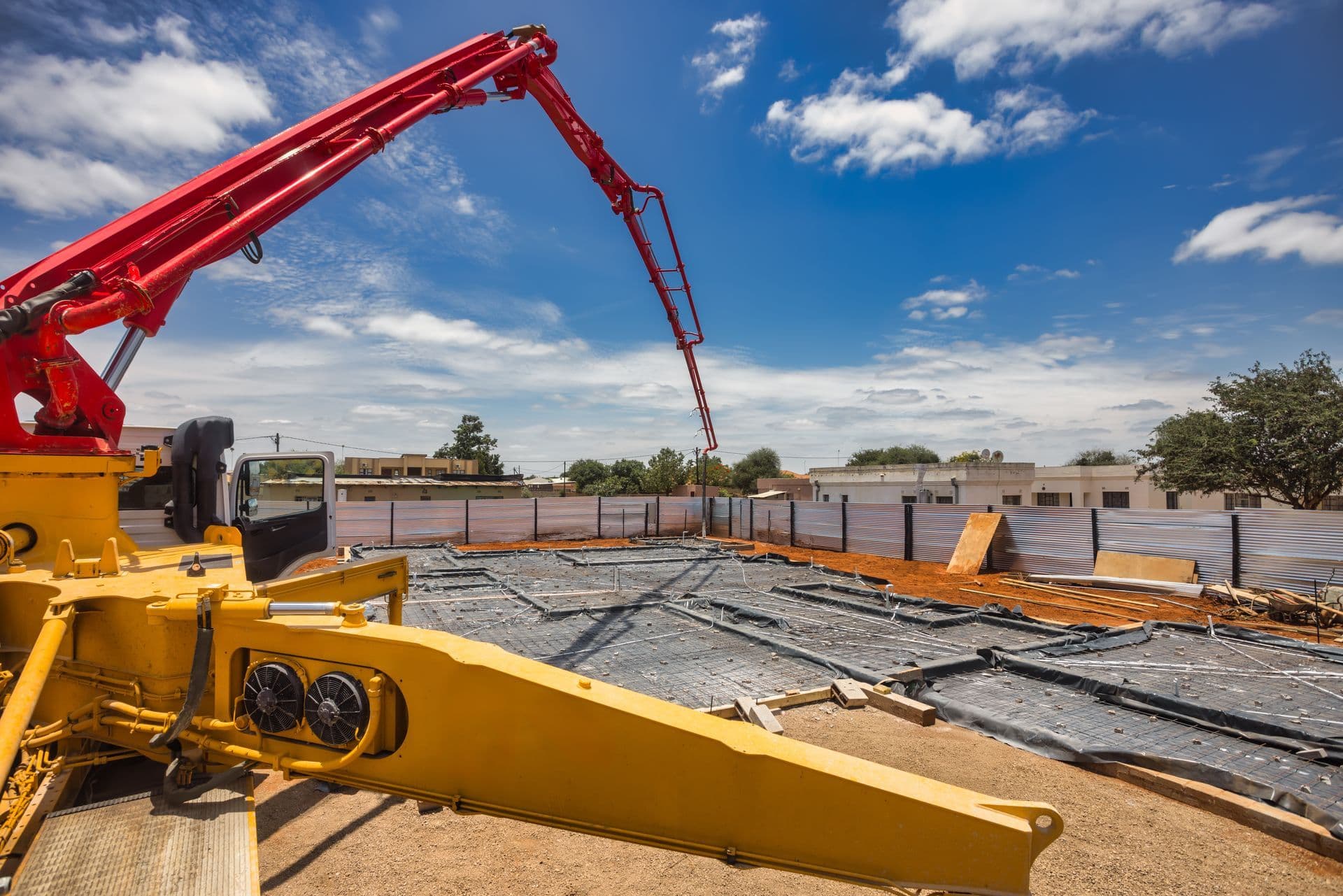
A pumped pour is high risk construction work when it falls into one of the categories in the WHS Regulation, and more than one of those categories can apply to pumping work. Safe Work Australia says concrete pumping may be considered high risk construction work in a number of instances, including when it is carried out on or near energised electrical installations or services, on, near or next to an in-use road or railway, or in an area where there is any movement of mobile powered plant. If any one of these applies to your pour, the businesses carrying out that work need a SWMS in place before it starts.
The Queensland code lists the full set of categories. Those that can apply to a pumped pour include:
- work involving a risk of a person falling more than two metres, such as an elevated slab or deck
- work in or near a shaft or trench with an excavated depth greater than 1.5 metres
- work involving tilt-up or precast concrete
- work on or near energised electrical installations or services
- work on, in or next to a road, railway or other traffic corridor in use by traffic other than pedestrians
- work at a workplace where there is movement of powered mobile plant
Who writes the SWMS: the pumping business for the pump, each trade for its own work
The business that carries out the high risk work makes sure the SWMS for that work is prepared. WorkSafe Queensland says a PCBU carrying out high risk construction work must ensure a SWMS is prepared, or has already been prepared by another person, before the work starts, and that the PCBU, in consultation with its workers, is best placed to prepare it. WorkSafe gives the example of one contractor working above two metres and another using powered mobile plant such as a crane: each must ensure a SWMS is prepared for its own work, either as one combined document or two.
Applied to a pumped pour, that usually splits the paperwork like this:
Who supplies what on a pumped pour in Queensland
| Party | What they bring | Source of the duty |
|---|---|---|
| Concrete pumping business | SWMS for the pumping work: pump and boom set-up, delivery line, hose, line hands, exclusion zones, cleaning | PCBU carrying out high risk construction work |
| Builder, concreter or other trades | SWMS for their own high risk work, such as work at height or near a trench | Each PCBU carrying out high risk construction work |
| Principal contractor (construction projects of $250,000 or more) | Collects every SWMS before work starts, consults the pumping business about risks, plans set-up area, traffic and washout | WHS Regulation sections 301 and 312, and the code |
Where more than one PCBU is involved, each must, so far as is reasonably practicable, consult, cooperate and coordinate with the others. On a construction project, the principal contractor must make sure a PCBU does not start high risk construction work until the principal contractor has been given a copy of its SWMS. On a smaller job with no principal contractor, WorkSafe Queensland says the SWMS must still be easily read by the person who has management and control over the high risk construction work.
What a concrete pumping SWMS has to contain
A concrete pumping SWMS has to name the high risk work, list its hazards and risks, and set out specific controls and how they will be checked. The Queensland code says a SWMS must identify the type of high risk construction work being done, specify the health and safety hazards and risks arising from the work, describe how the risks will be controlled, and describe how the control measures will be implemented, monitored and reviewed. It must be developed in consultation with the workers carrying out the work and their representatives.
WorkSafe Queensland adds that a SWMS should also record:
- the PCBU's name, address and ABN, if it has one
- who is responsible for implementing, monitoring and checking compliance with the SWMS
- the principal contractor's name, on a construction project
- the address where the work will be carried out
- the date it was prepared and the date it was given to the principal contractor
It may also include the names of workers consulted and each worker's signature.
Controls have to be specific. WorkSafe's own example is that the statement 'use appropriate PPE' does not detail the control measures. A generic SWMS is allowed for work done regularly, but it must be reviewed and revised before each new activity so it fits the actual workplace. That matters for pumping, where every site has different access, ground and overhead hazards.
SWMS or risk assessment: not the same document
A SWMS and a risk assessment are related but not the same. Managing risk is a duty on every construction job: the Queensland code quotes section 297 of the WHS Regulation, which says a PCBU must manage risks associated with carrying out construction work. That means identifying reasonably foreseeable hazards, eliminating risks so far as is reasonably practicable, and otherwise minimising them using the hierarchy of controls, then keeping those controls effective and reviewing them.
A SWMS is the specific document the Regulation requires on top of that duty when the work is high risk construction work. It records the outcome of the risk process for that work in a form workers and supervisors can follow on site. So a pumped pour that is not high risk construction work still needs its risks managed, while a pour that is high risk construction work needs that risk management plus a SWMS prepared before work starts. When a supplier offers a 'concrete pump risk assessment', check whether it is actually a SWMS written for your site.
The hazards the code of practice lists
A concrete pumping SWMS should cover the hazards the Queensland code lists. Safe Work Australia says concrete pumping has caused serious incidents in recent years through concrete boom failure, contact between booms and overhead powerlines, whipping of delivery hoses and hazardous moving parts. The Queensland code groups the hazards by where they come from:
Concrete pumping hazards named in Queensland's code and the controls a SWMS should set out
| Hazard source | Examples from the code | Typical controls in a SWMS |
|---|---|---|
| Plant and equipment | Placing booms, pipelines, clamps, valves, outriggers, the hopper, the rubber delivery hose (risk of hose whip) | Competent operators, pre-start checks, restrained lines, exclusion zones |
| Placement of plant | Proximity to traffic, members of the public, powerlines and trenches; ground stability | Set-up position planned with the principal contractor, firm level ground, traffic control |
| Tasks | Concrete delivery, pump and boom operation, pouring, line cleaning and clearing, pump cleaning, road travel | Communication with the line hand, a spotter for trucks, cleaning procedures |
| By-products | Fumes and noise | The code's noise and fume controls, written into the SWMS |
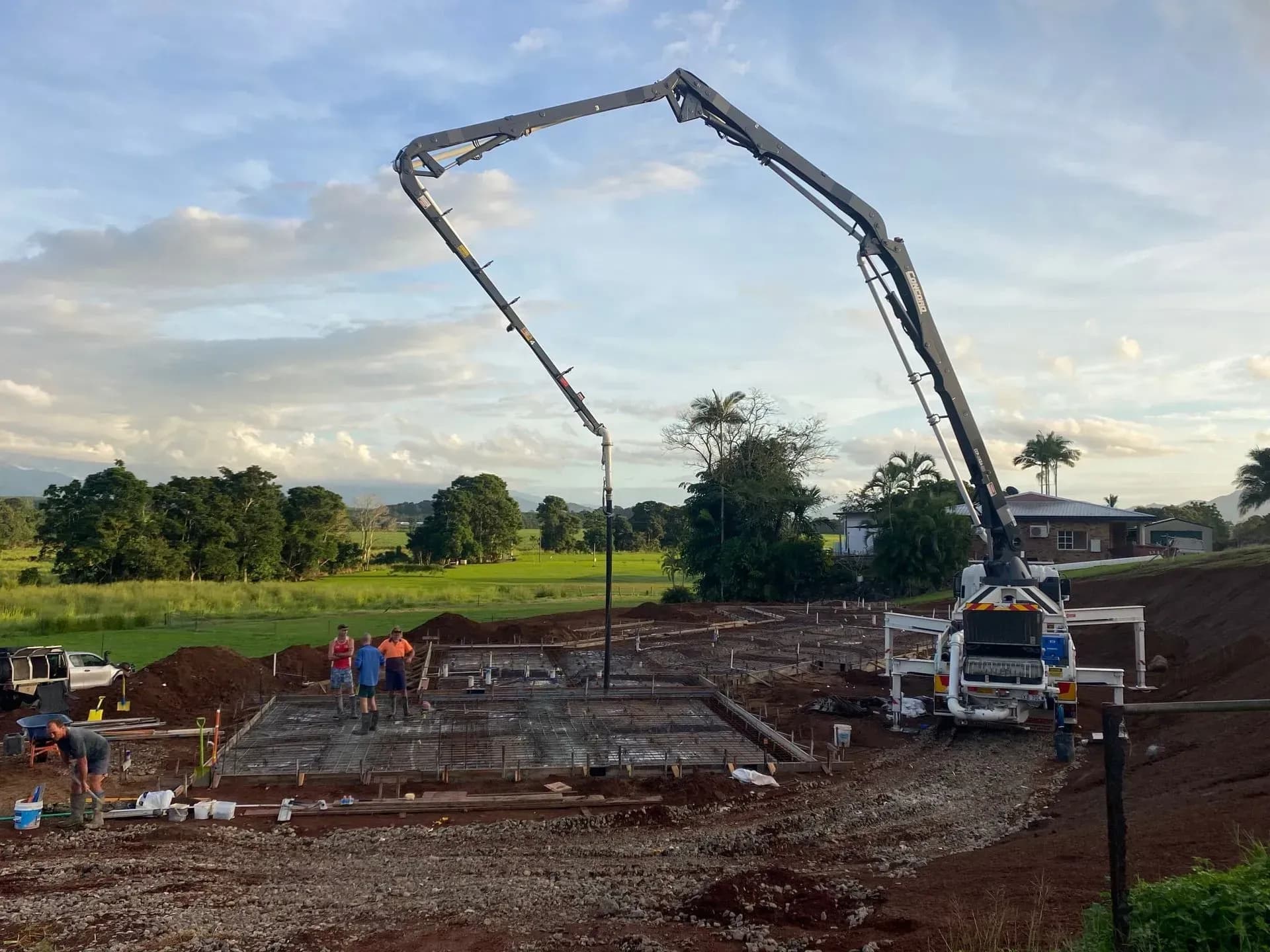
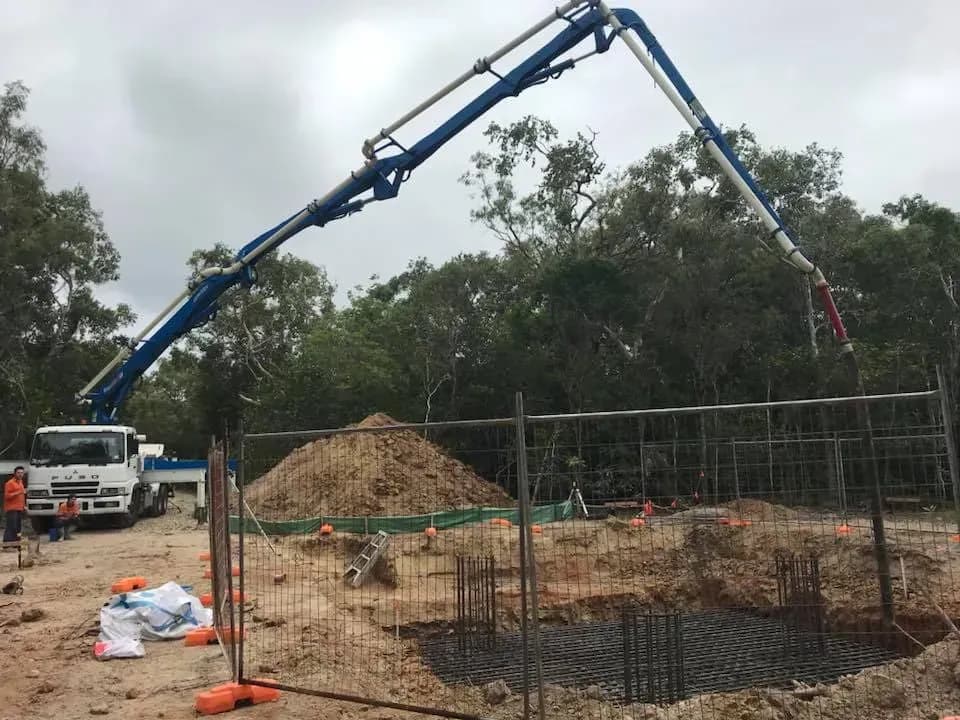
Set-up is a hazard in its own right. The code names risks of mobile concrete pumping booms tipping over and of workers being crushed or run over by the mobile pump or a concrete truck. Overhead power lines are covered in our guide to preparing your site for a concrete pump, and boom registration and inspections in concrete pump licence requirements.
Hose whip and exclusion zones
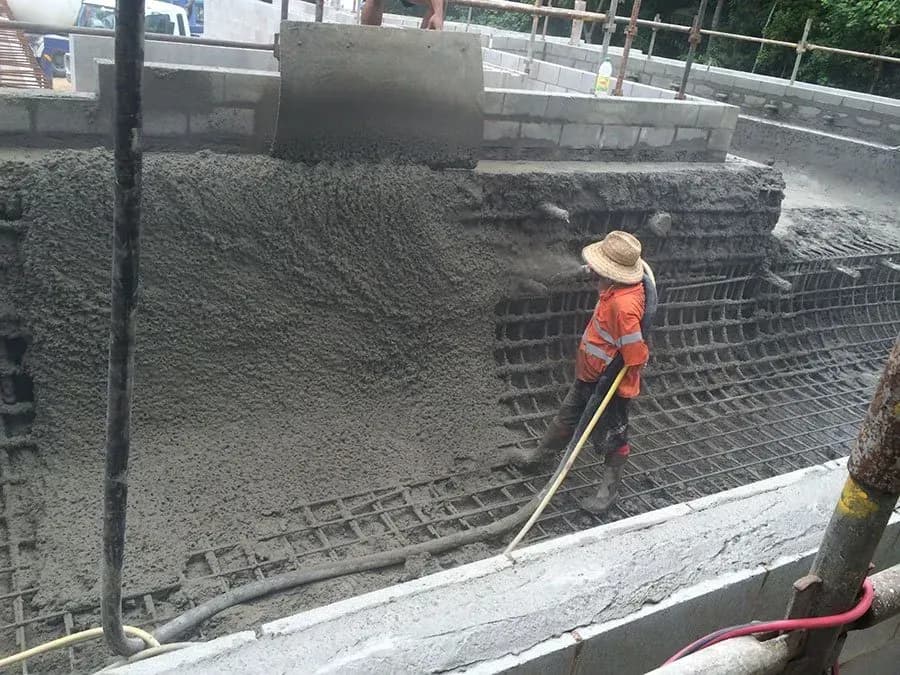
Hose whip puts people near the delivery hose at risk, and exclusion zones are one of the controls the code and WorkSafe Queensland set out. WorkSafe Queensland describes hose whip as uncontrolled and rapid motion of the flexible rubber hose on the end of a concrete placing boom or other delivery line. Workers can be struck by the hose, knocked over, or hit by ejected material. The code gives a sense of scale: with an unrestrained flexible hose 20 metres long, any worker within 20 metres of the fixed end is at risk of being struck.
How far back people stand is worked out for each pour. The code asks for exclusion zones to be identified through consultation when the pour is planned, and for the pour to be positioned and sequenced so authorised workers spend as little time as possible under the boom. On the day, the code and WorkSafe expect:
- an exclusion zone around the line when the pump starts, which ceases once concrete is moving
- an exclusion zone whenever air is present in the delivery line
- the operator to check unauthorised people are not in the pumping exclusion zone
- people working in the exclusion zone to wear high visibility vests and suitable PPE, with signage marking the zone
- the pump started slowly, only a pumpable mix as specified by the concrete supplier, no metal fittings on the free end of a rubber hose, and the hose never stretched to reach
Mix matters for blockages and hose whip, so it is worth reading what is pump mix concrete before you order.
A pre-pour safety checklist for builders
Run this checklist with the pumping business before the first truck arrives. Each point comes from WorkSafe Queensland's SWMS guidance or the Queensland code:
- Decide whether the pour is high risk construction work, and which businesses on site are carrying out high risk work.
- If you are the principal contractor on a construction project, get a copy of every SWMS, including the pumping business's, before that work starts. Check each one names this site address.
- Check the controls are specific to this pour, not general statements such as 'use appropriate PPE'.
- Agree the pump position, firm ground for the outriggers, truck access and the washout area with the pumping business. Our concrete washout guide covers where washout water can go.
- Mark the exclusion zones and signage, and confirm who keeps unauthorised people out.
- Confirm how the operator and line hand will communicate, and that the operator will not also be the line hand.
- Check the line hand numbers: the code sets one line hand for every 10 metres of workable hose where the pipe is 76.2 millimetres or more in diameter, and every 20 metres where it is smaller.
- If several trucks will deliver, name the person controlling truck delivery, separate from any traffic controllers.
- Make sure every worker involved has been told the hazards and controls, even if they do not hold a copy of the SWMS.
Remote and civil sites: plan for more
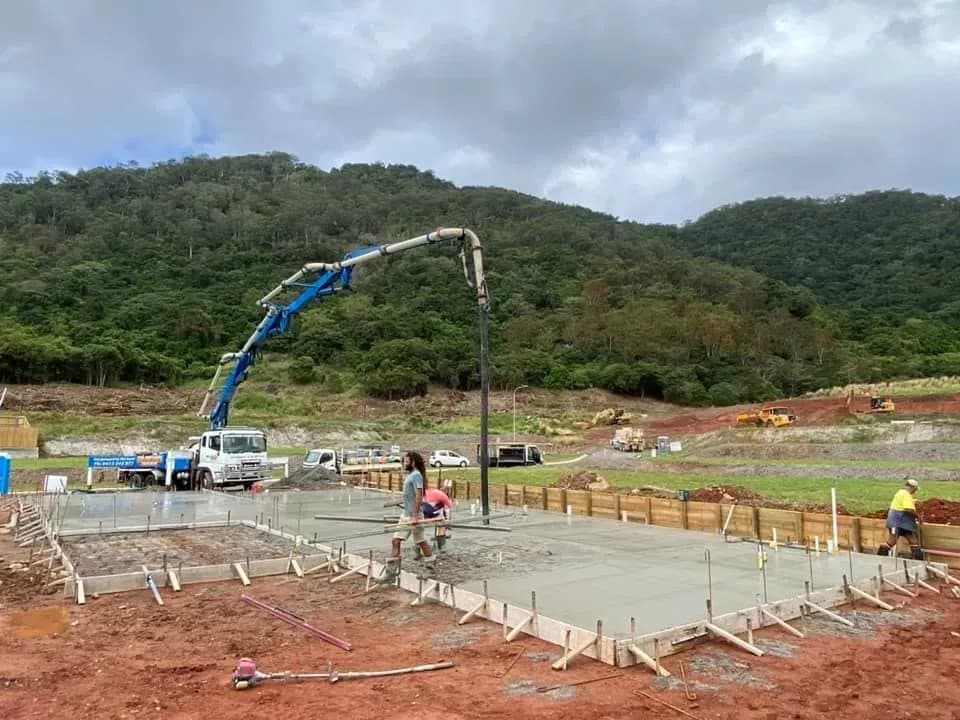
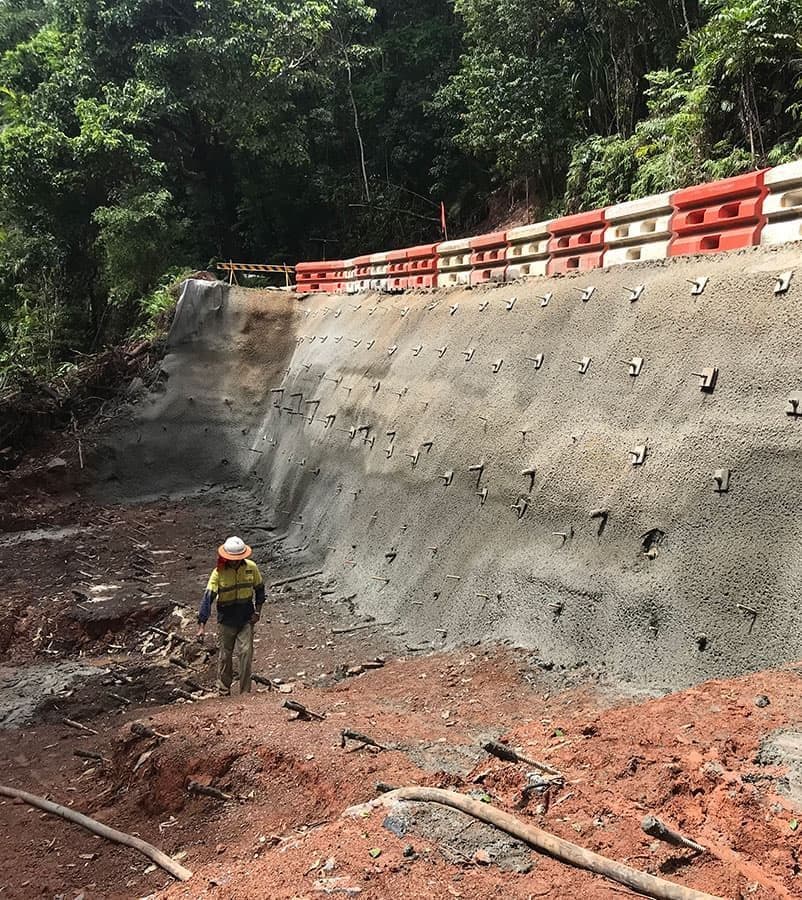
Civil pours can fall into several high risk construction work categories at once, so the SWMS has more to cover. Civil jobs can sit next to roads in use, near trenches deeper than 1.5 metres, or alongside other powered mobile plant, and each of those is a category on its own. Where a pump sets up on or next to a public road, the code says permits must be obtained from the relevant authority.
Distance from help changes the planning too. The code says planning should make sure an emergency plan has been prepared for each workplace where concrete pumping will be done, and that the pumping business should consider whether enough workers are available to pump safely and to operate the emergency shut down system. Open sites bring wind into play: mobile and satellite placing booms are not to be operated in winds stronger than the manufacturer specifies. For long pours on remote sites, these points belong in the SWMS before the crew leaves town, not on the day. See our civil concrete pumping page for the kinds of jobs this covers.
How we approach site safety
Before starting any job, Far Northern Concrete Pumping assesses the worksite carefully, identifies hazards and associated risks, and puts control measures in place. All of our operators are fully licensed and high-risk certified, and we hold PB Truck Placing Boom Certificate 9691905.
We are based in Mareeba and pump across the Tablelands, Cairns, Cape York and surrounds, for residential, commercial and civil work. If your site needs a SWMS from the pumping business, raise it when you book so it is ready before the pour, and with the principal contractor on a construction project. Call us on 0413 345 977.
Next steps
With the paperwork sorted, the next job is getting the site itself ready for the pump and the trucks. Work through preparing your site for a concrete pump, then contact us with the site address, the pour type, the volume and photos of the access so we can plan the set-up with you.
Sources
- Concrete Pumping Code of Practice 2019, WorkSafe Queensland. Accessed 30 October 2026.
- Safe work method statements, WorkSafe Queensland. Accessed 30 October 2026.
- Work Health and Safety Regulation 2011 (sections 292, 293, 301 and 312), Queensland Government, Queensland Legislation. Accessed 30 October 2026.
- Concrete pumping: hose whip, WorkSafe Queensland. Accessed 30 October 2026.
- Concrete pumping overview, Safe Work Australia. Accessed 30 October 2026.
- Concrete pumping, Safe Work Australia. Accessed 30 October 2026.