

In brief
Washout is the slurry from rinsing the pump hopper, the truck chutes and hand tools. Queensland's Environmental Protection Act 1994 makes it an offence to let it reach a gutter, a stormwater drain or a waterway, and the Concrete Pumping Code of Practice 2019 expects every pumped pour to have a clearly defined washout area. Plan one before pour day.
On this page
Concrete washout in one answer
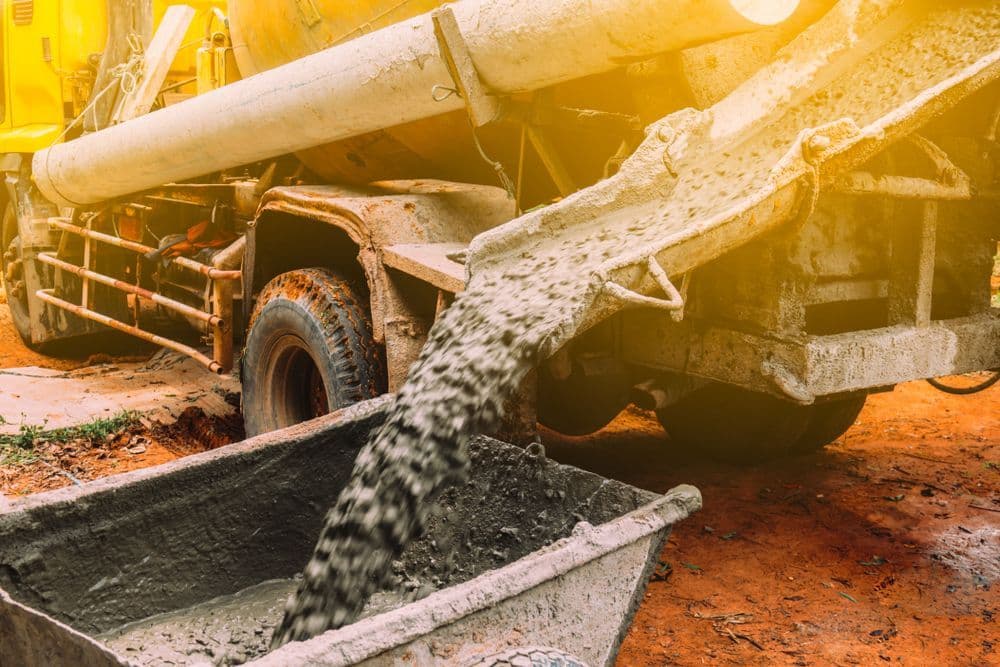
Concrete washout is the wet waste made when equipment is rinsed clean after concrete is delivered, and the place on site where that rinsing happens. Transport for NSW describes washout areas as places that contain concrete slurry and liquids when the chutes of concrete mixers and the hoppers of concrete pumps are rinsed out after delivery, so the solids can be gathered for disposal or reuse and contaminated water does not run off. The US Environmental Protection Agency adds why the rinsing cannot wait: truck chutes and pump hoppers have to be washed out to remove the remaining concrete before it hardens.
This guide is for the builder, concreter or owner getting a site ready for a pumped pour in Far North Queensland. It covers why Queensland law treats washout as a pollutant, what the pump and the trucks each wash out, the washout set-ups that suit a house block or a bigger site, and what to do with the hardened waste once the pour is over.
Washout water cannot go down the drain in Queensland
Concrete washout must not go into a gutter, a stormwater drain or a waterway in Queensland, because the law names concrete as a water contaminant. Schedule 10 of the Environmental Protection Regulation 2019 lists building and construction materials, including cement and concrete, as prescribed water contaminants. The same schedule also lists waste water generated by building or construction, and any substance with a pH outside the range 6.5 to 8.5.
Section 440ZG of the Environmental Protection Act 1994 then says a person must not unlawfully deposit a prescribed water contaminant in waters, a roadside gutter or stormwater drainage, or leave it somewhere it could reasonably be expected to wash, blow, fall or otherwise move into them. So a puddle of slurry on a driveway that slopes to the kerb can be a problem before the next rain carries it away. Under the Act as current at 29 June 2026, the maximum penalty is 1,665 penalty units if the deposit is wilful and 600 penalty units otherwise.
The Queensland environment department's procedural guide for building sites says the occupier of a building or small construction site is responsible for having measures in place to prevent environmental harm, and it notes that this offence is devolved to local government, so your council administers and enforces it in its area. The same guide expects cement-wash from exposed aggregate driveways to be caught in a collection trench and the residue disposed of without reaching stormwater.
Why slurry is treated as a pollutant
Concrete slurry is treated as a pollutant because it is strongly alkaline, carries metals and sets hard in pipes. Transport for NSW says concrete wash water is alkaline, with a pH of around 12, and contains high levels of chromium, so it can pollute land and leach into groundwater. It also says washout material can raise the pH of surrounding waters and harm aquatic life, and that solids which are not disposed of properly can clog stormwater pipes and cause flooding.
EPA Victoria makes the same point: washing excess concrete from an agitator truck chute releases concrete into the stormwater system, where it can change the pH of the water and clog drains and gutters, raising the risk of flooding when it rains. The slurry is also hard on people. The US EPA warns that wet concrete and washout water may cause skin irritation and eye damage, so anyone doing the rinsing should handle it with care.
What the pump and the trucks wash out
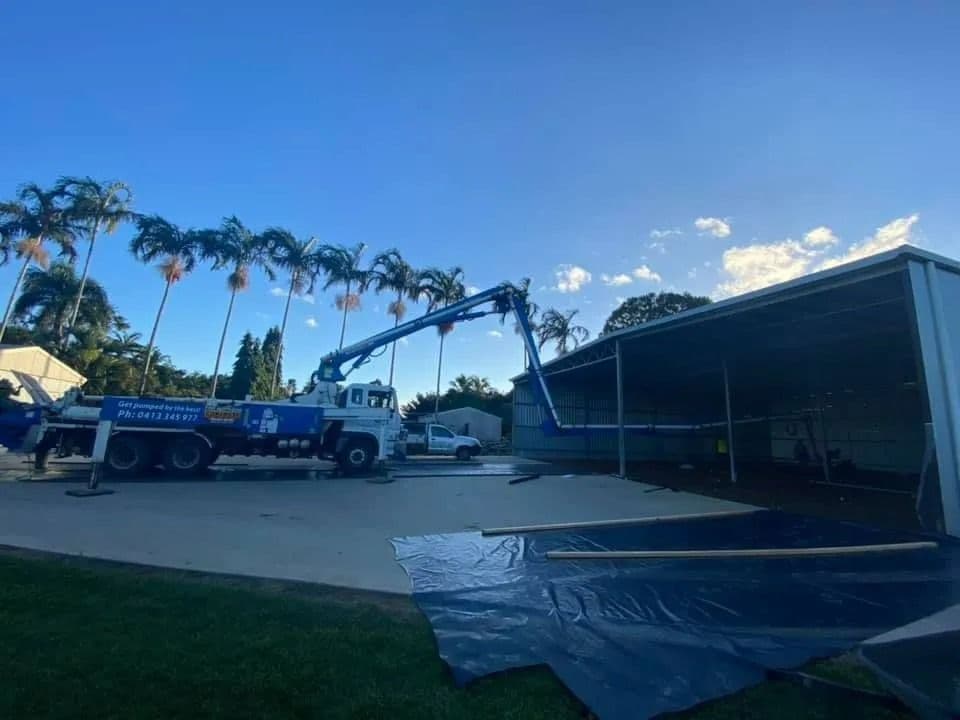
A pumped pour makes washout from three places: the concrete pump, each concrete truck, and the hand tools used to place and finish. Queensland's Concrete Pumping Code of Practice 2019 expects a way to collect concrete residue so the wash down from cleaning the pump and the delivery trucks does not find its way into stormwater drains. Where each one comes from:
- The pump hopper and delivery line. The code describes three ways to clean a line. When the pump is reversed to pull concrete back, the concrete sucked back into the hopper has to be discarded. When water is pushed through, the contaminated water can be stored on site and reused with the solids progressively removed. Compressed air is the third method and, in the code's words, has the highest risk of the three and is the least preferred.
- The truck chutes. Each agitator truck rinses its chute after it empties.
- Wheelbarrows, screeds and hand tools, which the crew washes at the end of the pour.
The US EPA notes that pump trucks have a low hanging hopper at the back that may stop them washing out into a bale-lined pit, so the pump needs a washout it can actually reach. Tell the pumping business where the washout will be when you book.
Washout options: pits, lined bays, skips and containers
Any washout works if it holds all of the liquid and solids until they can be removed; the right one depends on the site and the volume of concrete. The design aim Transport for NSW sets is to capture and store concrete waste water and solids in an impervious bunded area. Its guideline shows these set-ups:
Concrete washout set-ups and where each fits
| Set-up | How it works | Points to watch |
|---|---|---|
| Lined trap (pit) | A pit dug into the ground and lined with impervious plastic sheeting to hold the liquid | The US EPA says the lining should be free of tears or holes; a damaged pit needs relining |
| Berm trap (above-ground bay) | Raised walls of timber, straw bales, sand bags, soil or lined concrete barriers, holding the slurry until it evaporates or cures | A pump's low hopper may not reach over bale walls |
| Sealed skip | A skip that holds liquid and solid washout until final treatment and disposal | Keep other rubbish out of it so the concrete is not mixed with general waste |
| Sealed container on a pallet | A container for small volumes that can be moved to where concrete is being used | Do not fill it completely, and watch for spills when moving it |
| Plastic drop sheet | Sheeting with weighed down edges under the pump connectors or a truck chute | A secondary measure only, used with one of the options above |
Bought vinyl washout containers and metal washout bins are other forms of the sealed container: what matters is that nothing leaks out.
How to set up a washout on a house block
On a house block, set up a lined washout on your own land, away from drains and reachable by the pump and the trucks, before pour day. The Queensland environment department's procedural guide gives washing equipment only in a contained area that cannot reach the stormwater system as the basic example of keeping cement out of stormwater, and EPA Victoria advises keeping the wash-up area far from stormwater drains. A simple order to work in:
- Pick a spot on your property, not the footpath or the road, where water will not run toward the kerb, a drain, a ditch or a creek.
- Check the pump and each truck can reach it after the pour without driving over soft ground.
- Build the containment: a pit or a bunded bay lined with heavy plastic sheeting, or hire a skip or container.
- Lay a weighted plastic sheet under the spot where the pump line is broken down or the chute is rinsed.
- Make it obvious. Transport for NSW suggests a washout that is conveniently located and clearly signposted.
- Tell the pumping business and the concrete supplier where it is when you confirm the booking.
- On the day, scrape excess concrete off tools before washing them; Transport for NSW says this, and a high pressure, low volume nozzle, cut the amount of washout water.
For the rest of the site set-up, from truck access to powerlines, see our guide to preparing your site for a concrete pump.
After the pour: let it harden, then remove it
Concrete washout does harden, and that is how it is meant to be handled: let the water evaporate or remove it, then break up and take away the solids. The US EPA describes a lined pit used by several trucks: once the washwater has evaporated or been vacuumed off, the hardened solids can be broken up and removed from the pit. It adds that hardened washout concrete can be crushed and reused as road base or fill, or taken to a recycler.
Leftover concrete is a separate problem from washout. Transport for NSW says washout areas are generally not designed to collect excess concrete; surplus should go back to the batching plant or into a receptacle set aside for concrete and masonry and be allowed to set there. The US EPA says unused wet concrete should not be dumped on bare ground to harden, because it can contribute to groundwater and surface water contamination. Order close to the volume you need with our how much concrete do I need calculator.
Wet season and remote sites: plan for rain and capacity
In the wet season, a washout fails by overflowing, so check it before rain and keep spare capacity. Transport for NSW says washout areas should be checked at least weekly in dry weather, before forecast rain, during rain and as soon as practical afterwards, and that set concrete should be removed to restore capacity and prevent overflows. The US EPA suggests that once a container is more than 75 percent full, the water should be removed or allowed to evaporate, and that before heavy rain the level should be lowered or the container covered.
Remote and civil sites often have no kerb or drain nearby, but section 440ZG also covers waters, so a washout that can drain into a creek, gully or open ditch is still a problem. On large sites with a lot of concrete work, the US EPA suggests placing washouts at several locations so truck drivers can reach one easily. For wet weather planning more broadly, read can you pour concrete in the rain.
Who sets up the washout on the day
The washout is part of the site, so the person running the site provides it and the pumping business uses it. The Queensland Concrete Pumping Code of Practice 2019 says the principal contractor, or the person with management or control of the workplace, should ensure there is a clearly defined pump washout area that complies with environmental protection legislation and local authority requirements. Under section 319 of the Environmental Protection Act 1994, everyone carrying out an activity that is likely to cause environmental harm has a general environmental duty to take all reasonably practicable measures to prevent or minimise it.
Councils enforce these rules, and the code itself refers to local authority requirements. Douglas Shire Council, for example, says builders and property owners have a legal responsibility to prevent or minimise the release of prescribed contaminants into waters, and that failing to manage run-off from building sites may result in enforcement action. Check your own council's requirements and any development approval conditions before the pour.
Washout on our jobs
Far Northern Concrete Pumping is based in Mareeba and pumps for residential, commercial and civil pours across Cairns, the Tablelands, Cape York and the rest of Far North Queensland. See the areas we service and our concrete pumping services. Whether it is a residential driveway or a large slab, have the washout spot agreed when you book so the operator knows where to clean down after the last truck. Call us on 0413 345 977 if you are unsure where it should go on your site.
Next steps
With the washout planned, work through the rest of the site checklist in preparing your site for a concrete pump. Then contact us with the site address, the pour type, the volume and photos of the access and the washout spot so we can plan the set-up with you.
Sources
- Environmental Protection Regulation 2019, Schedule 10 Prescribed water contaminants, Queensland Government (Queensland Legislation). Accessed 30 October 2026.
- Environmental Protection Act 1994, sections 319 and 440ZG, Queensland Government (Queensland Legislation). Accessed 30 October 2026.
- Procedural guide: Releases to waters from building sites and small construction sites (less than 2500m2), Queensland Department of Environment and Science. Accessed 30 October 2026.
- Concrete Pumping Code of Practice 2019, WorkSafe Queensland. Accessed 30 October 2026.
- Building and Industry, Douglas Shire Council. Accessed 30 October 2026.
- Concrete Washout Guideline, Transport for NSW. Accessed 30 October 2026.
- Prevent stormwater pollution on building sites, EPA Victoria. Accessed 30 October 2026.
- Stormwater Best Management Practice: Concrete Washout, US Environmental Protection Agency. Accessed 30 October 2026.