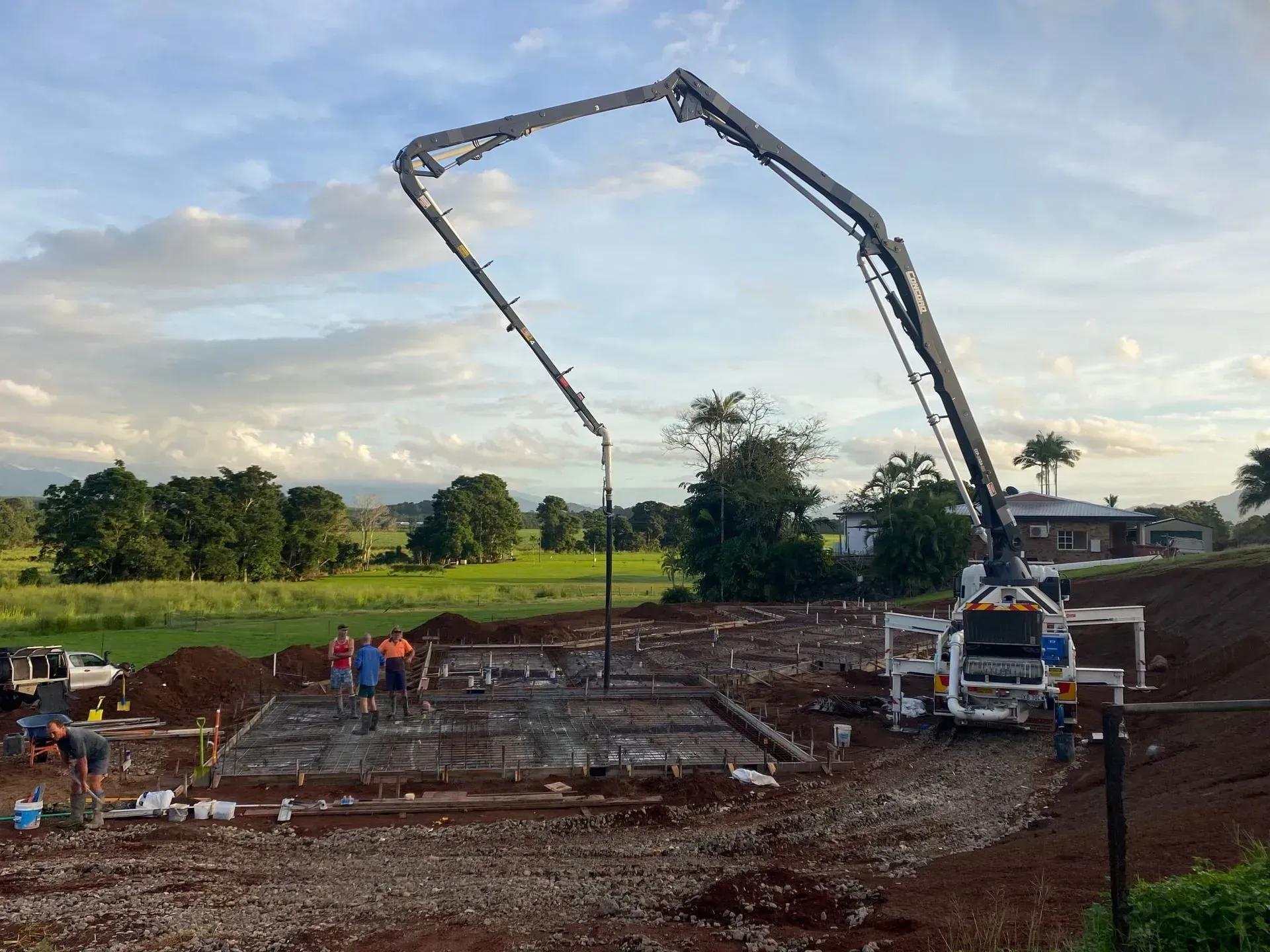
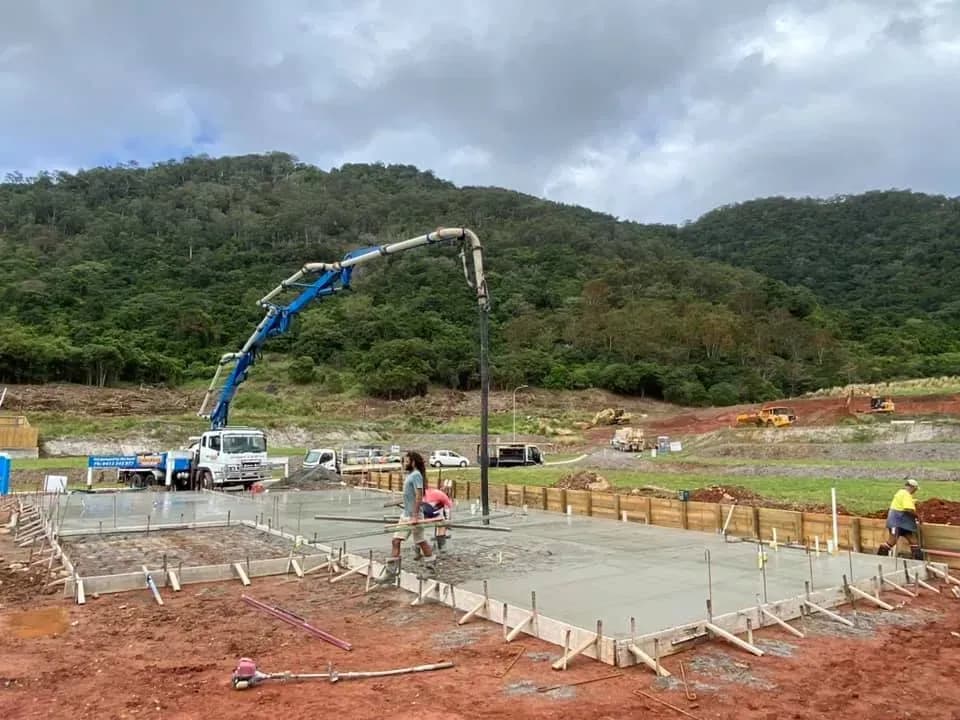
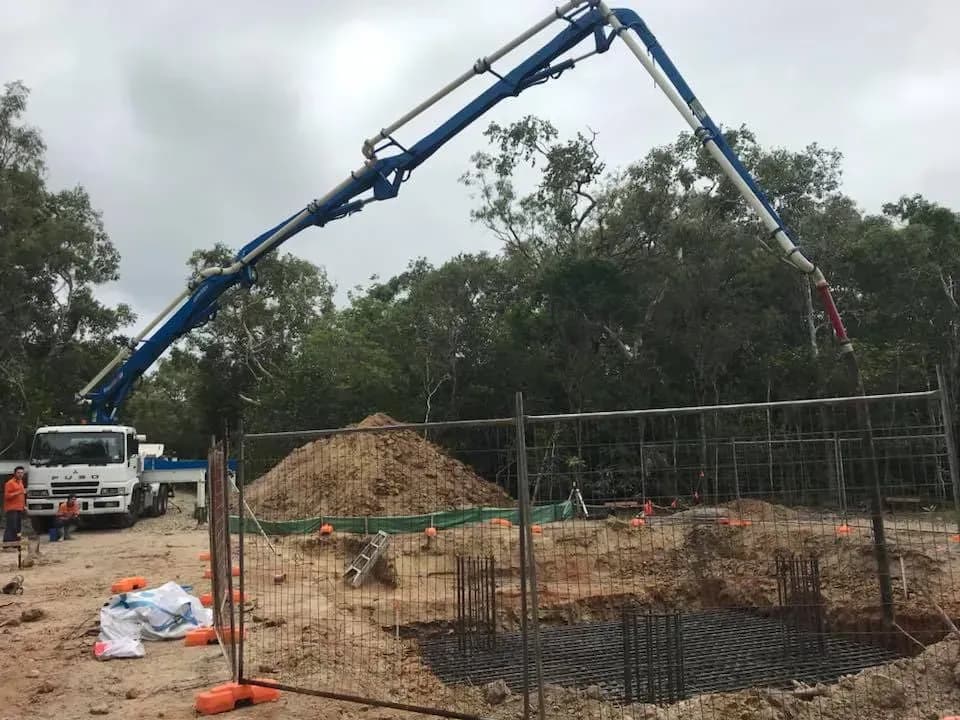
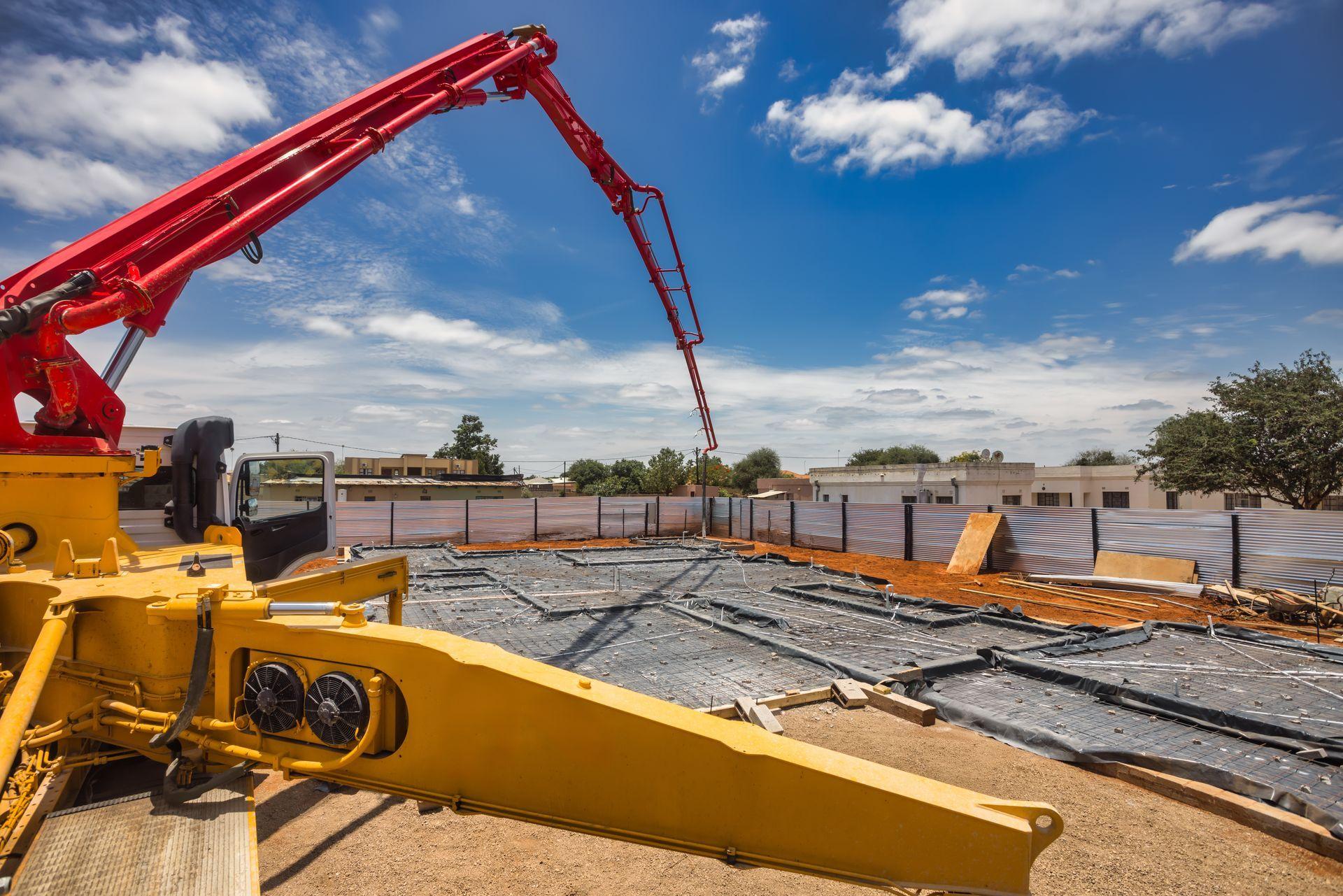
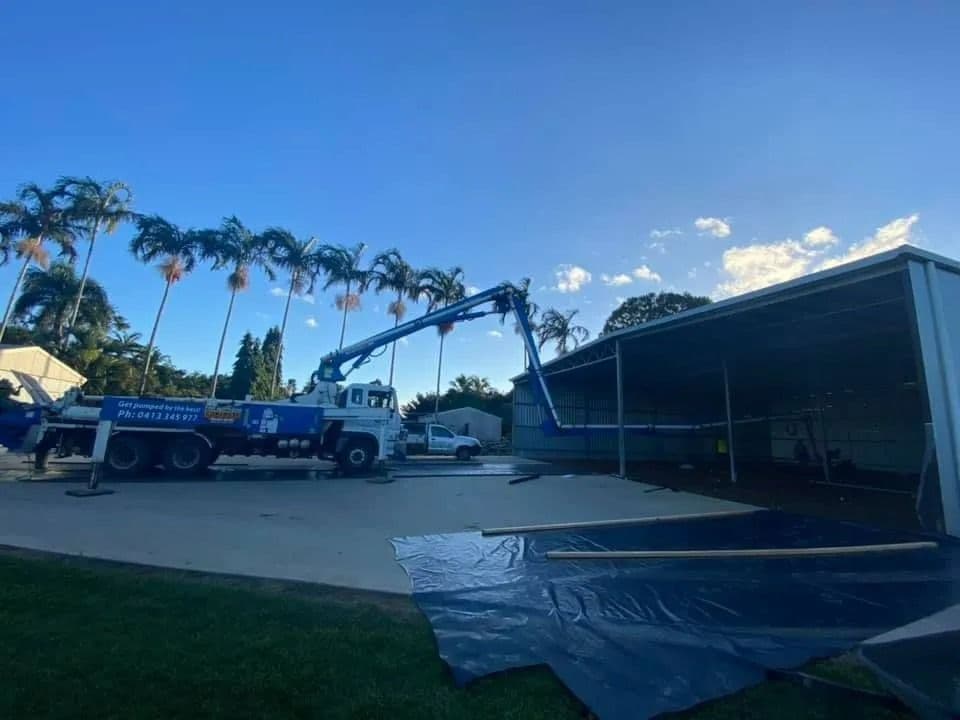
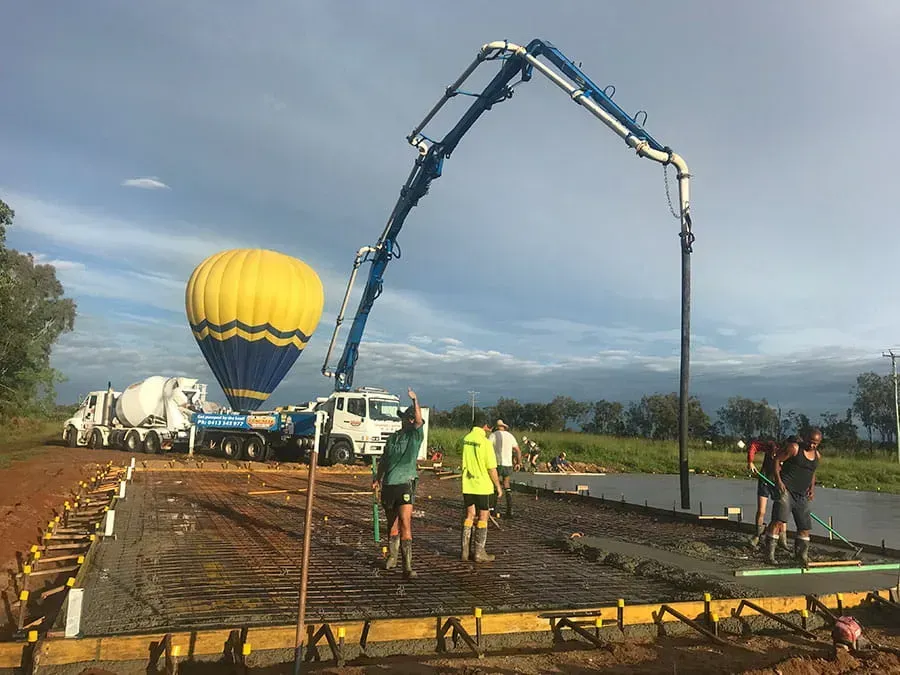
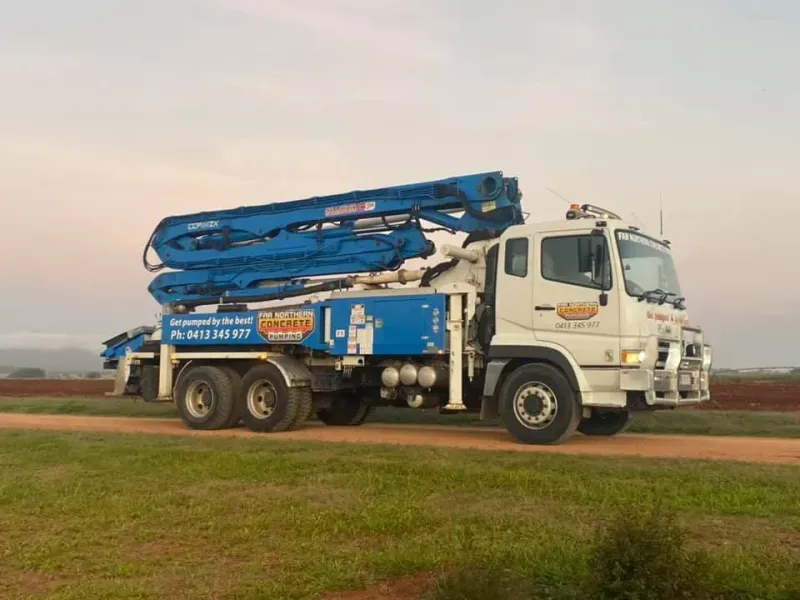
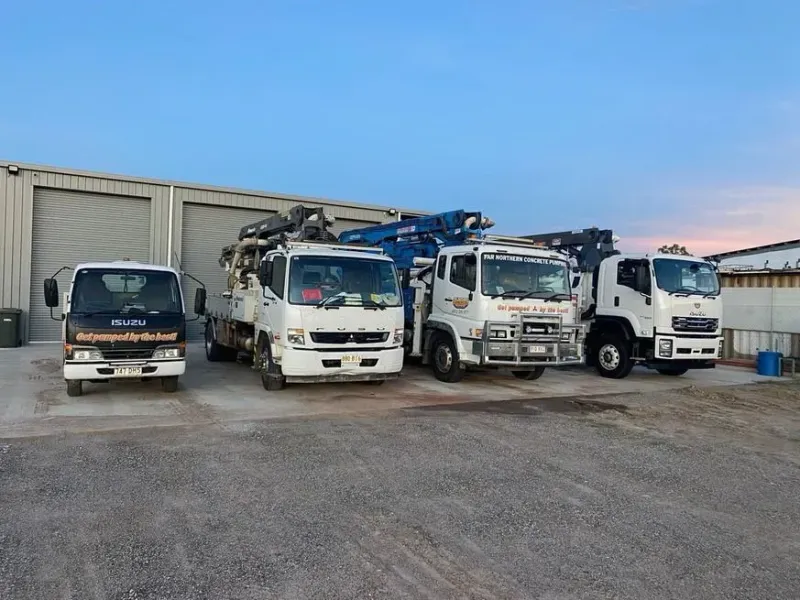
Queensland's Concrete Pumping Code of Practice 2019 expects the person controlling the site to provide a clear, firm, level set-up area and truck access, with room for the outriggers fully extended, and short legging is avoided because it raises the risk of overturning. So the first check is where a pump truck can stand, with that space kept clear.
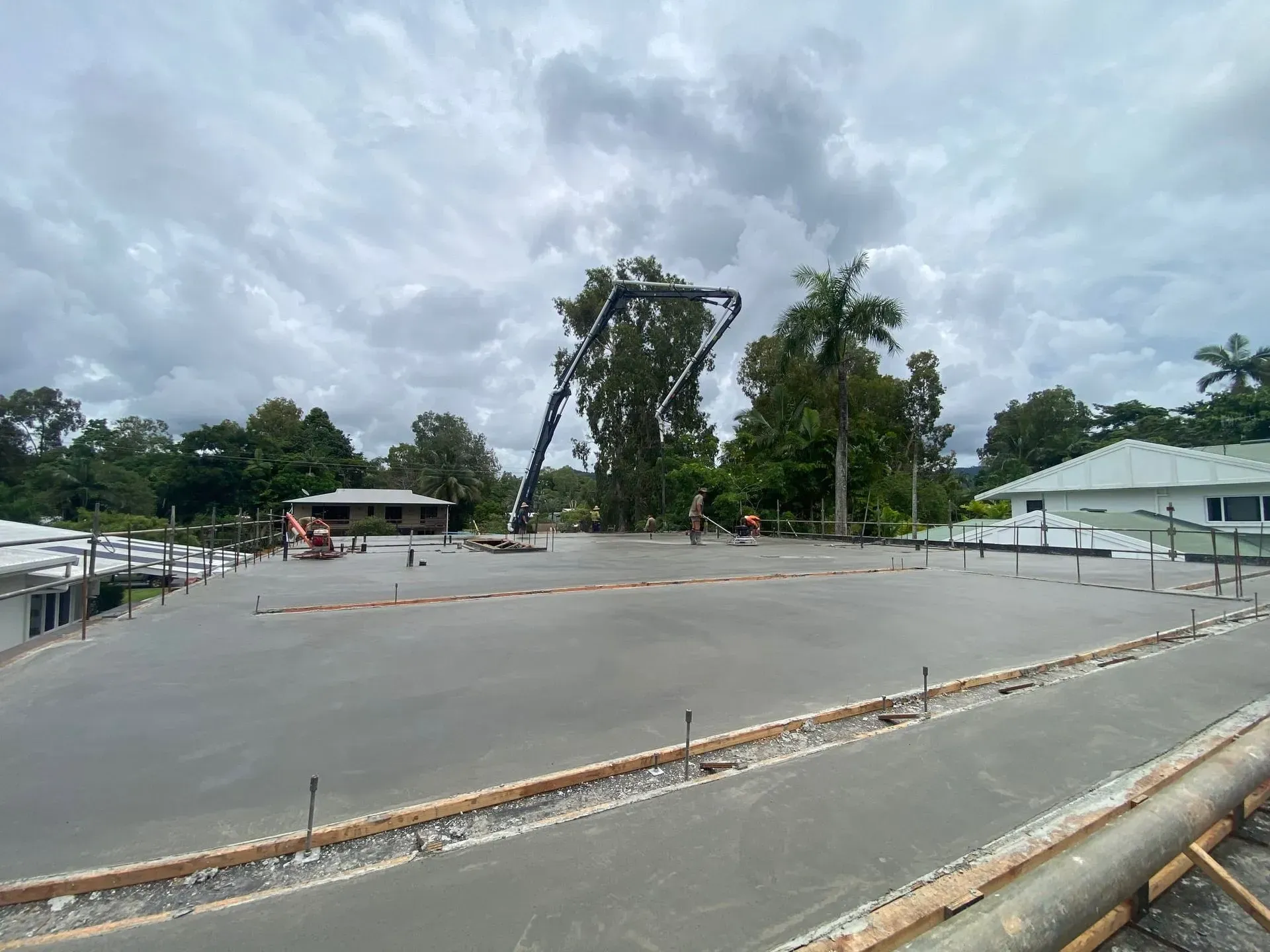
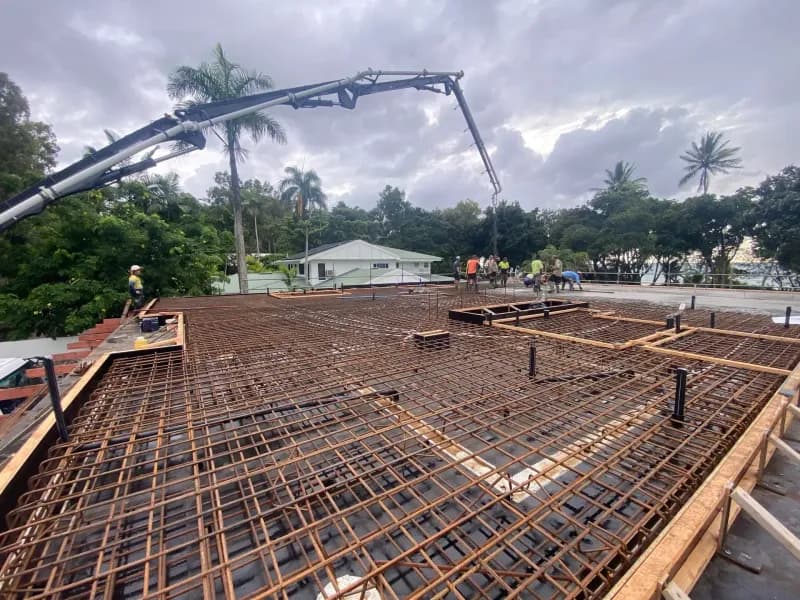
Second, check the route. Where a patio or shed slab sits behind the house, the route decides the pump: a line pump suits a pour at or near ground level where a hose can be laid along the ground, and a boom suits a pour that is high, behind a building or large enough that reach and speed matter. As a guide, one manufacturer lists about 26.3 metres of horizontal reach for its 31m boom, but usable reach depends on where the truck can safely stand.
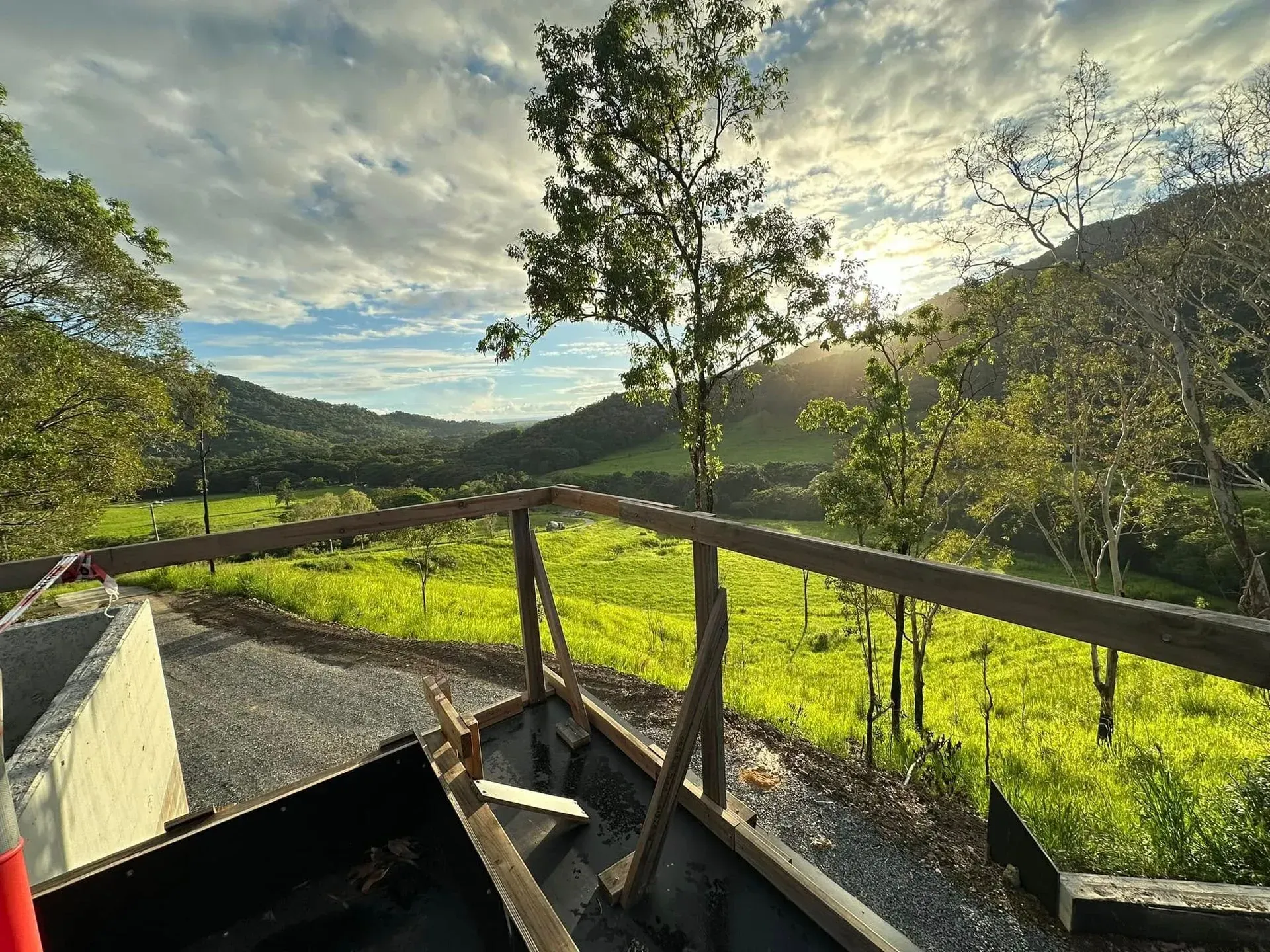
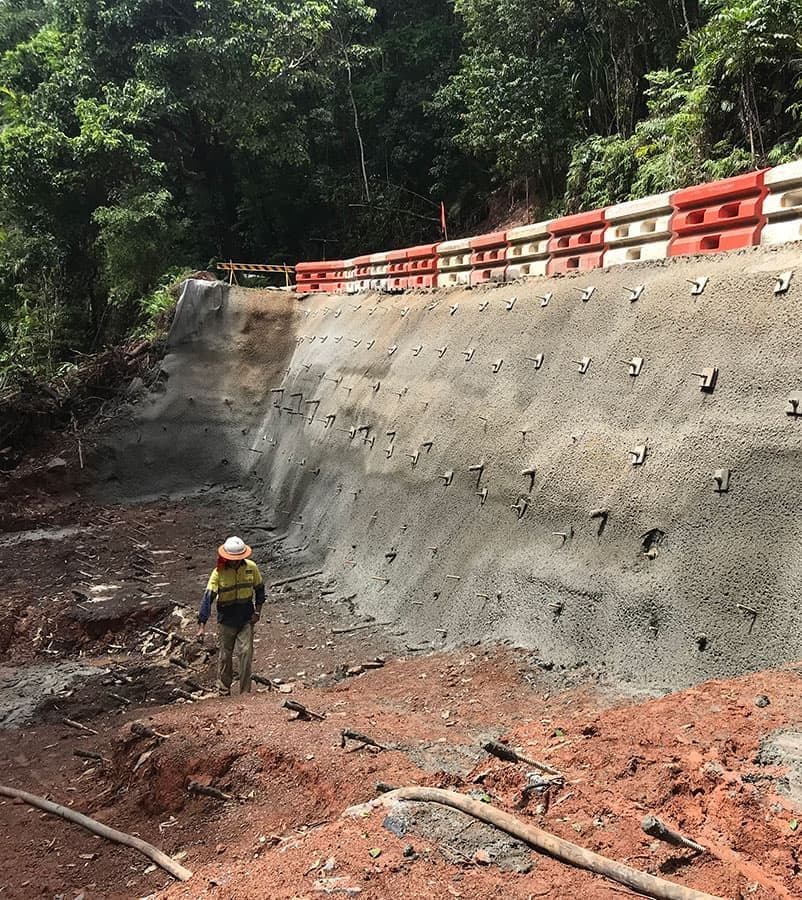
Third, check council's records for your property. Council publishes a 1% AEP predicted flood inundation map covering Freshwater, Stratford and Aeroglen; it says these maps are an indication only, and offers individual property assessments for a fee. The suburb also sits beside Mount Whitfield (364m) and Lumley Hill (325m), part of a reserve declared in 1885. Some sloping blocks may fall within the CairnsPlan 2016 Hillslopes overlay, where excavation and filling over 50m3, a batter or retaining wall over 1.8 metres, or land steeper than 1 in 6 can mean an application is needed. The fact sheet does not list suburbs, so check your own property with council or your builder; we pump the concrete and do not give planning advice.
Fourth, check the date. Our rain guide, drawing on Bureau of Meteorology figures, puts Cairns at more than twice Mareeba's annual rainfall, with about 16 rain days a month from January to March. Because we travel from Mareeba on a regular Cairns run, book ahead and keep a fallback date for a wet-season pour. If a flood watch is issued, council advises monitoring the Cairns Disaster Dashboard and BoM warnings, and we recheck the set-up ground after rain because water in the ground reduces support.
Last, check the lines. WorkSafe Queensland reported that in November 2021 a worker suffered serious burns and another minor injuries when a mobile concrete placing boom contacted an 11kV overhead powerline. Our site guide keeps the boom at least 3 metres from lines up to 132kV, and Ergon Energy's Look up and Live map can help you plan work near overhead lines before pump day.