


In brief
A pumped pour can go no faster than the trucks arrive and unload, whatever the pump's rated output. At its rated maximum of 22 cubic metres an hour, Schwing's compact TP 100 trailer pump would empty a 7 cubic metre truck in about 19 minutes, so whenever trucks arrive slower than that, the pump waits for concrete. Add setup and washout, and plan the pour with your supplier around truck spacing.
On this page
The short answer: a pour goes no faster than the trucks
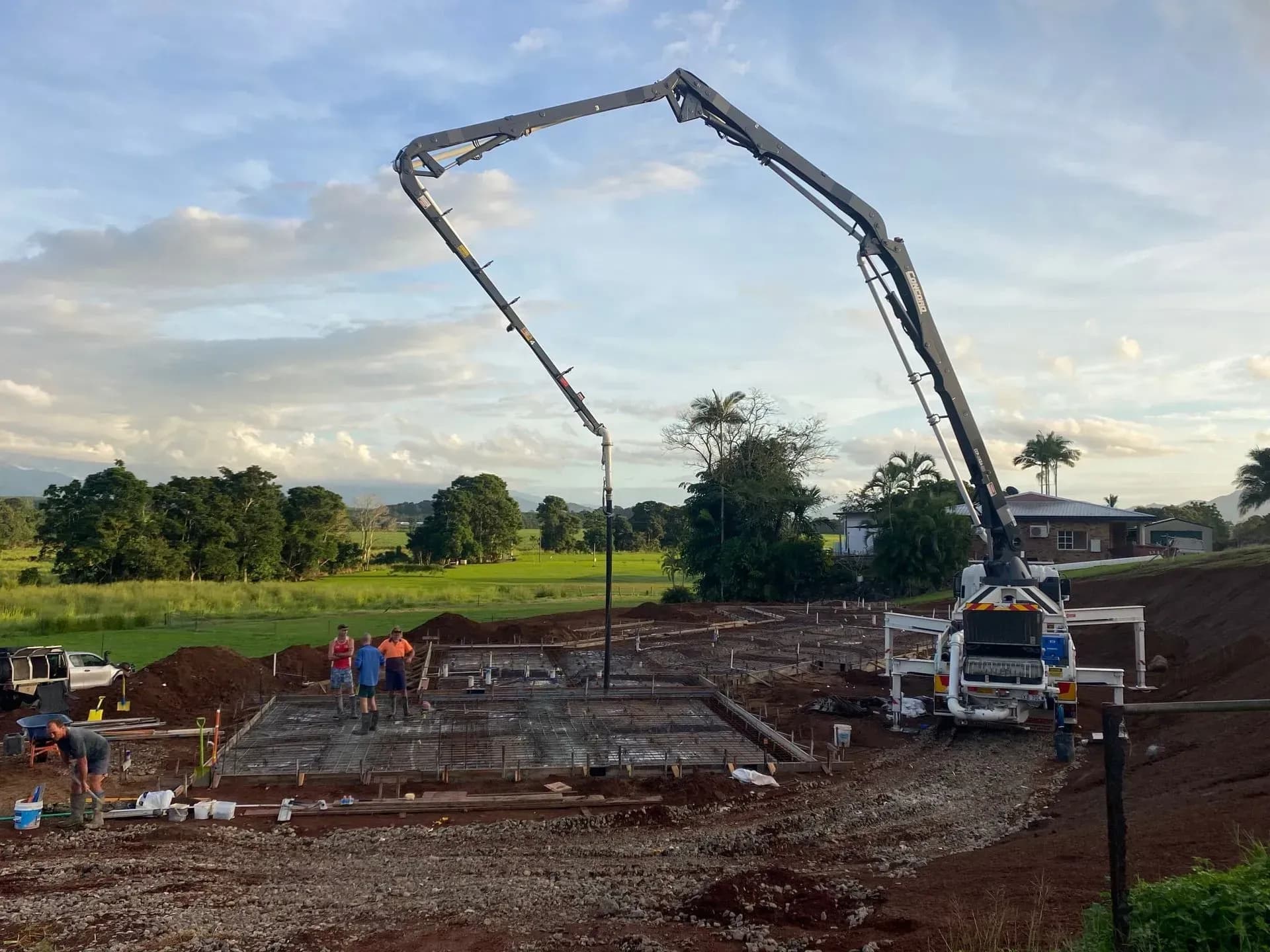
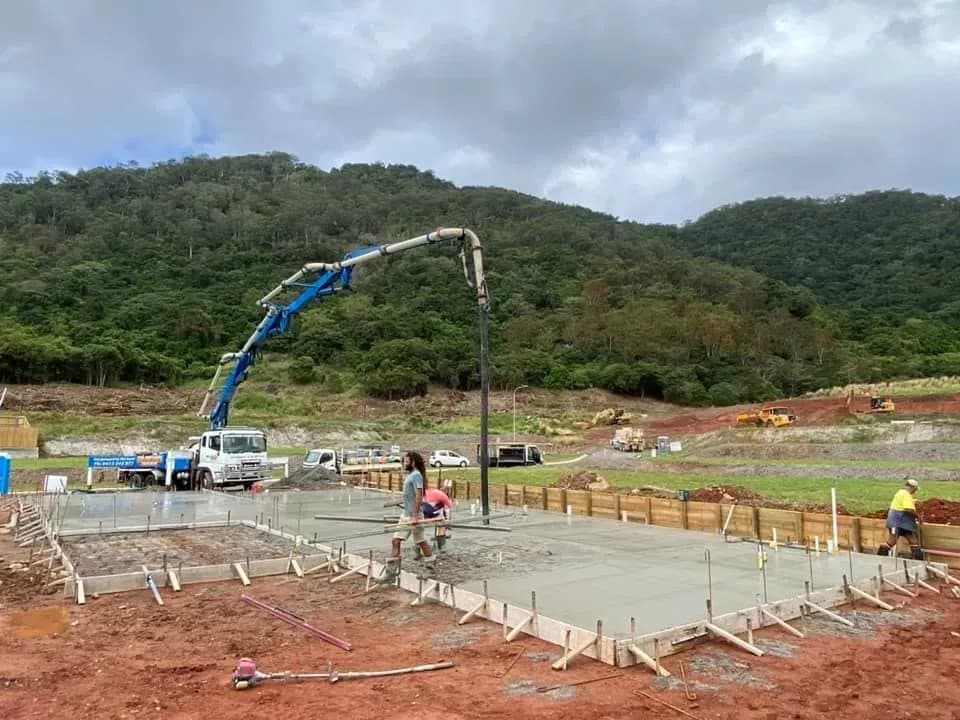
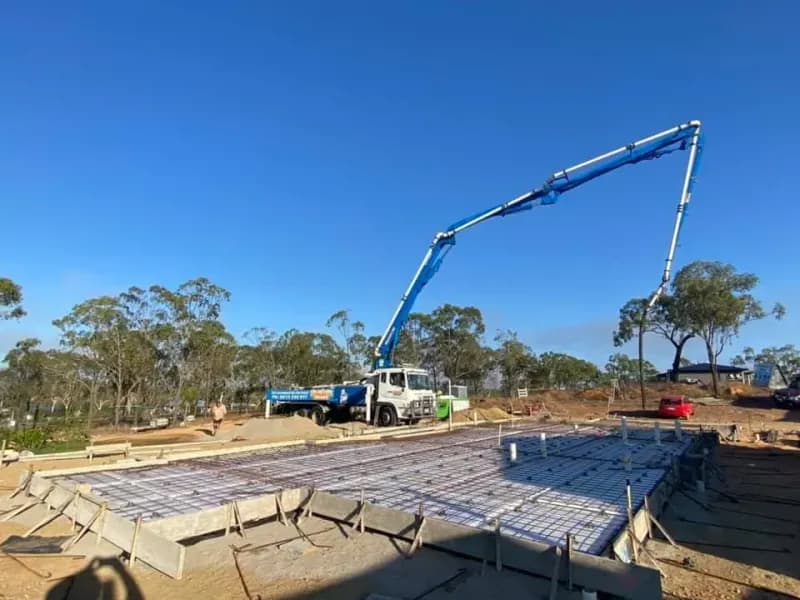
A concrete pour can go no faster than the concrete trucks arrive and unload, because a pump can only place the concrete that reaches its hopper. The pump can only run as continuously as the supply feeding it, which is why, on remote jobs, we ask how long the agitators take between loads. The pump's rated output tells you the ceiling, not the pace. Pump manufacturer Schwing publishes its truck-mounted figures as maximum theoretical values, and even its compact TP 100 trailer pump is rated at 22 cubic metres an hour. At that rate a 7 cubic metre truckload would be gone in about 19 minutes. When trucks arrive slower than that, the limit is then the gap between trucks, how quickly the crew can place, compact and finish each load, and how the site is set up. Total time on site also includes setting up the pump, priming the line and washing out at the end.
Rated pump output: what the brochure numbers mean
A concrete pump's rated output is the most concrete it can move in an hour under ideal conditions, quoted in cubic metres per hour. Manufacturer data sheets show a wide spread by pump size. Schwing lists its compact TP 100 trailer pump at 22 cubic metres an hour and its SP 750 trailer pump at up to 67. Its S 20 truck-mounted boom lists 62, 98 or 111 cubic metres an hour depending on the pump kit and setting, and the largest models in its truck-mounted range reach 162. Two cautions apply. In its truck-mounted data, Schwing states that performance specifications are maximum theoretical values, and that maximum concrete output and maximum pressure on concrete cannot be achieved at the same time. On the S 20, the 111 cubic metre setting comes with the lowest pressure rating, 60 bar, while the 62 cubic metre setting allows 108 bar.
Manufacturer maximum outputs (Schwing data, listed maximum outputs, checked October 2026)
| Pump | Type | Maximum output | Time to empty a 7 m3 truck at that rate |
|---|---|---|---|
| Schwing TP 100 | Compact trailer pump | 22 m3/h | About 19 minutes |
| Schwing SP 750 | Trailer pump | Up to 67 m3/h | About 6 minutes |
| Schwing S 20 | Truck-mounted boom, about 20 m | 62 to 111 m3/h, by setting | About 4 to 7 minutes |
| Largest Schwing truck-mounted models | Truck-mounted boom | Up to 162 m3/h | Under 3 minutes |
What actually sets the pour rate on the day
The pour rate on the day can be no faster than the slowest of truck supply, the placing crew, the site and the pump, and the pump's rated output is a maximum figure, not the pace of the pour. Cement Concrete & Aggregates Australia (CCAA) advises giving the supplier the time of the first truckload and the time between truckloads, with enough time to place and compact one load before the next arrives. When that spacing is longer than the pump needs to empty a truck, the spacing becomes the pace of the pour. WorkSafe Queensland's Concrete Pumping Code of Practice 2019 says a time schedule should be set before a major pour, based on a realistic assessment of the time to complete, with allowances for:
- weather and site accessibility
- the volume of concrete, and slab and site limitations
- equipment back up and equipment capacity
- restricted work times under local authority rules
- pump operator availability and the line hand's limitations
- the concrete supplier's requirements
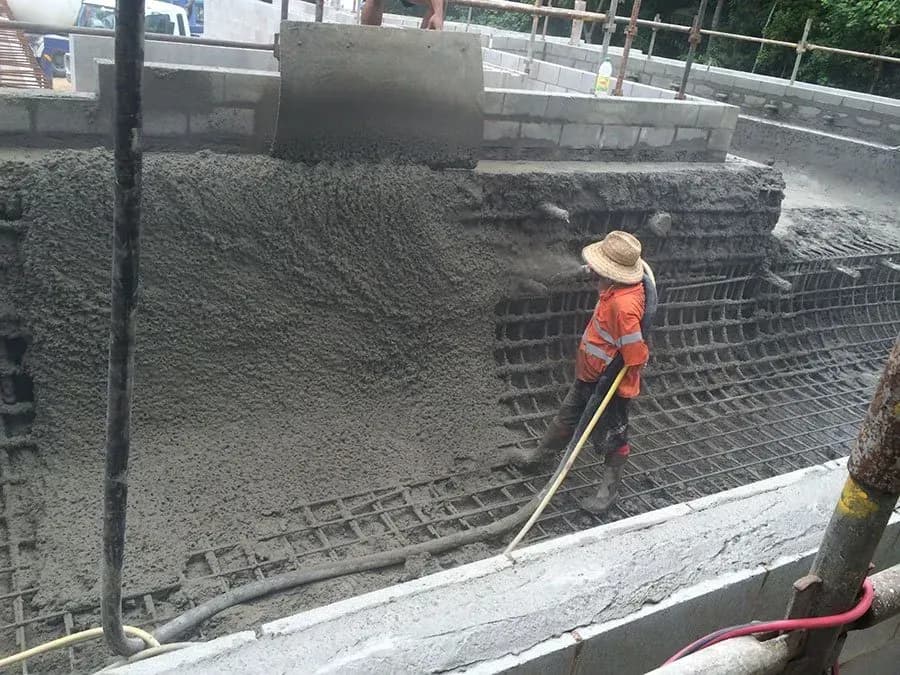
Line length matters too. The same code notes that pumping through one metre of rubber hose can take the same effort as three or more metres of steel pipeline, and since Schwing's truck-mounted data says maximum output and maximum pressure cannot be reached together, a long hose run is one reason a pump works below its brochure figure. Pushing the pump harder is not the fix: WorkSafe lists pumping concrete too quickly as one cause of line blockages. Our guide to concrete pump blockages covers why.
Setup, priming and washout sit on top of the pour
The time a concrete pump spends on site is longer than the pour itself, because setting up, priming the line and washing out all happen before the first truck discharges or after the last one leaves. Under the WorkSafe Queensland code, the pump operator should consult the principal contractor on the setup and pour plan, including the delivery rate of concrete, positioning, access and the clean-out location, before setup starts. A boom needs support placed under all of its outrigger feet before it is raised, and the code expects hose restraint devices, couplings and hoses to be installed correctly before pumping starts. The code then calls for the pipeline to be adequately primed and lubricated before pumping begins. At the end of the pour, the line is cleaned out. The code describes a go-devil, a rubber device pushed through the pipeline with compressed air or water to clean out the concrete, and expects the site to have a clearly defined pump washout area that complies with environmental and local authority requirements.
There is no fixed number of minutes for setup or washout. Both depend on the pump, the length of line, the access and where the washout area is. When you ask for a quote, ask how setup and washout are charged, as covered in our concrete pump hire cost guide, and have the site ready using our site preparation checklist.
Worked examples: driveway, house slab, 30 m3 and a commercial floor
A worked example shows why truck supply decides the pour time. The table below uses round numbers, not quotes. It assumes 7 cubic metre truckloads (Hunter Concrete, one Australian supplier, lists agitators carrying from 0.4 to 8.0 cubic metres, including a 7.0 cubic metre model) and compares pumping time at two rated outputs with a supply-limited case. For the supply case, it uses the 30 minute unloading allowance in Queensland supplier terms: Boral's Queensland Country service fees give 30 minutes to unload a vehicle from arrival, and Holcim's North Queensland schedule charges waiting time after 30 minutes on site. That allowance is a fee threshold, not a discharge speed, so it marks a slow but realistic case when each truck arrives as the last one leaves.
Example pour times: pump rating vs truck supply (illustrative arithmetic, excluding setup and washout)
| Example pour | Concrete | 7 m3 truckloads | At 22 m3/h | At 111 m3/h | If each truck takes 30 minutes |
|---|---|---|---|---|---|
| Driveway | 6 m3 | 1 | About 16 minutes | About 3 minutes | About 30 minutes |
| House slab | 25 m3 | 4 | About 68 minutes | About 14 minutes | About 2 hours |
| Larger slab | 30 m3 | 5 | About 82 minutes | About 16 minutes | About 2.5 hours |
| Commercial floor | 100 m3 | 15 | About 4.5 hours | About 54 minutes | About 7.5 hours |
Read the last column as the planning case, then shorten it with the steps further down. Your own volume comes from the concrete volume guide, and the right pump for the site from line pump vs boom pump.
Remote and regional pours in Far North Queensland
Remote and regional pours in Far North Queensland can take longer, because the gap between trucks can grow with the distance from the batching plant unless the supplier puts more trucks on the run. A truck that has to drive back to the plant and reload sets a slower supply rate than one running a short loop in town. Boral's Queensland Country rates, for example, are quoted for deliveries within 20 km of the nearest Boral plant. Travel also eats into the supplier's discharge time limit; CCAA describes the AS 1379 requirement, in the edition it covers, for concrete to be discharged within 90 minutes of the commencement of mixing. Our 90 minute rule guide explains how that window works. Before we commit to a remote job, such as a pour in Cape York, we want to know the access route, the site conditions, where the agitators are coming from and how long they take between loads. For coastal jobs, see Cairns concrete pumping.
How to shorten a pour
The way to shorten a concrete pour is to close the gaps between trucks and have the crew ready to place each load as it arrives. CCAA's ordering guidance says the required rate of placing the concrete is important so the supplier can programme production and delivery, and Holcim asks for the rate of placement so it can schedule deliveries to match. These steps keep the concrete moving:
- Give the supplier your rate of placement, the time of the first truck and the time between trucks when you order.
- Tell the supplier about likely delays and site access, so it can programme production and delivery.
- Book the pump to be set up and primed before the first truck arrives.
- Plan truck access and traffic control for continuous delivery, as the WorkSafe Queensland code expects, with clear access to the pump.
- Where the site allows, set up so two trucks can feed the pump in turn. Boral's delivery requirements provide for two trucks feeding a pump hopper at the same time, with 600 mm clearance between them.
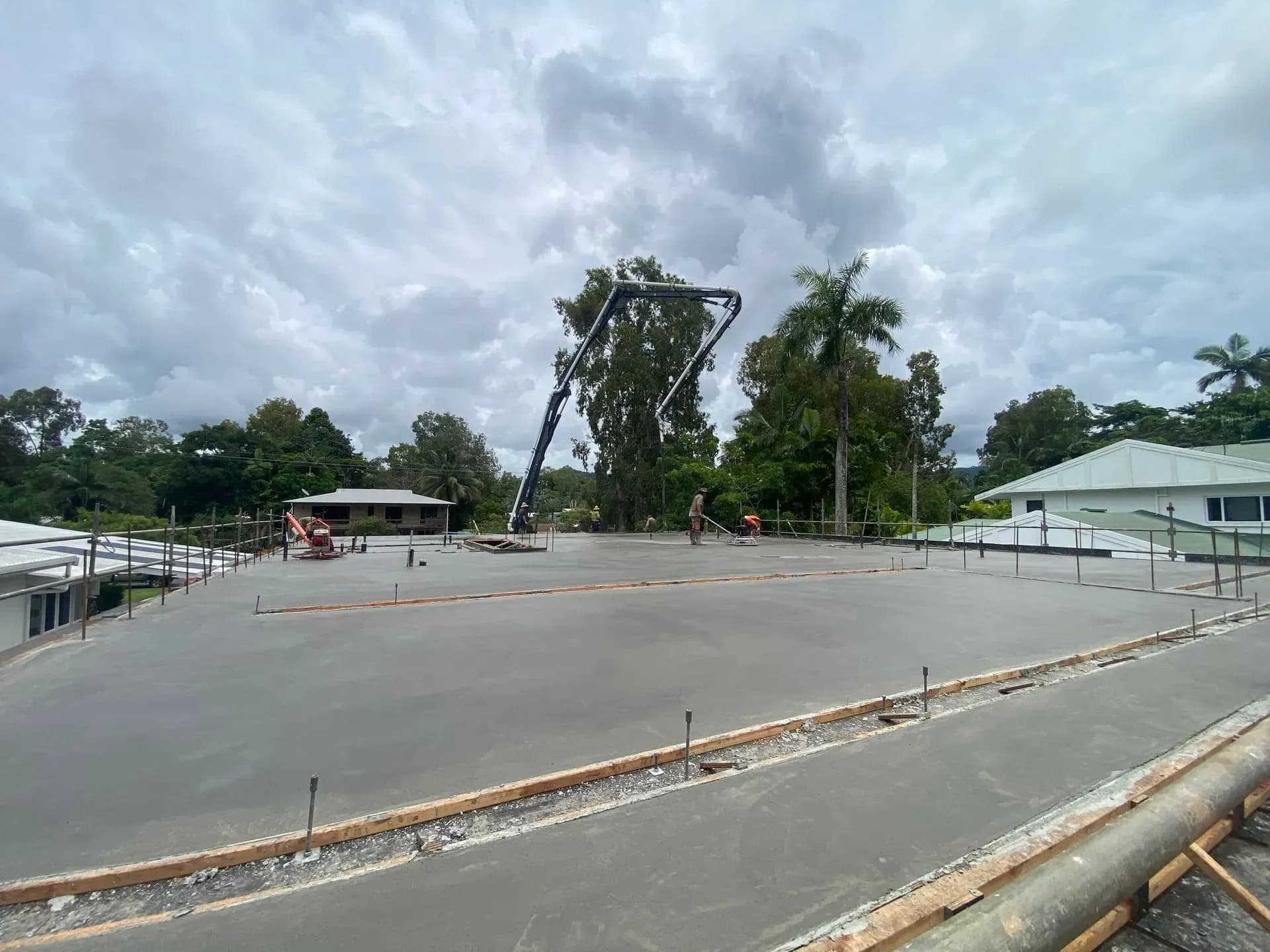
- Have enough hands to place, compact and finish each load before the next arrives.
- Keep the hose run as short as the site allows, since long rubber hose takes more pumping effort.
Next steps
Once you know roughly how long the pump will be on site, compare the cost in our concrete pump hire cost guide. Our operators have access to a 31m boom pump, 28m boom pump, 20m boom pump and line pump, plus a compact high-pressure line pump for hard-to-reach pours, and the fleet is maintained in our own workshop so we can commit to a start time and hold it. See our concrete pumping services, residential and commercial work. When you are ready to book, contact us or call 0413 345 977 with your address, the volume your supplier has quoted and the truck spacing. We are open 24 hours, Monday to Sunday.
Sources
- Concrete Pumping Code of Practice 2019, WorkSafe Queensland. Accessed 30 October 2026.
- Truck-mounted concrete pumps: technical data product overview, Schwing Stetter. Accessed 30 October 2026.
- Trailer pumps, Schwing Stetter. Accessed 30 October 2026.
- SP 750 trailer pump brochure, Schwing Stetter. Accessed 30 October 2026.
- Concrete Basics: A Guide to Concrete Practice, Cement Concrete & Aggregates Australia. Accessed 30 October 2026.
- Ordering Premixed Concrete, Cement Concrete & Aggregates Australia. Accessed 30 October 2026.
- 5 essential things you need to know when ordering premixed concrete, Holcim Australia. Accessed 30 October 2026.
- North Queensland service fees, Holcim Australia. Accessed 30 October 2026.
- Service Fees, Boral Concrete, Queensland Country, Boral. Accessed 30 October 2026.
- Boral Concrete Delivery Requirements, Boral. Accessed 30 October 2026.
- Our fleet, Hunter Concrete. Accessed 30 October 2026.